
CCNA
200-301 Articles & Study Guides
Explore focused explanations and study guides for Implementing and Administering Cisco Solutions.
16 articles published

Start here
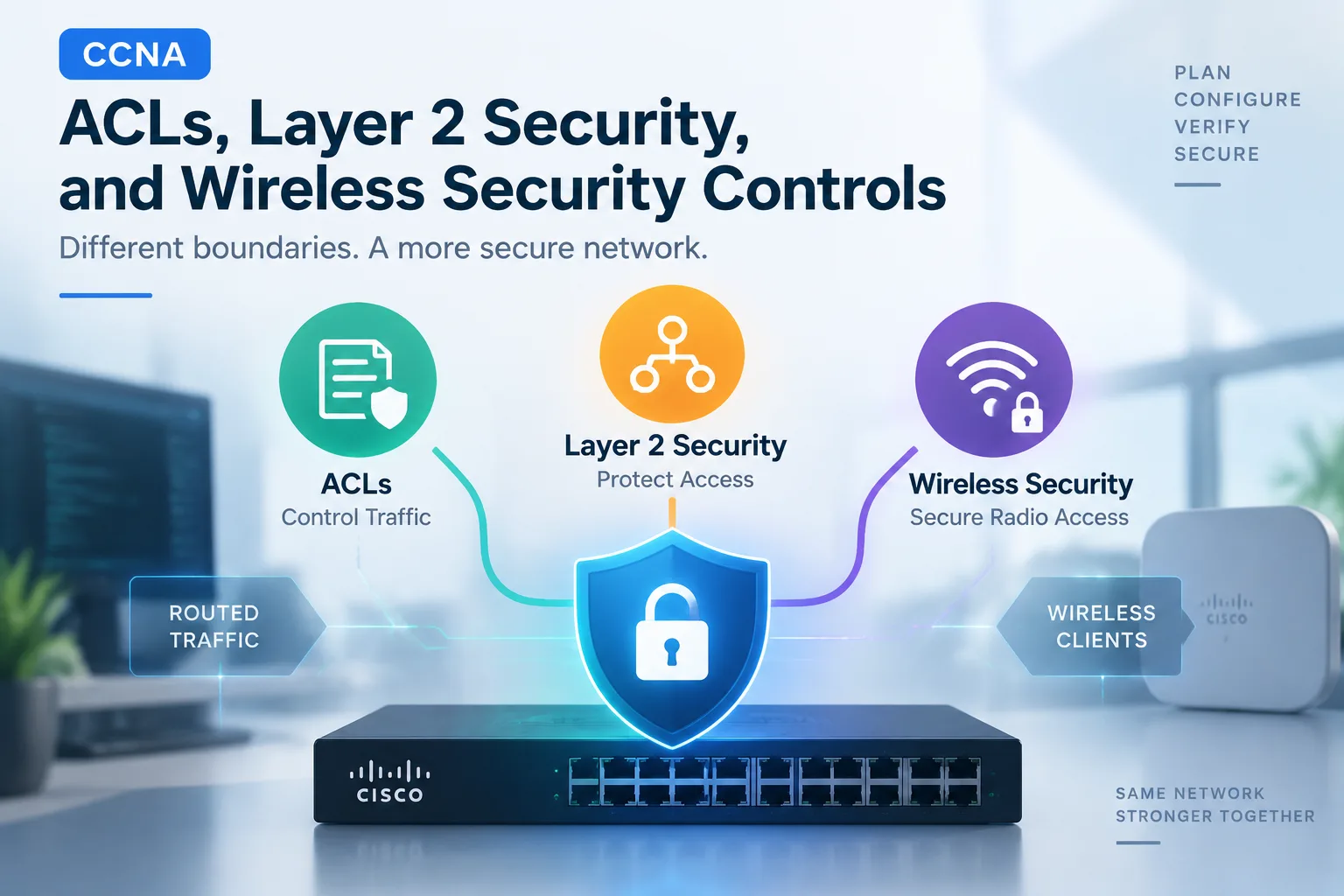
01 · Study & Preparation · Guide
ACLs, Layer 2 Security, and Wireless Security Controls
Security enforcement works only when it is placed on the traffic path and when its dependencies are trusted.
Explore 200-301 articles
Showing 1–12 of 16 articles
01 · Study & Preparation · Guide
ACLs, Layer 2 Security, and Wireless Security Controls
Security enforcement works only when it is placed on the traffic path and when its dependencies are trusted.
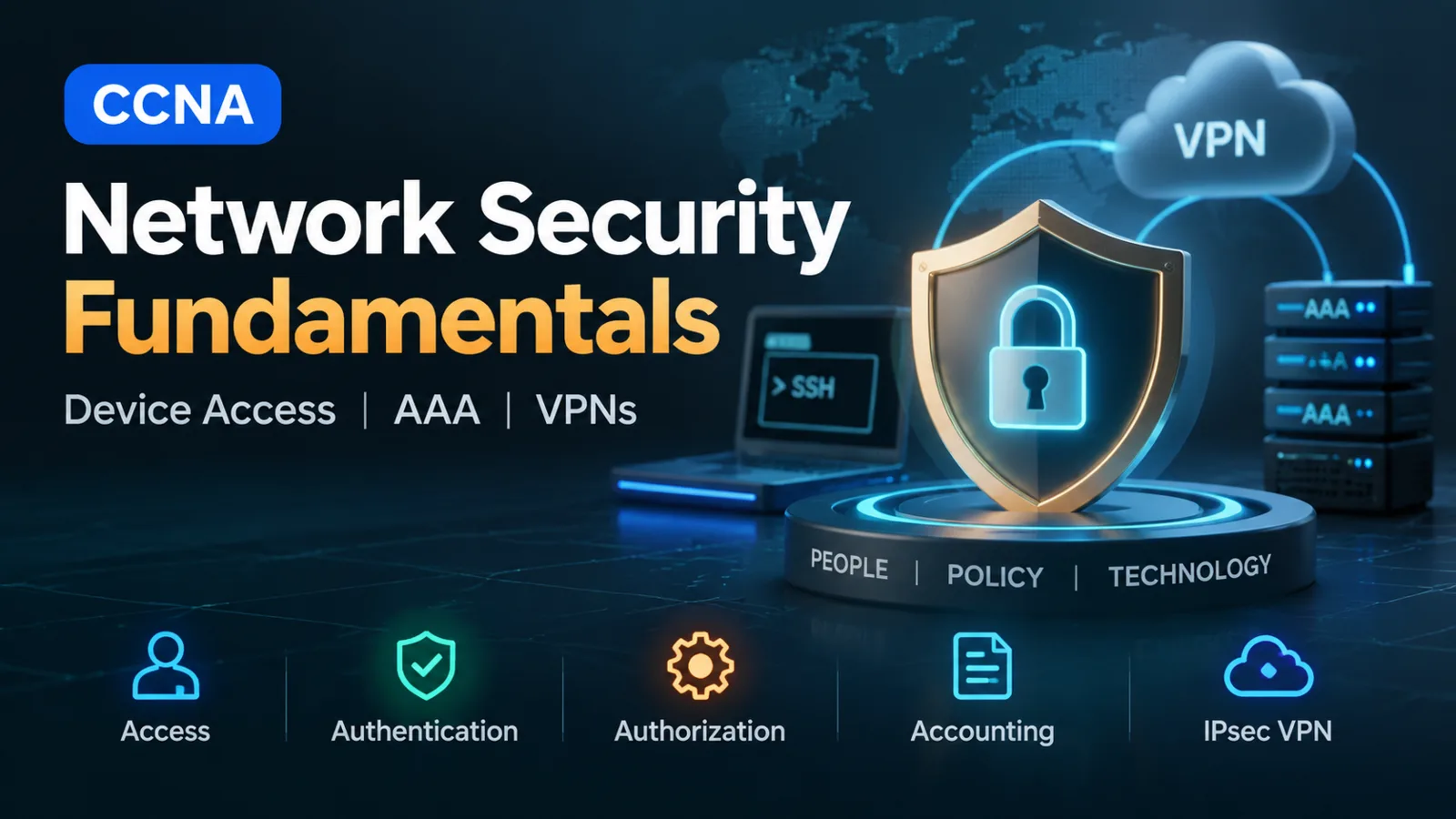
02 · Study & Preparation · Guide
Network Security Fundamentals, Device Access, AAA, and VPNs
Network security is a system of complementary controls. A threat is a potential cause of harm, a vulnerability is a weakness, an exploit uses a weakness, and a mitigation reduces likelihood or impact.
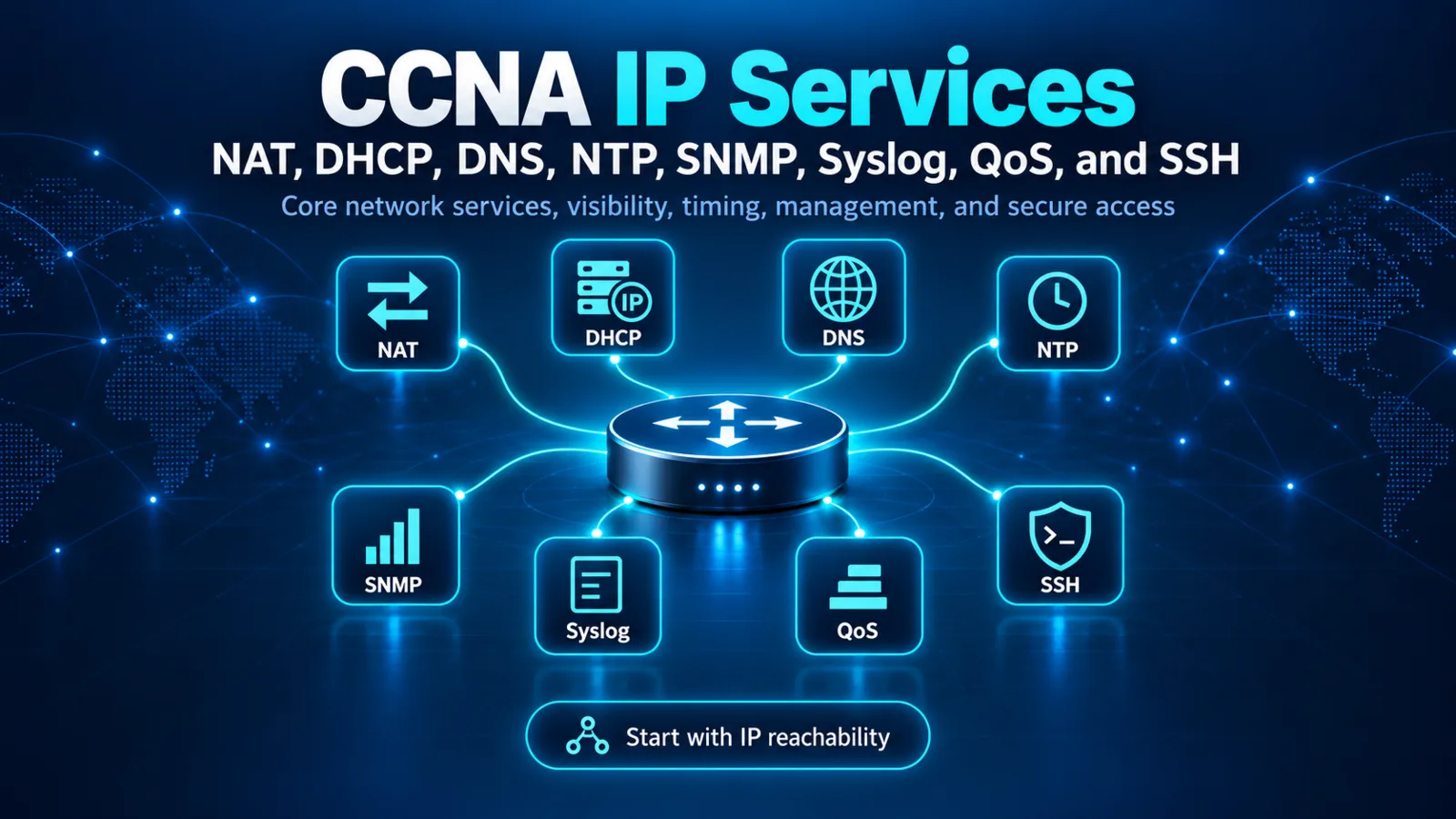
03 · Study & Preparation · Guide
CCNA IP Services: NAT, DHCP, DNS, NTP, SNMP, Syslog, QoS, and SSH
IP services turn basic reachability into an operable network. They assign addresses, resolve names, synchronize time, translate traffic, collect telemetry, prioritize congestion-sensitive flows, and provide management access.
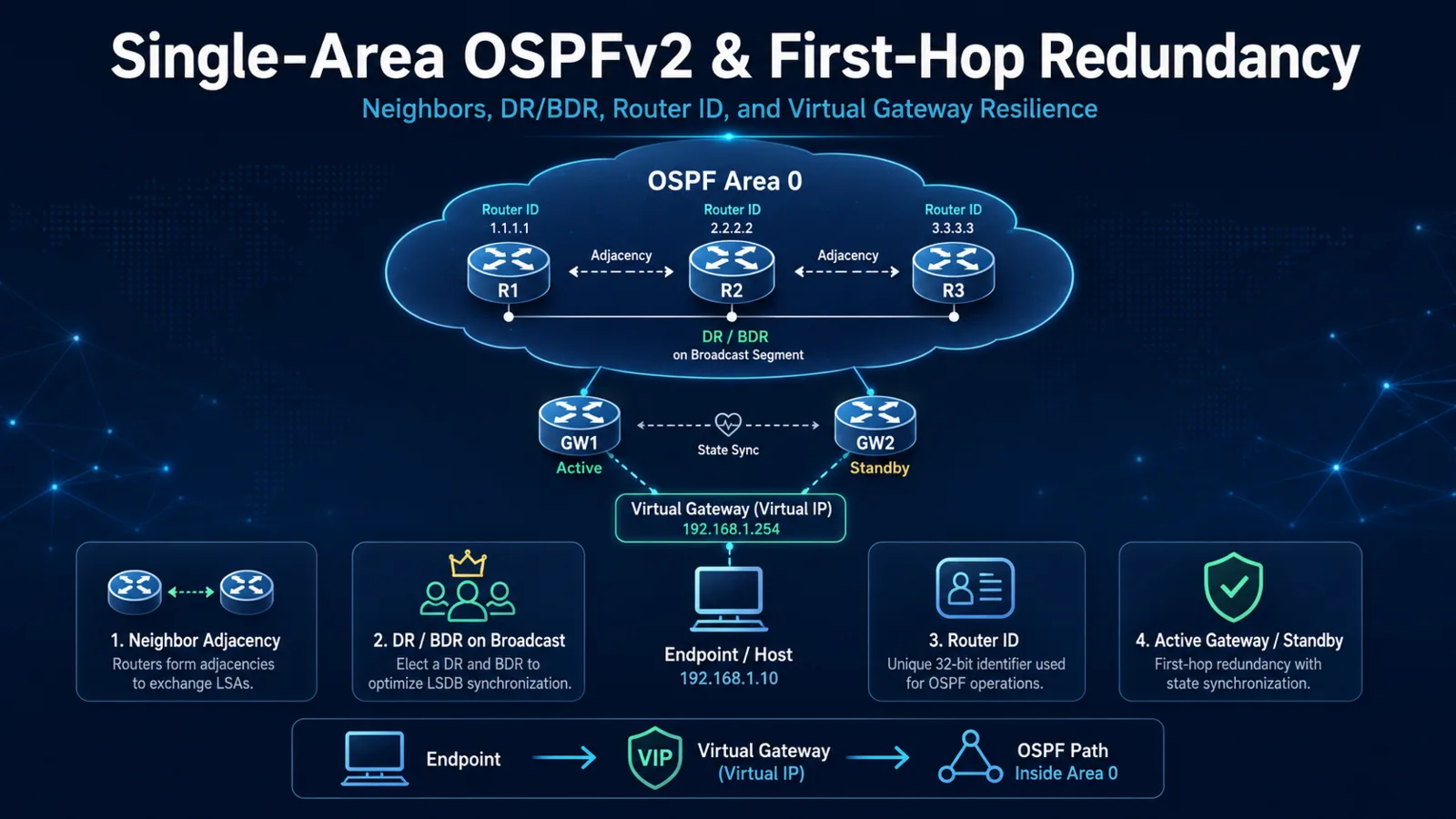
04 · Study & Preparation · Guide
Single-Area OSPFv2 and First-Hop Redundancy Fundamentals
Open Shortest Path First version 2 (OSPFv2) lets routers exchange IPv4 topology information and calculate routes.
05 · Study & Preparation · Guide
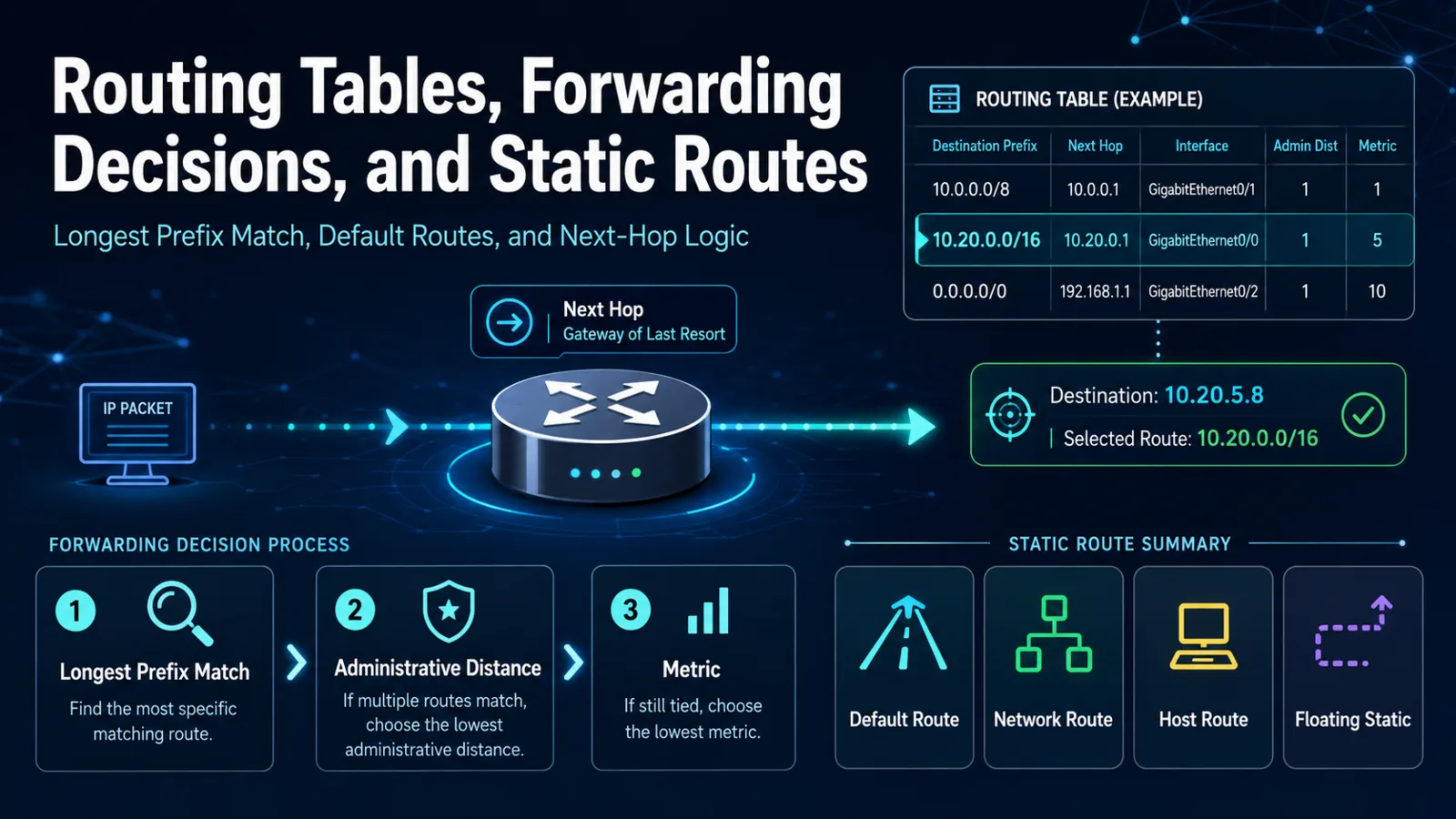
Routing Tables, Forwarding Decisions, and Static Routes
A router forwards a packet by matching its destination against installed routes. Understanding the routing table prevents a common mistake: treating the configuration as proof that a route is usable.
06 · Study & Preparation · Guide
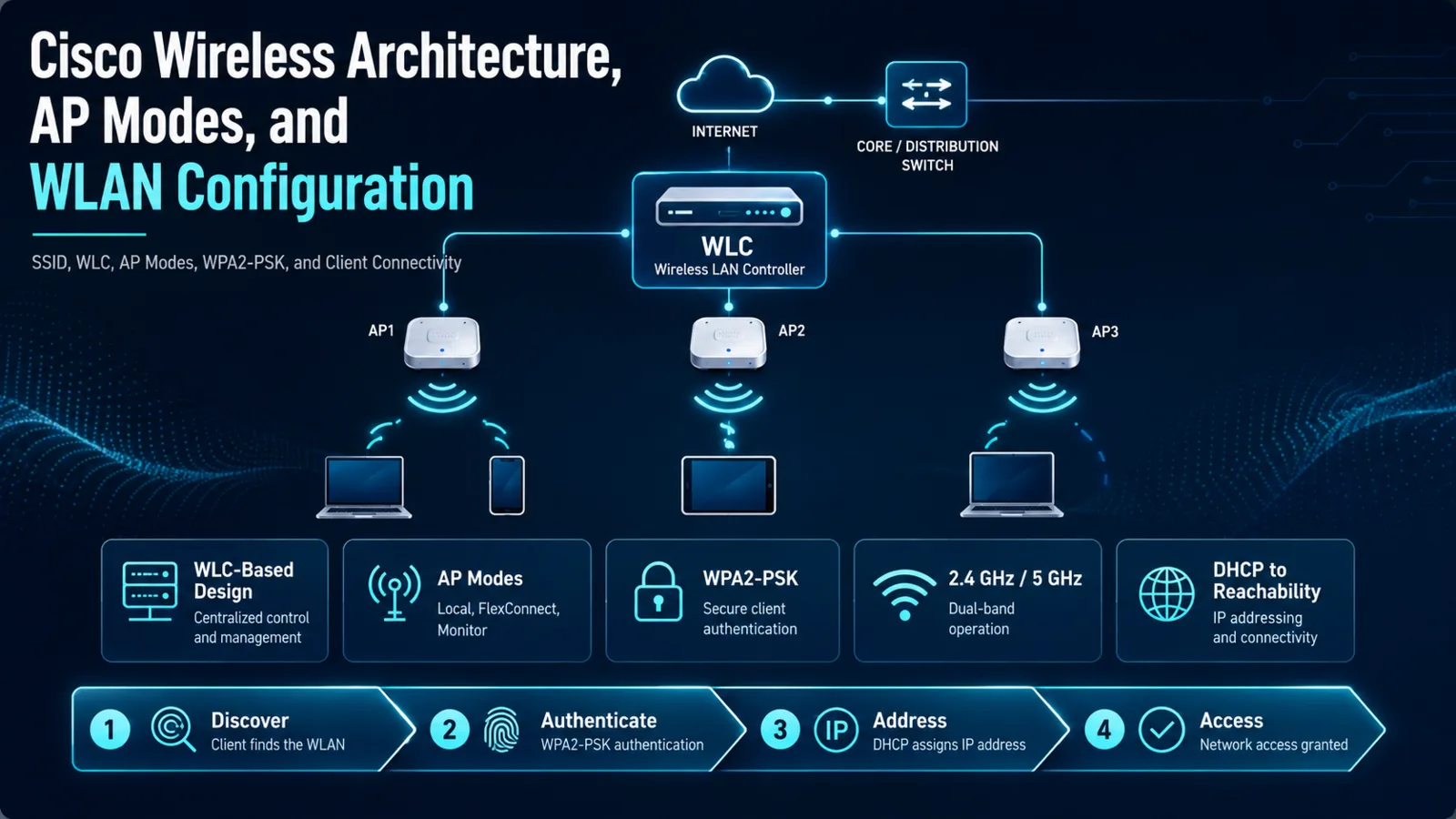
Cisco Wireless Architecture, AP Modes, and WLAN Configuration
A wireless connection crosses radio frequency, access-point, switching, controller, security, addressing, and upstream routing dependencies.
07 · Study & Preparation · Guide
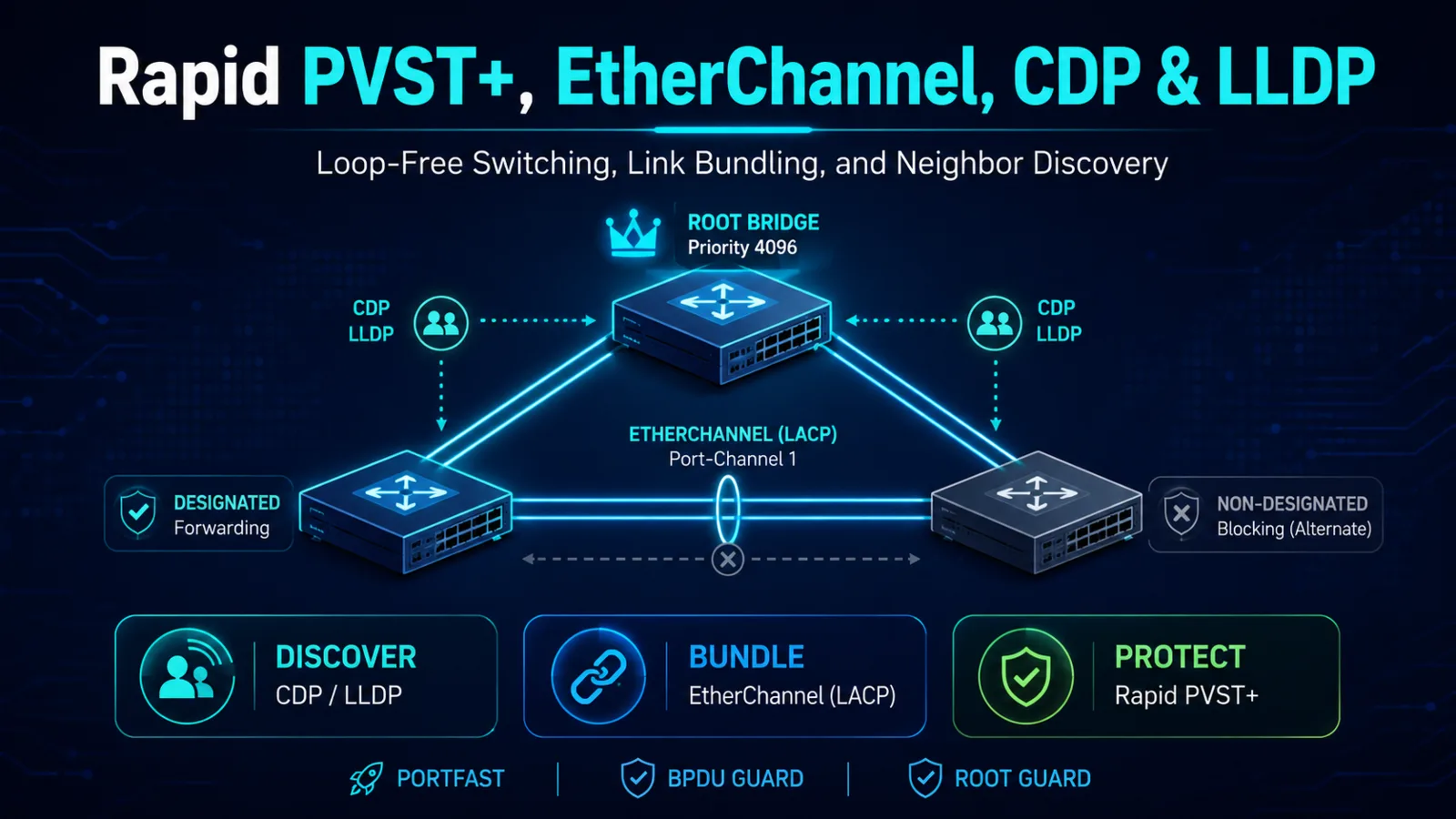
Rapid PVST+, EtherChannel, CDP, and LLDP Operations
Redundant Layer 2 links improve availability but can create loops. Rapid Per-VLAN Spanning Tree Plus (Rapid PVST+) selects a loop-free topology, while EtherChannel makes multiple compatible links operate as one logical connection.
08 · Study & Preparation · Guide
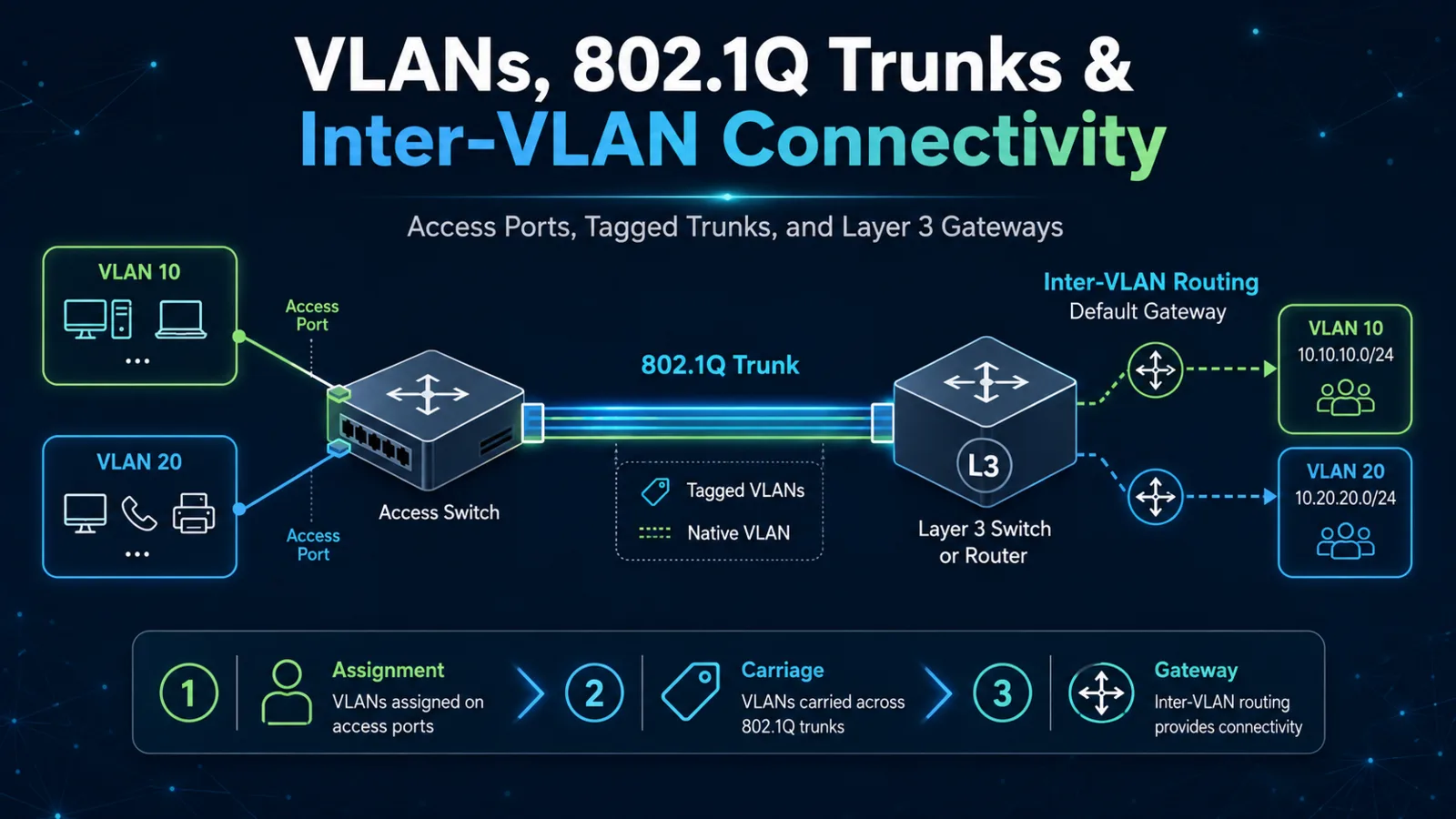
VLANs, 802.1Q Trunks, and Inter-VLAN Connectivity
A virtual local area network (VLAN) creates a Layer 2 broadcast domain. Access ports place endpoint traffic into one VLAN, trunks carry multiple VLANs between infrastructure devices, and a Layer 3 interface routes between VLANs.
09 · Study & Preparation · Guide
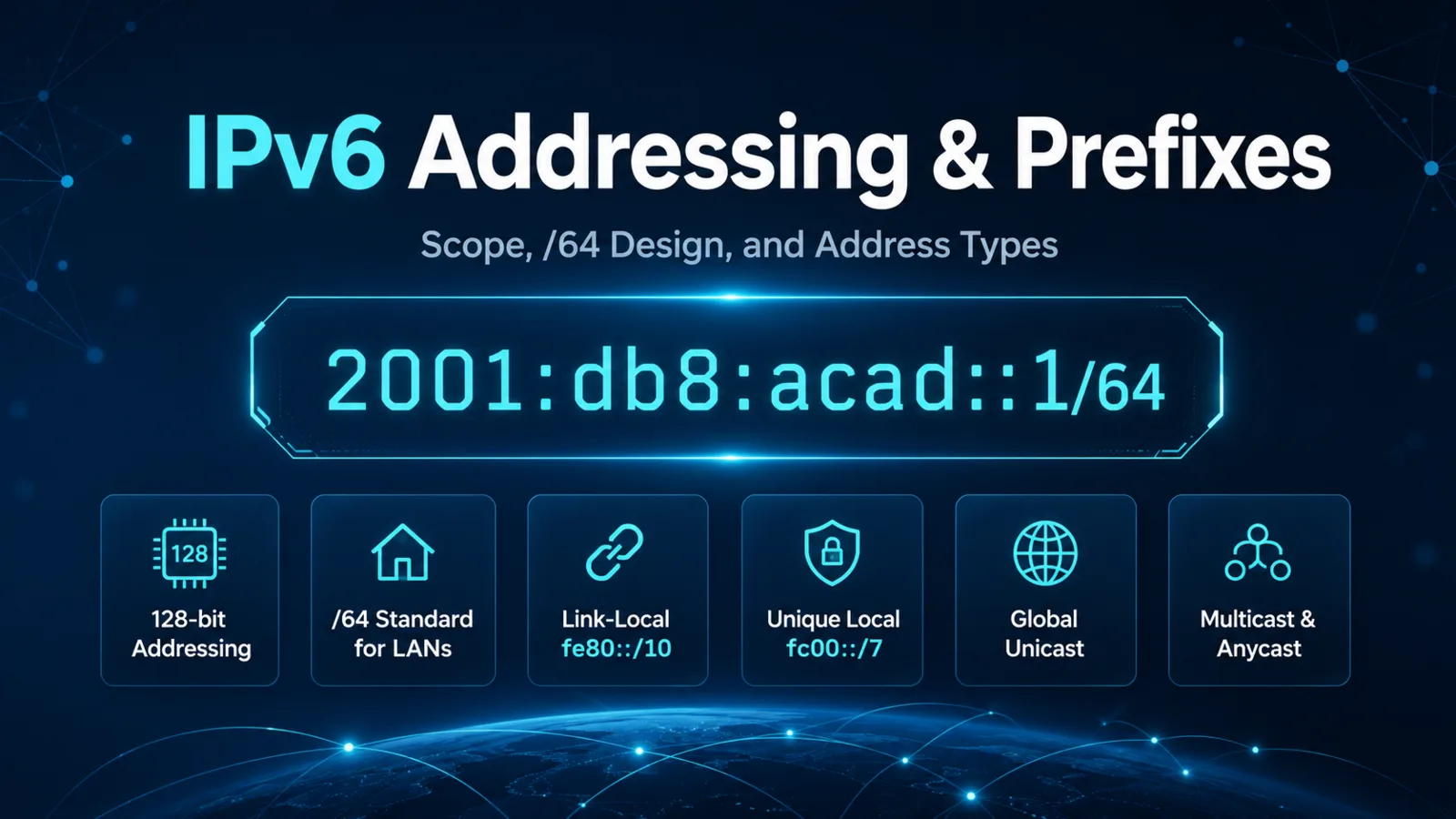
IPv6 Addressing, Prefixes, and Address Types
IPv6 uses 128-bit addresses and removes IPv4 broadcast, but it still depends on precise interface scope, prefix selection, neighbor discovery, and routing.
10 · Study & Preparation · Guide
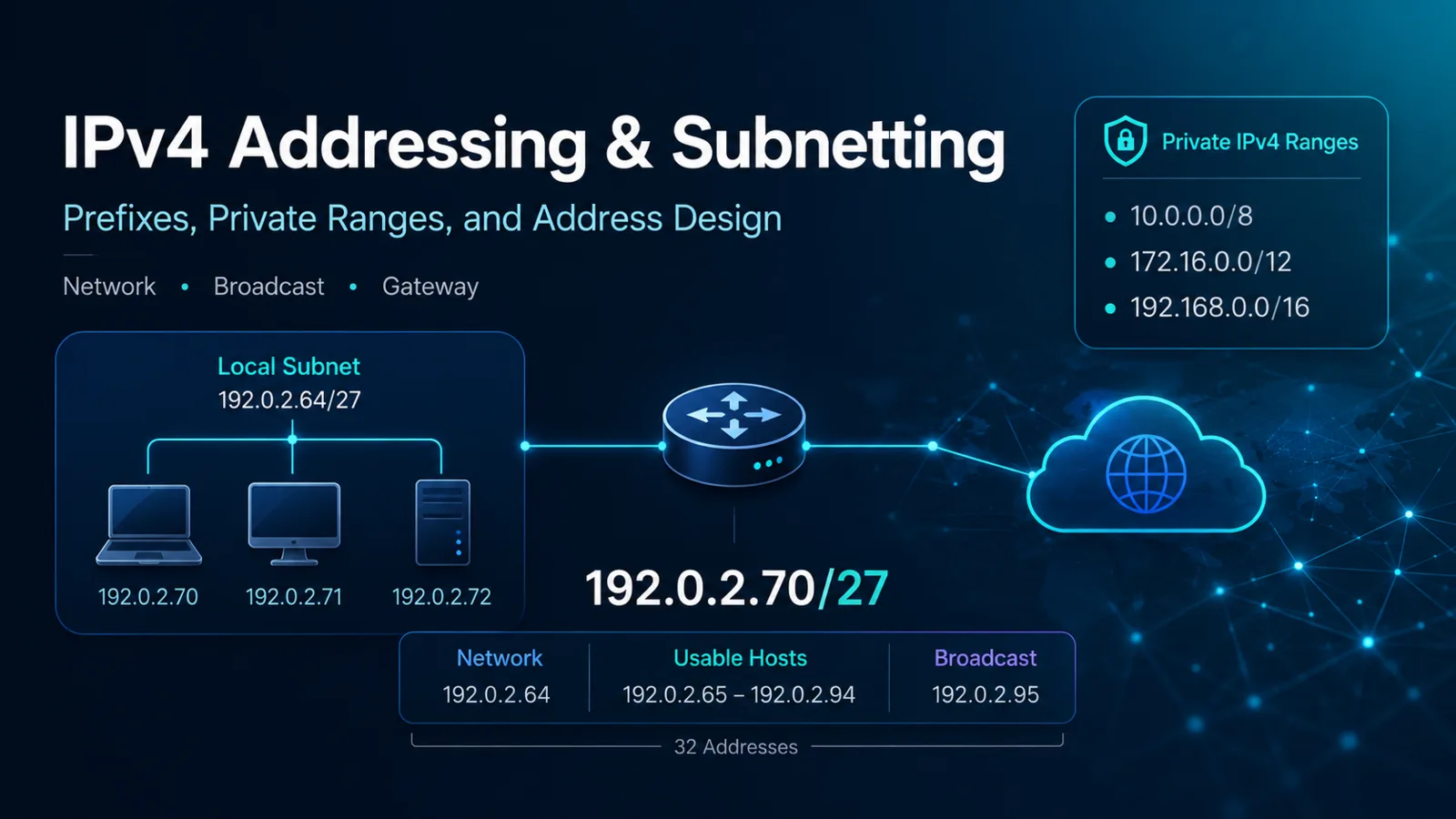
IPv4 Addressing, Subnetting, and Private Address Design
IPv4 subnetting defines which destinations are local, how many addresses a segment can contain, and where a router is required.
11 · Study & Preparation · Guide
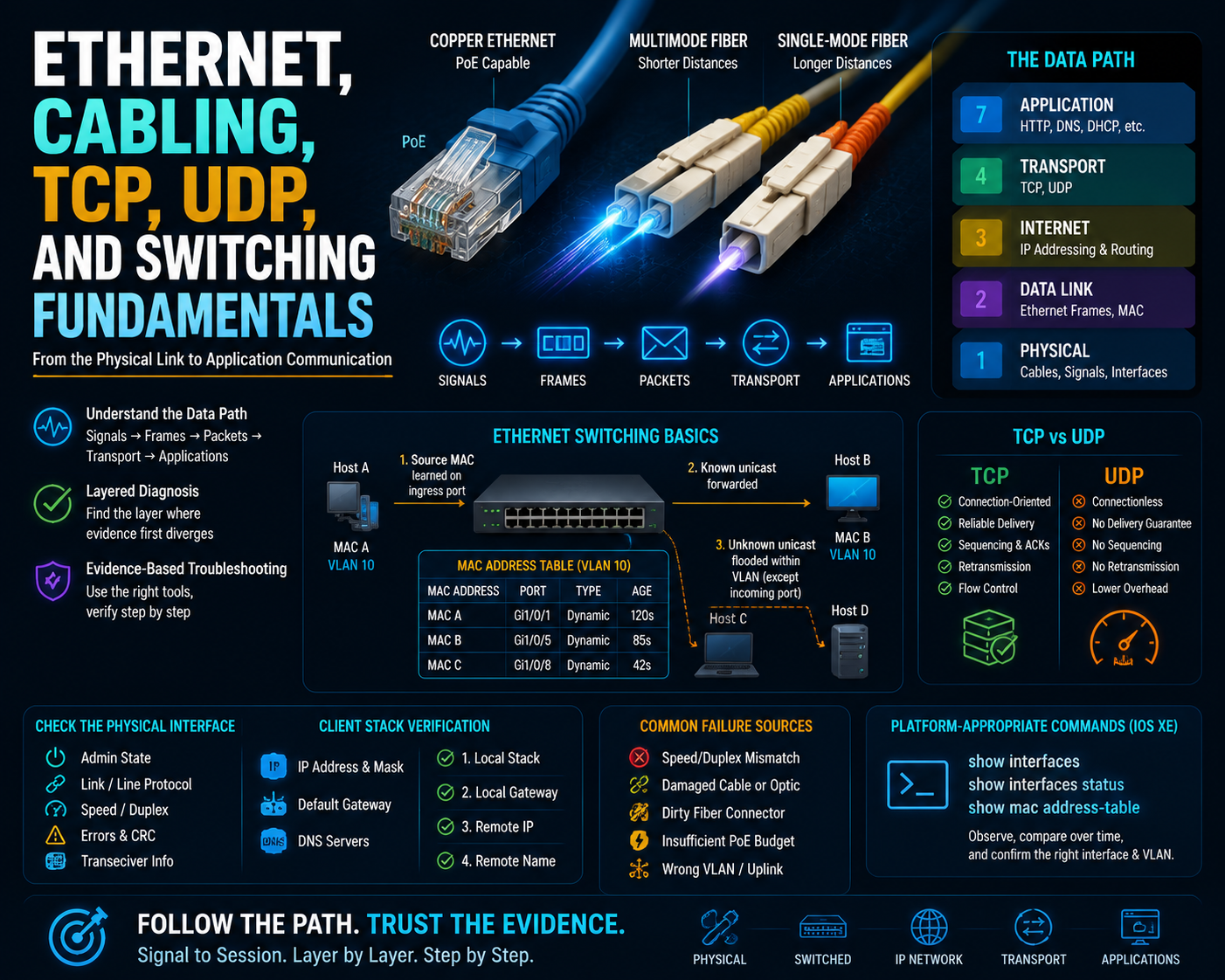
Ethernet, Cabling, TCP, UDP, and Switching Fundamentals
Reliable network diagnosis begins with the physical link and follows data upward.
12 · Study & Preparation · Guide
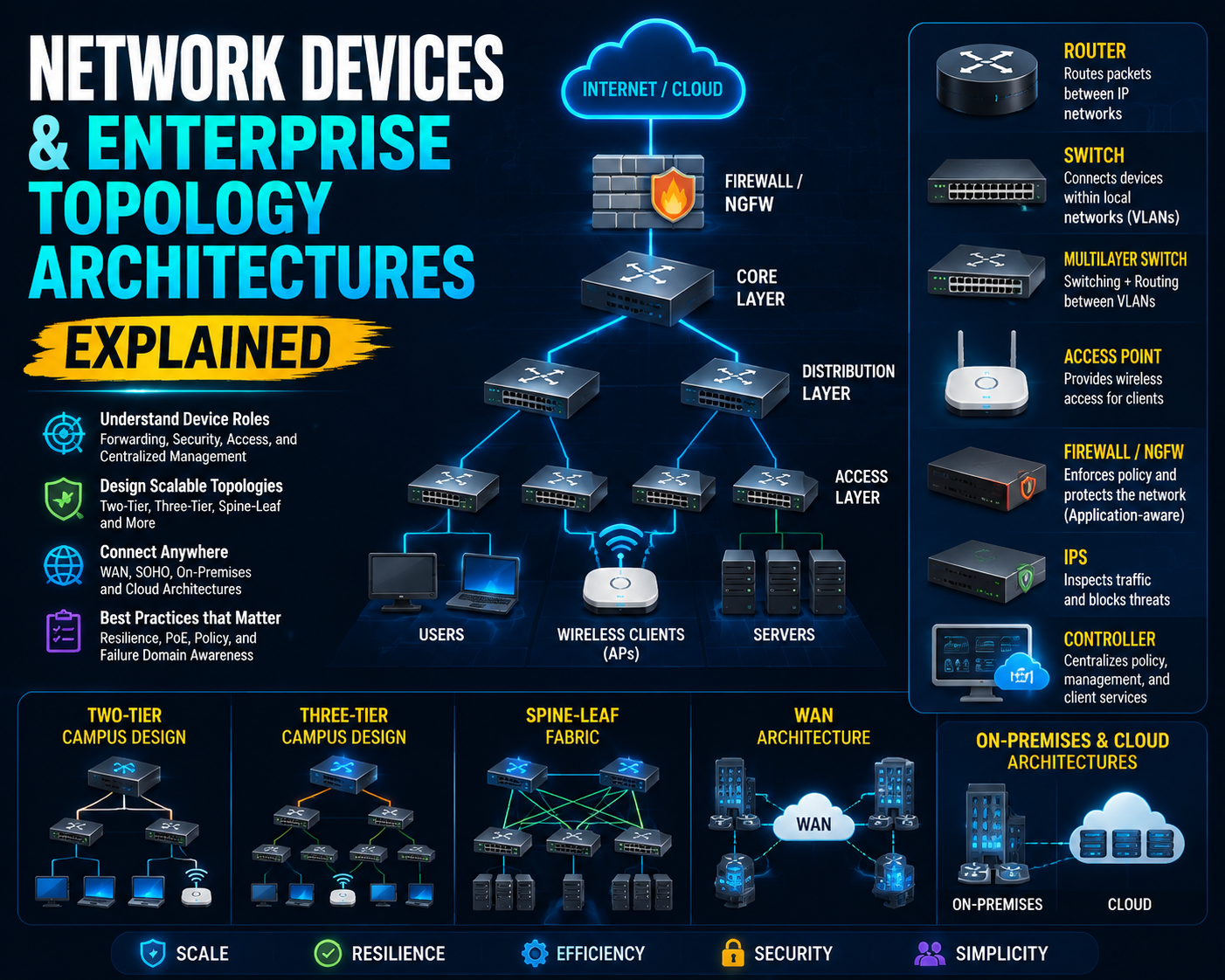
Network Devices and Enterprise Topology Architectures Explained
Network architecture becomes easier to reason about when every component has a clear responsibility.