
Microsoft Certified: Power Platform Developer Associate
AB-400 Articles & Study Guides
Explore focused explanations and study guides for Power Platform Developer Associate.
24 articles published

Start here
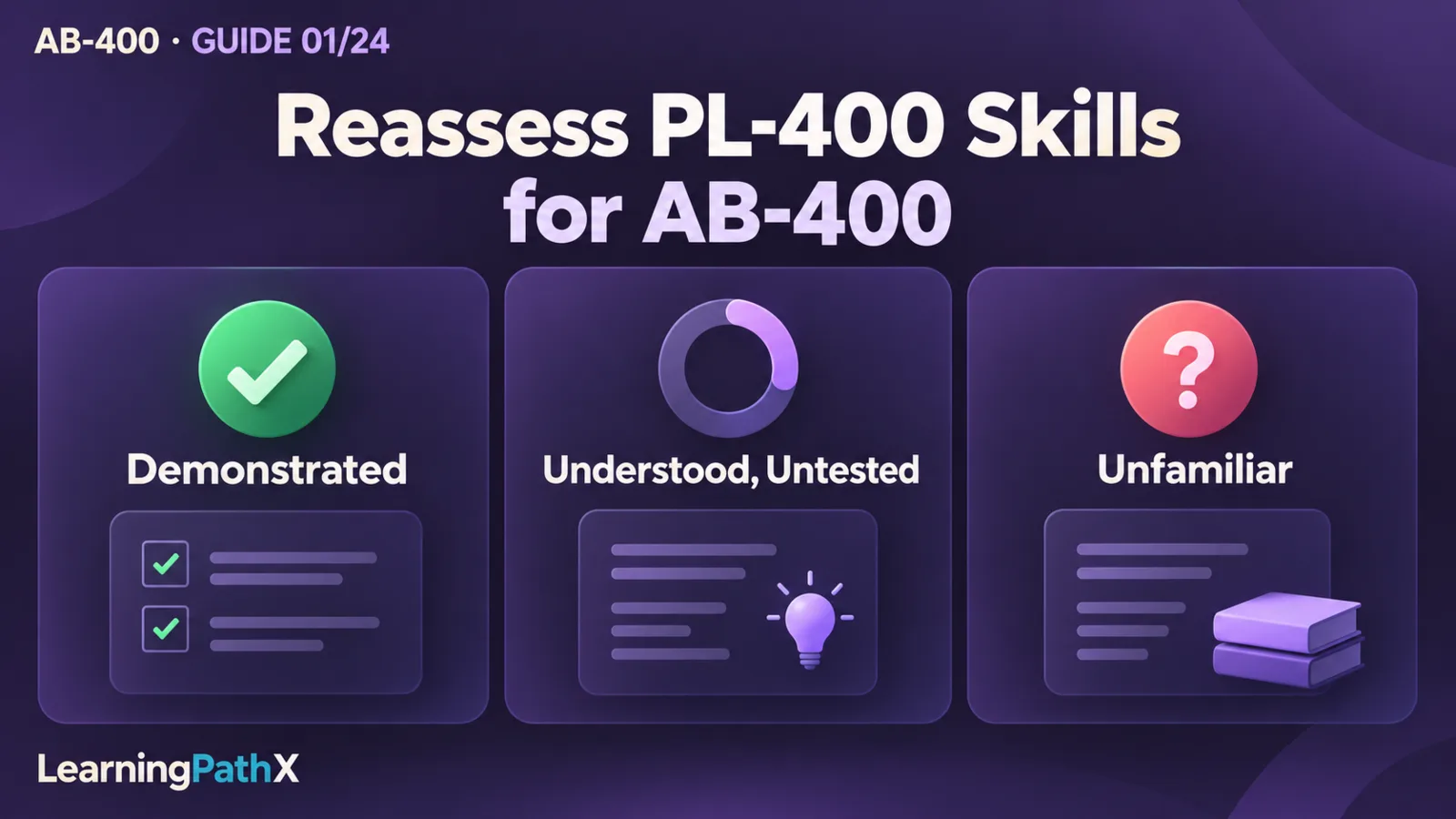
01 · Study & Preparation · Guide
AB-400: Certification Guide and the PL-400 Transition
AB-400 assesses developers who extend Microsoft Power Platform through custom user experiences, server logic, automation, integrations and agentic AI. It is associated with Microsoft Certified: Power Platform Developer Associate.
Explore AB-400 articles
Showing 13–24 of 24 articles
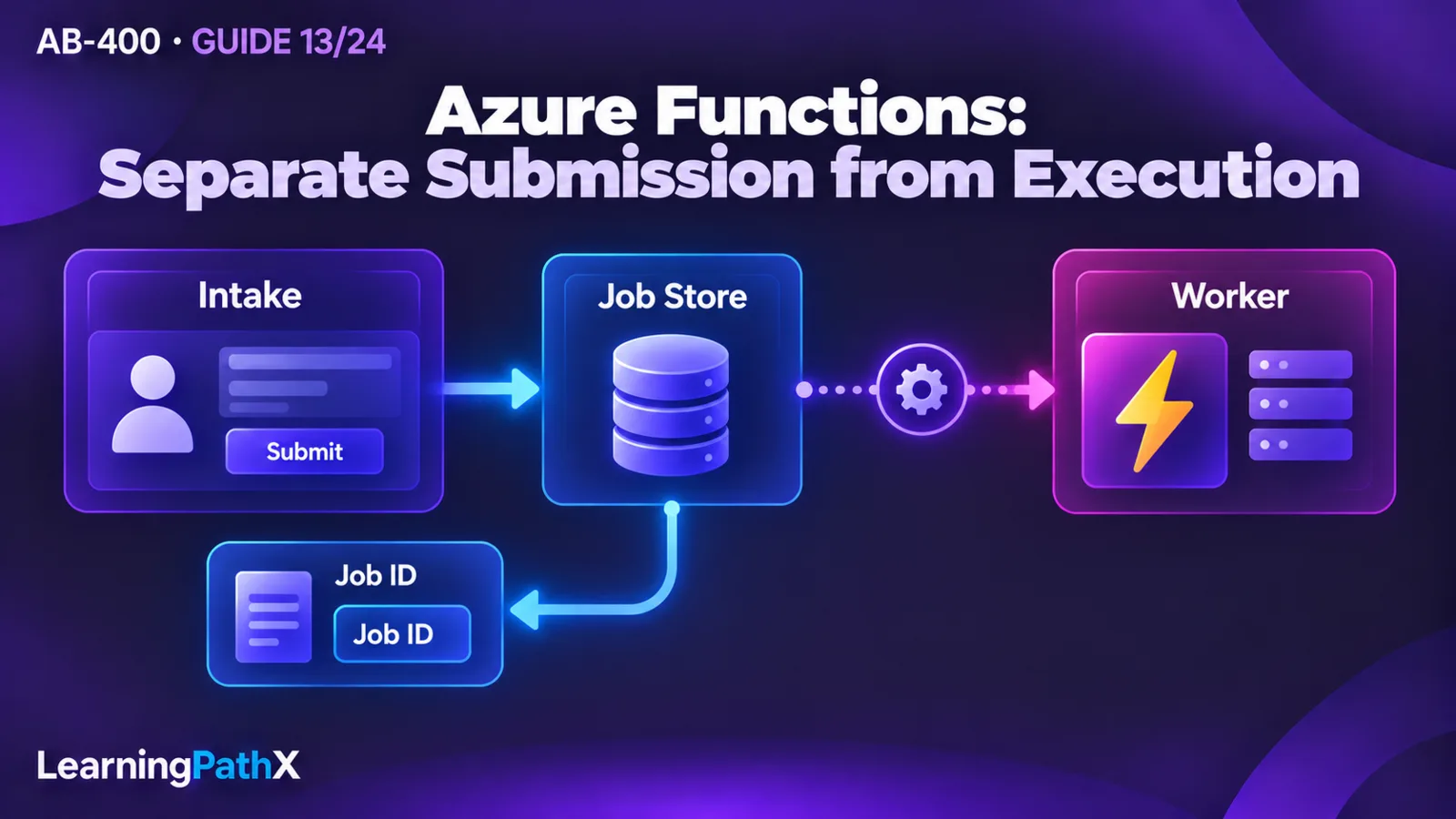
13 · Study & Preparation · Guide
AB-400: Azure Functions for Power Platform Workloads
Use Azure Functions for Power Platform workloads by separating submission from execution: accept a bounded request, persist an identifiable job, and let a scheduled or event-driven worker process it independently of the caller.
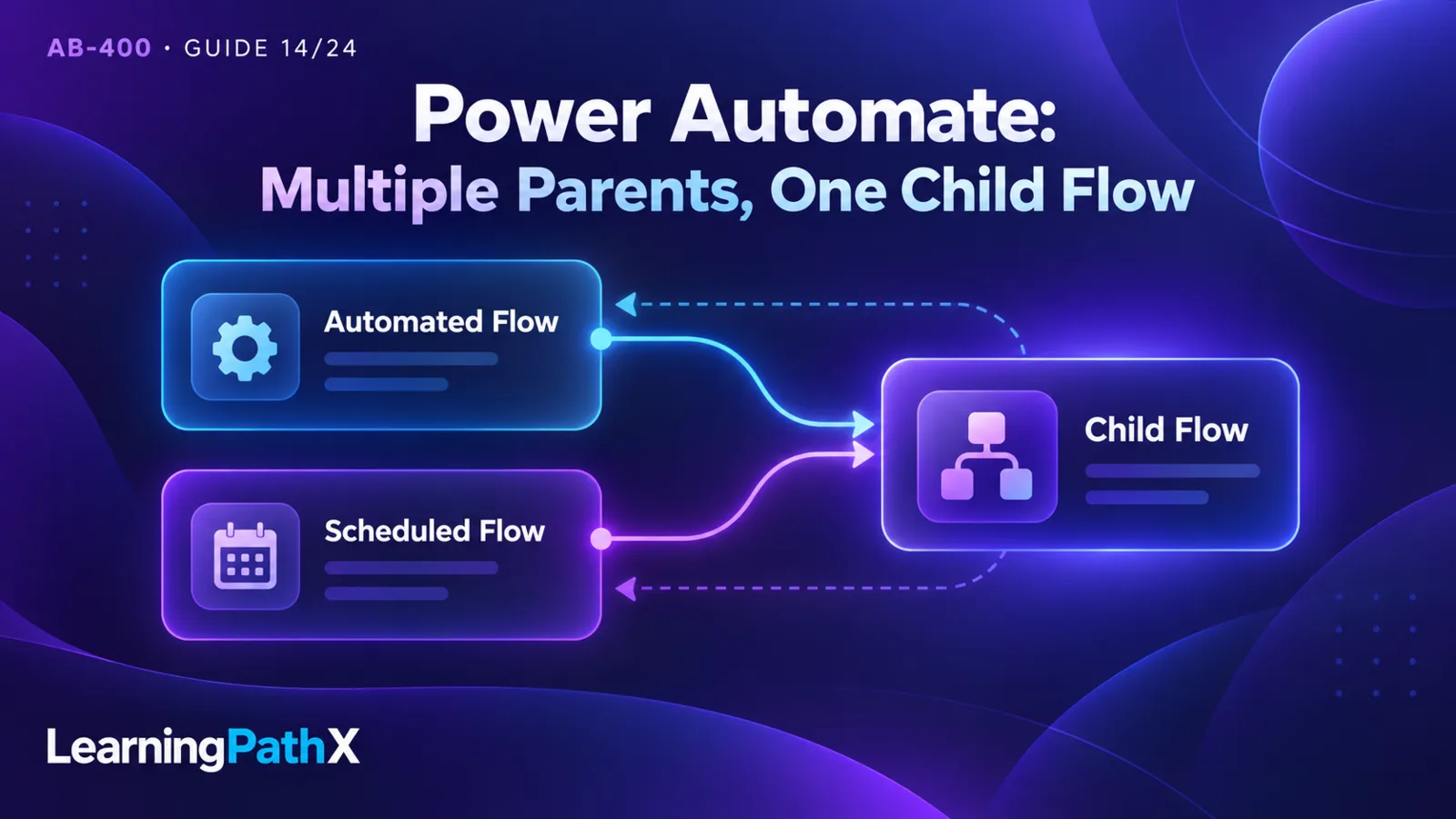
14 · Study & Preparation · Guide
AB-400: Reliable Cloud Flows and Copilot Studio Workflows
To implement reliable cloud flows and Copilot Studio workflows, define a typed input/output contract, filter irrelevant events at the trigger, validate admitted requests, and put reusable work behind an explicit child-flow boundary.
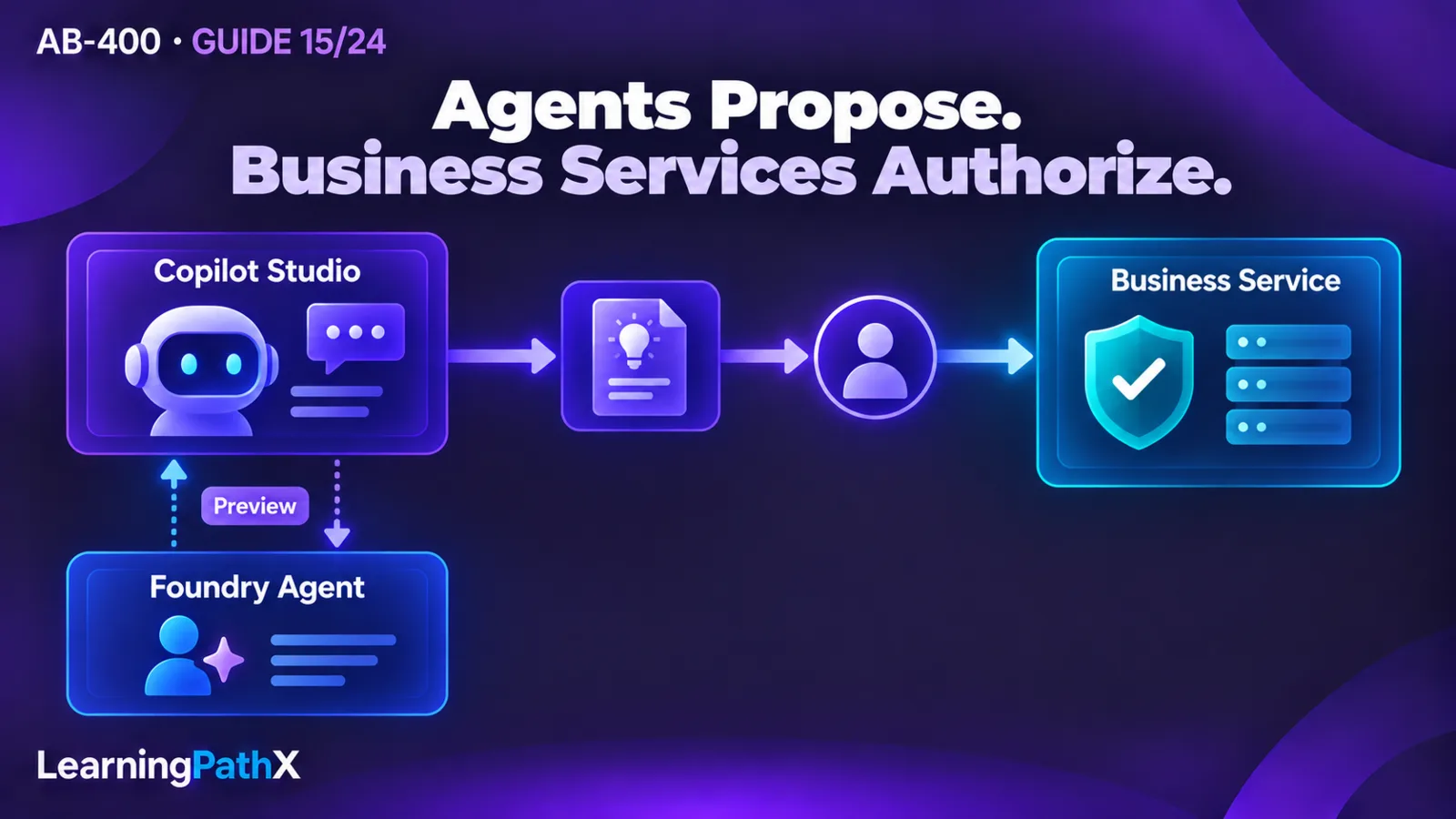
15 · Study & Preparation · Guide
AB-400: Integrating Foundry and Copilot Studio Agents
Compose Microsoft Foundry and Microsoft Copilot Studio around explicit ownership: the application owns its user session, Copilot Studio owns the conversation it orchestrates, a connected Foundry agent performs a bounded specialist task,…
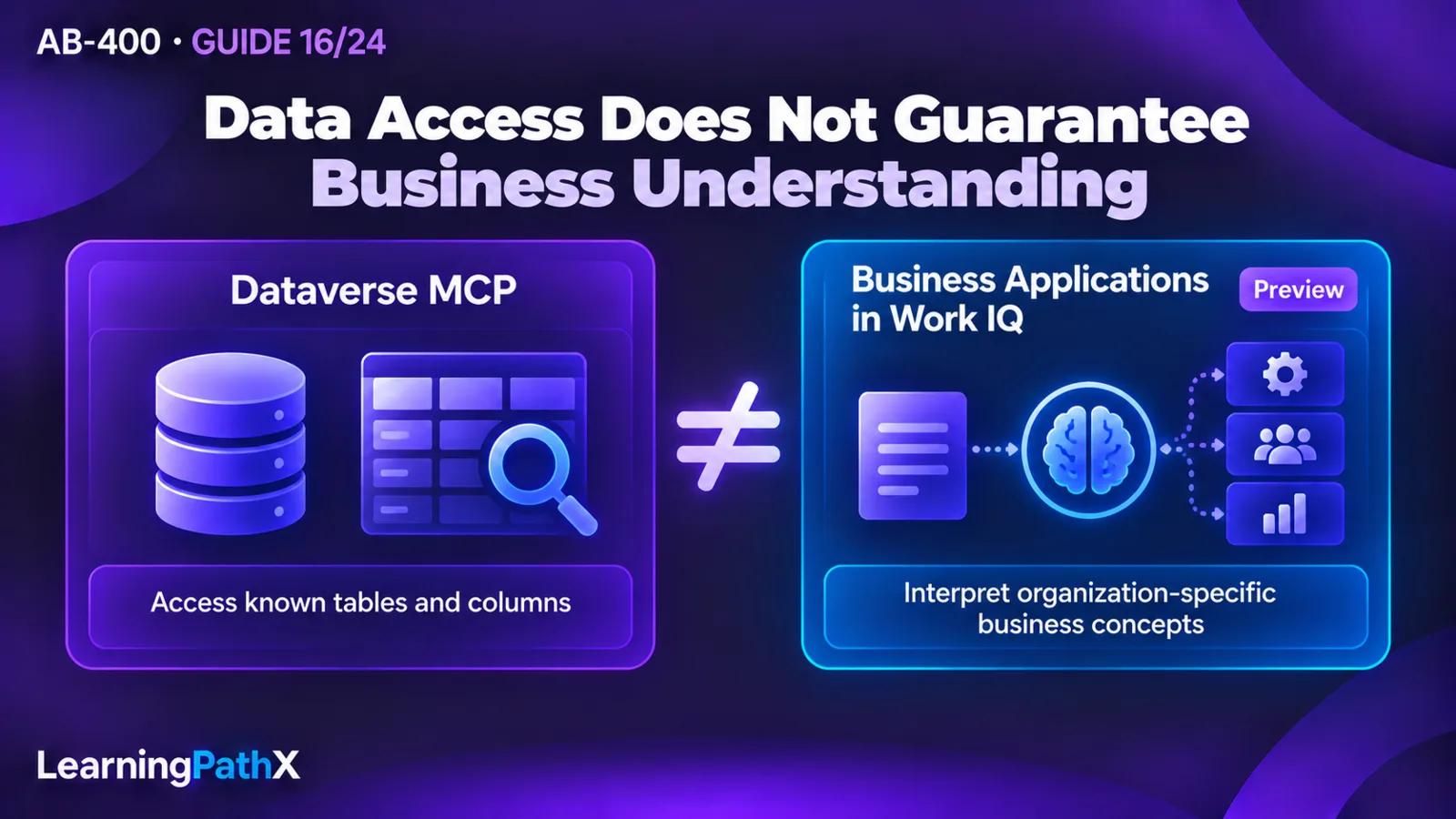
16 · Study & Preparation · Guide
AB-400: Dataverse MCP and Work IQ Access for Agents
Choose Dataverse Model Context Protocol (MCP) access when an agent needs a discoverable interface to a particular Microsoft Dataverse environment's data and operations.
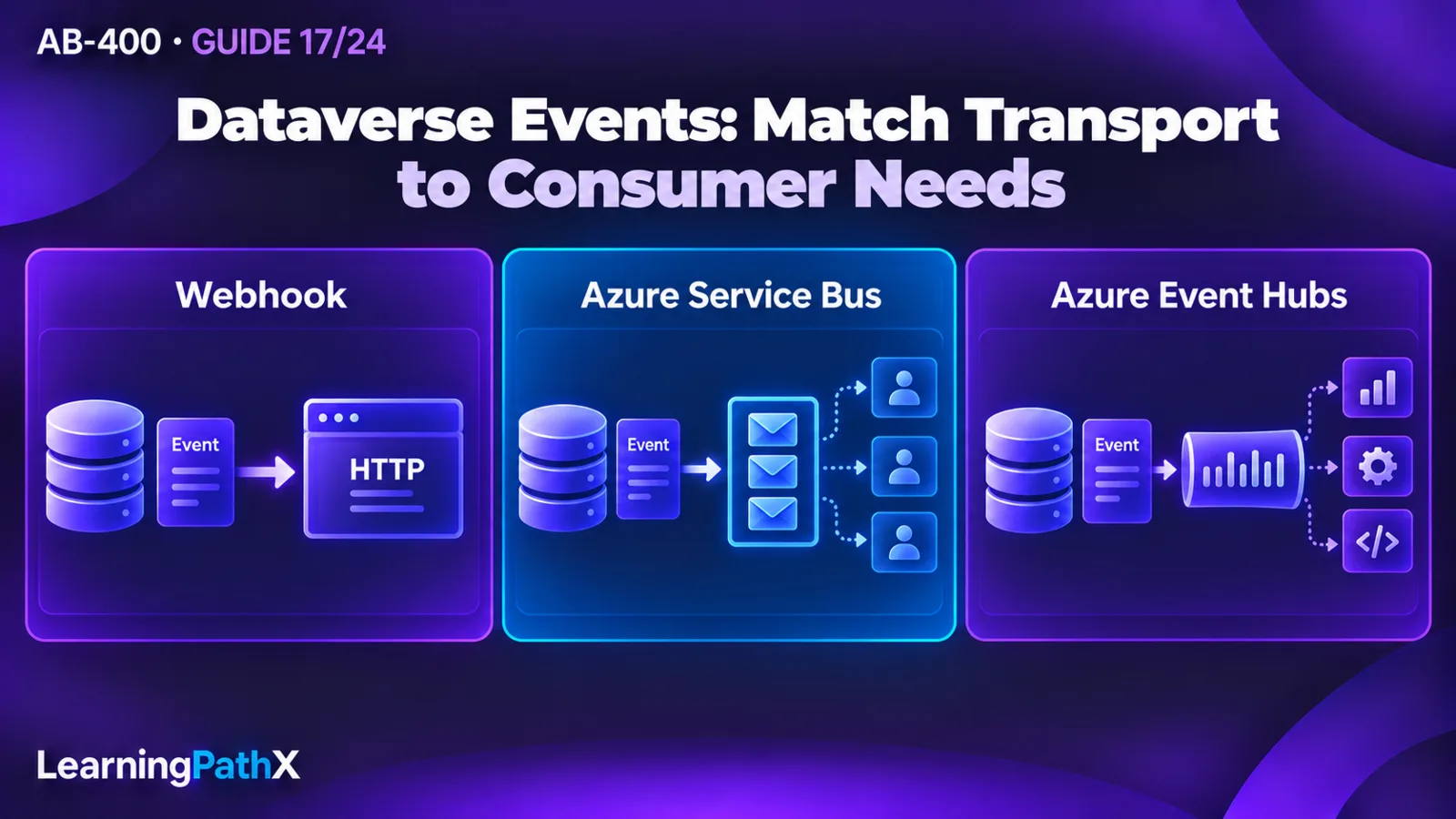
17 · Study & Preparation · Guide
AB-400: Publishing Dataverse Events to External Services
Choose a Dataverse event delivery path from the consumer's operating contract: use a webhook for an HTTP receiver that can absorb the expected traffic, Azure Service Bus when queued work or independent subscriptions are needed, and Azure…
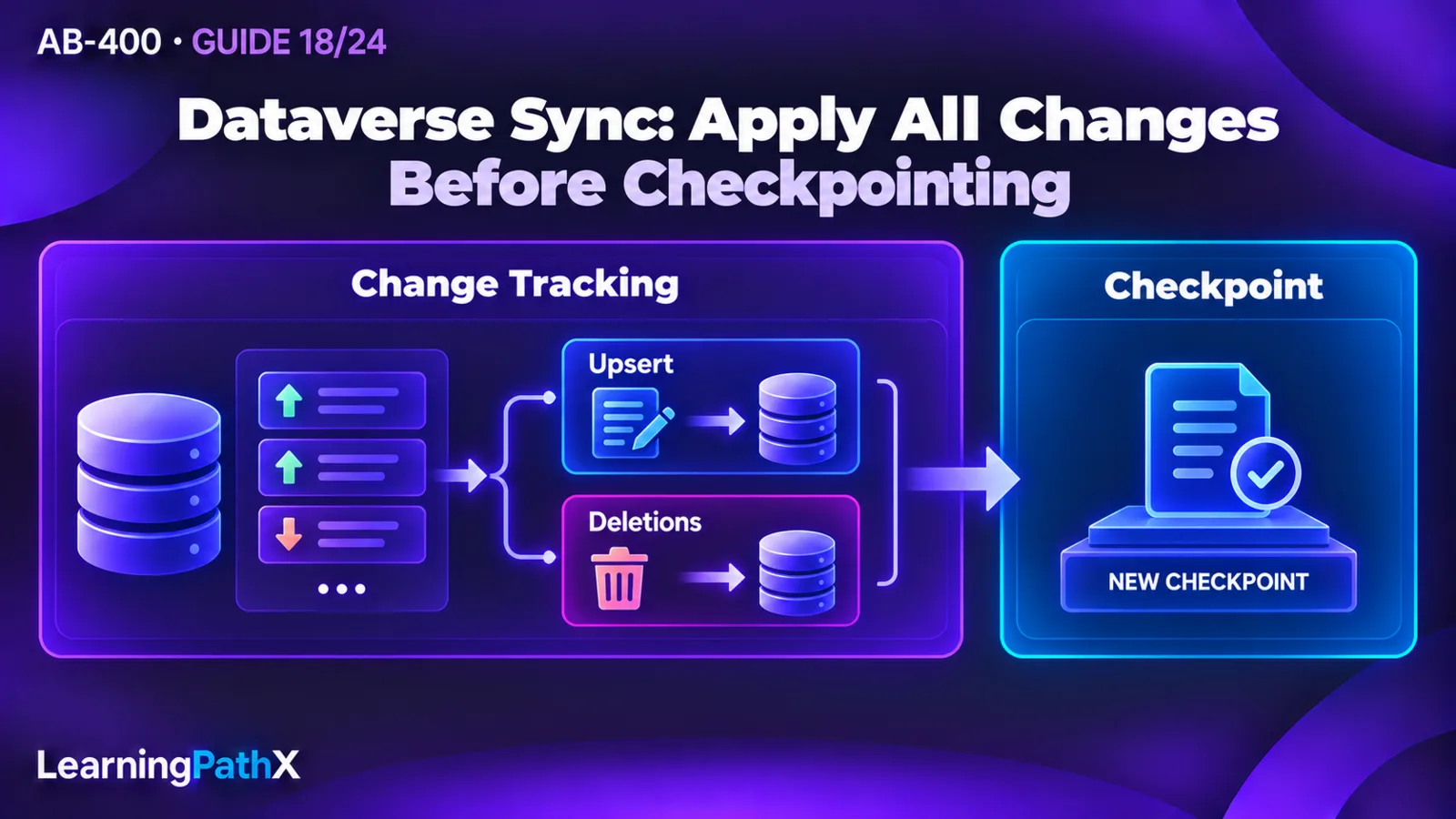
18 · Study & Preparation · Guide
AB-400: Synchronizing Dataverse with Change Tracking and Upsert
Build a restartable Dataverse synchronization loop by assigning field ownership, fixing a stable identity, completing an initial extraction, then applying each change-tracking interval before committing its next token.
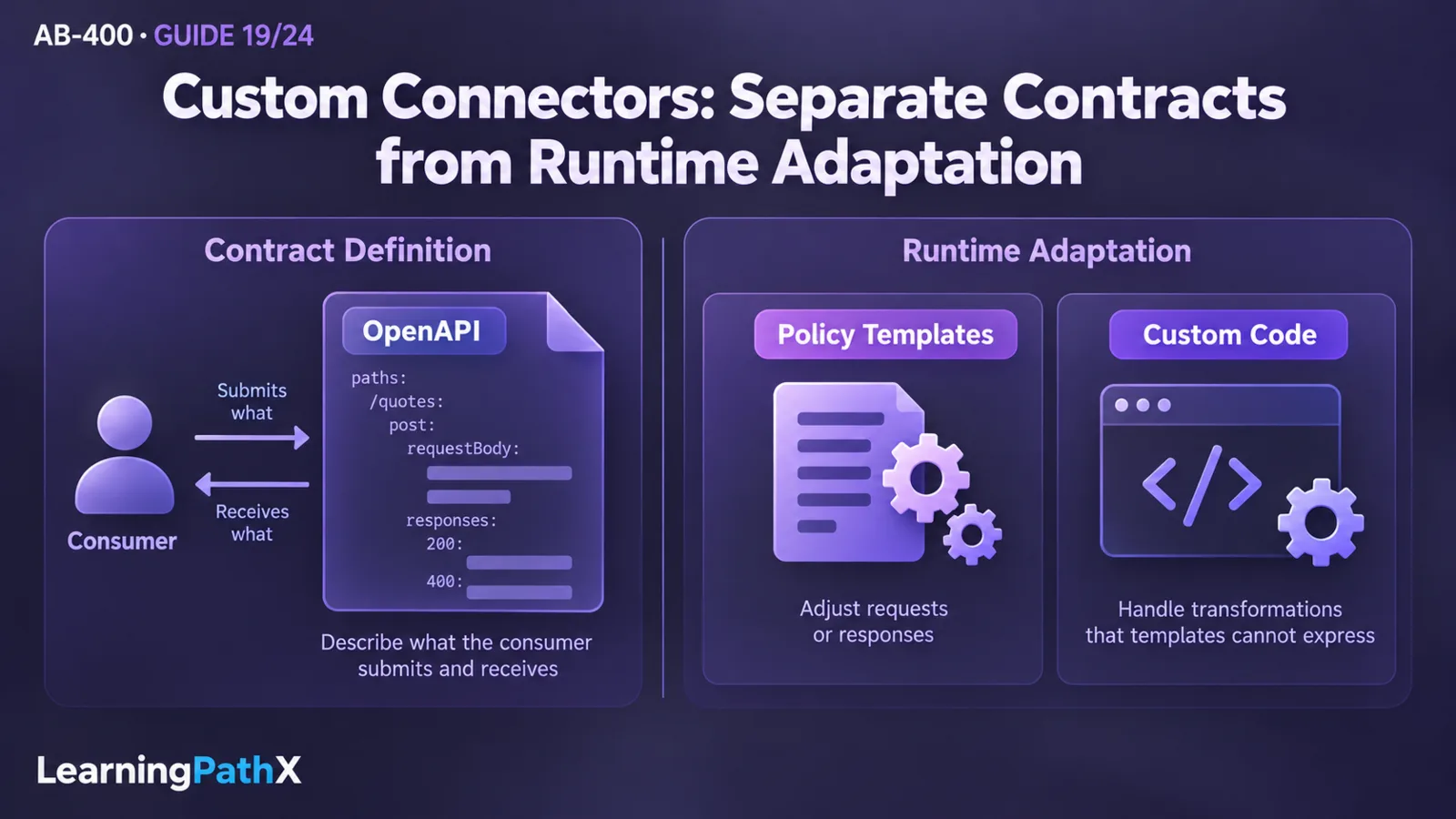
19 · Study & Preparation · Guide
AB-400: Custom Connectors with OpenAPI, Policies and Code
Expose an authenticated external API through a Power Platform custom connector by reviewing its OpenAPI contract, importing a controlled definition into a development solution, matching the connector's authentication to the API, and…
20 · Study & Preparation · Guide
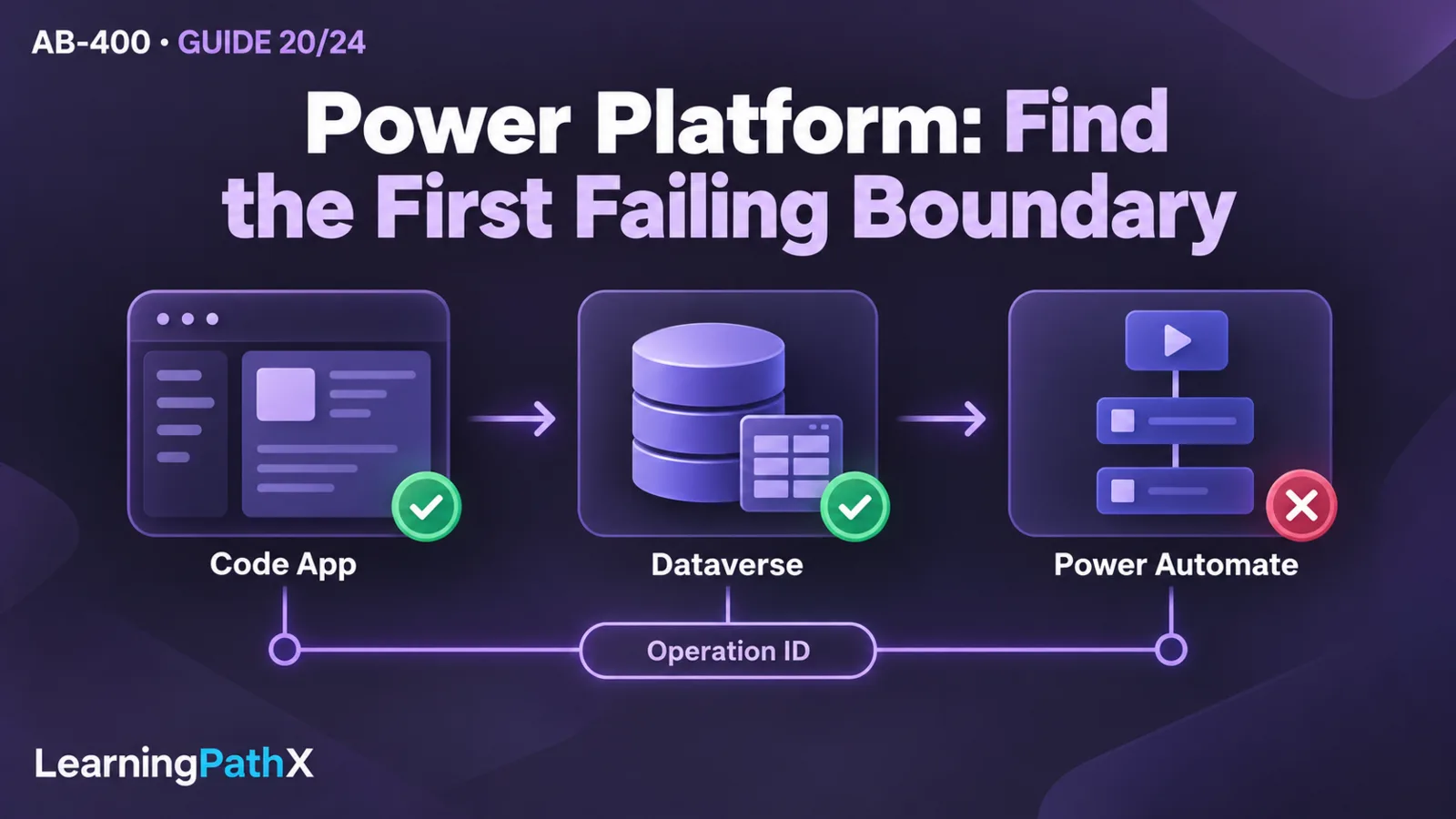
AB-400: Tracing Failures Across Power Platform Extensions
Detect a failed business operation by monitoring both component health and the business outcome, then isolate it by finding the first boundary where observed evidence differs from the expected contract.
21 · Study & Preparation · Guide
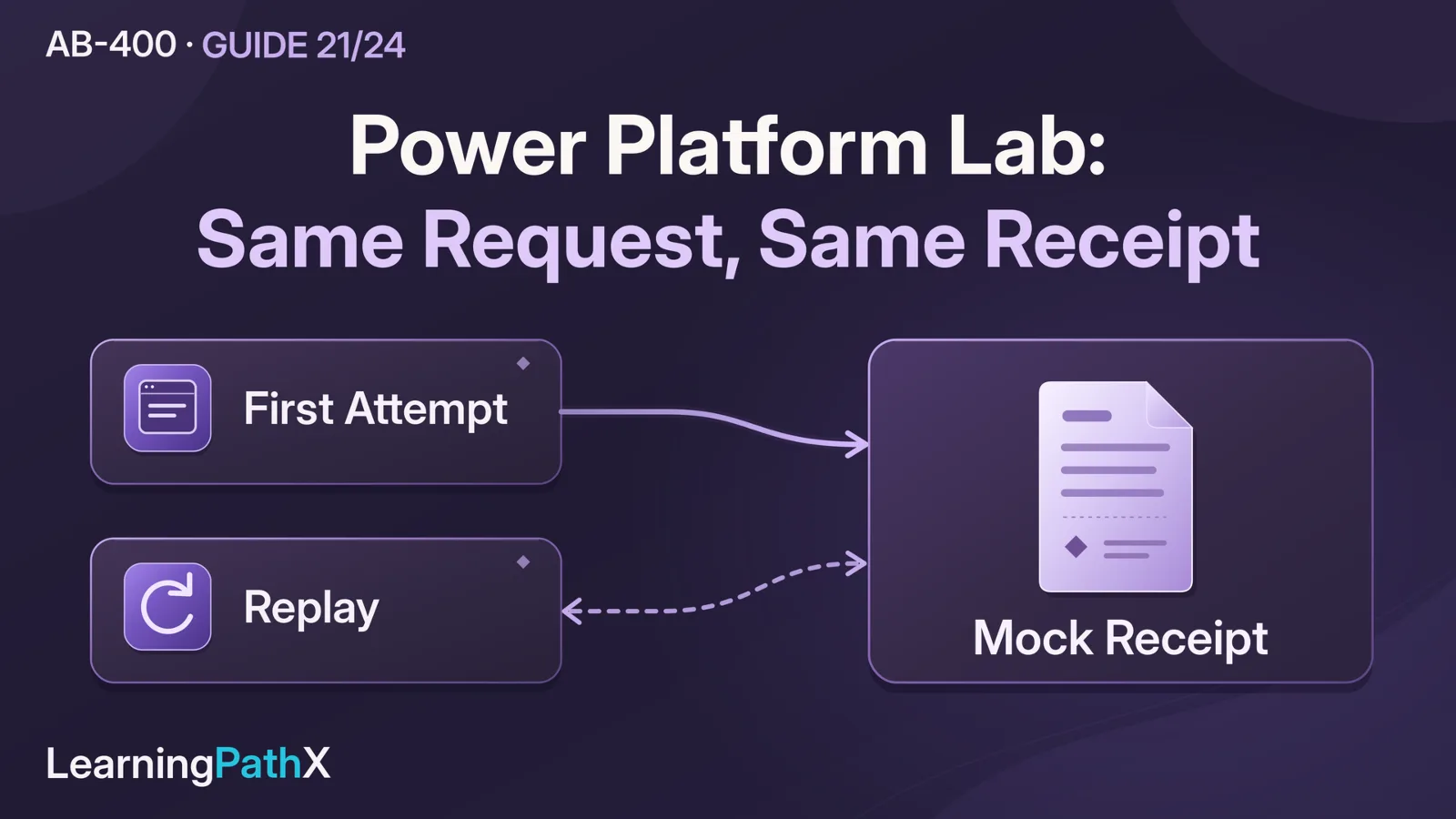
AB-400: Lab: A Governed Service Request Integration
Validate a governed service request integration by creating one request with a stable external identity, dispatching it through solution-aware parent and child flows, and checking a durable mock receipt.
22 · Study & Preparation · Guide
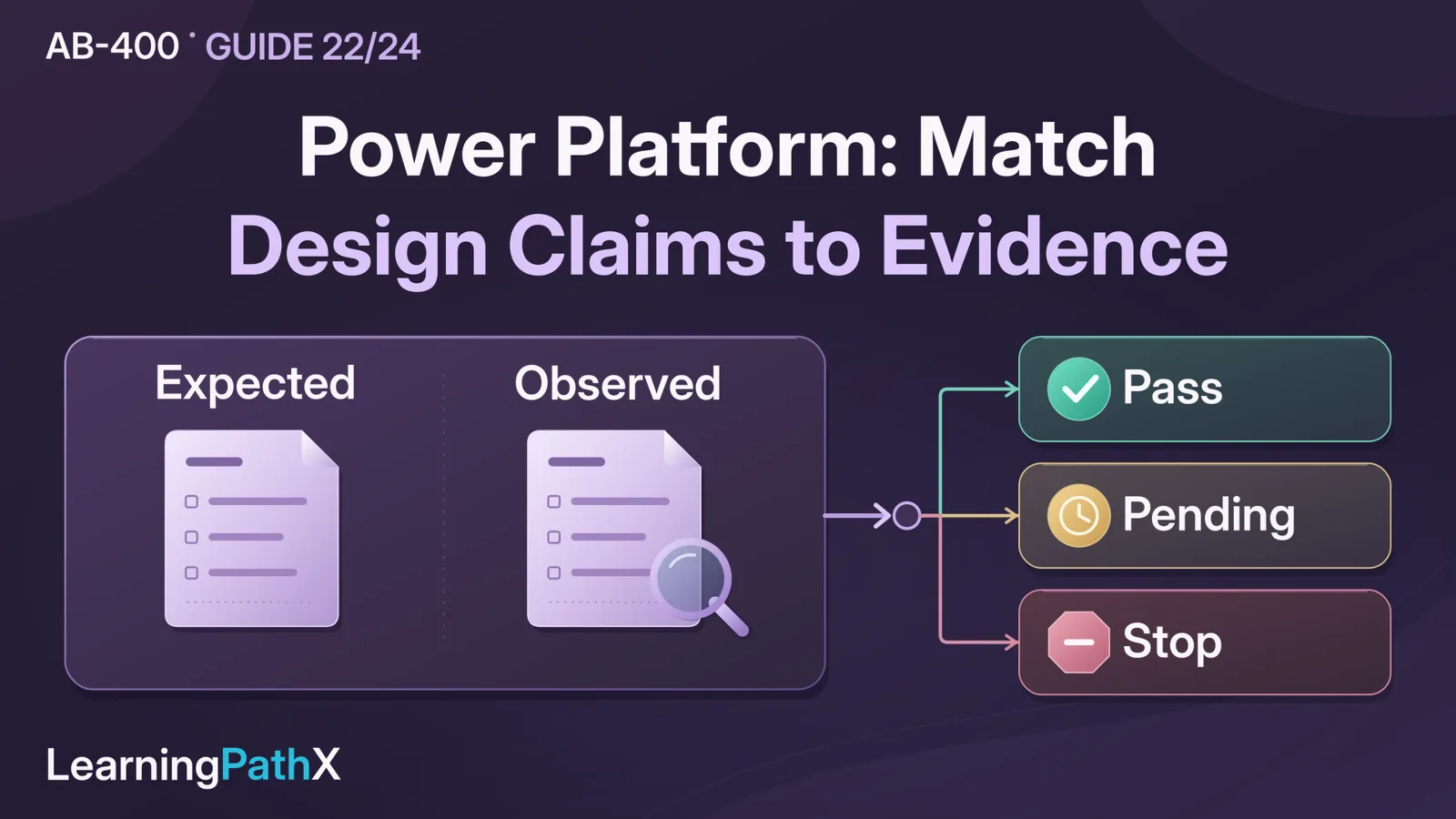
AB-400: Extension Design and Reliability Review Checklist
A sound Microsoft Power Platform extension design can show where a business rule is enforced, which identity crosses each boundary, what succeeds or rolls back together, and how a caller discovers the final outcome.
23 · Study & Preparation · Guide
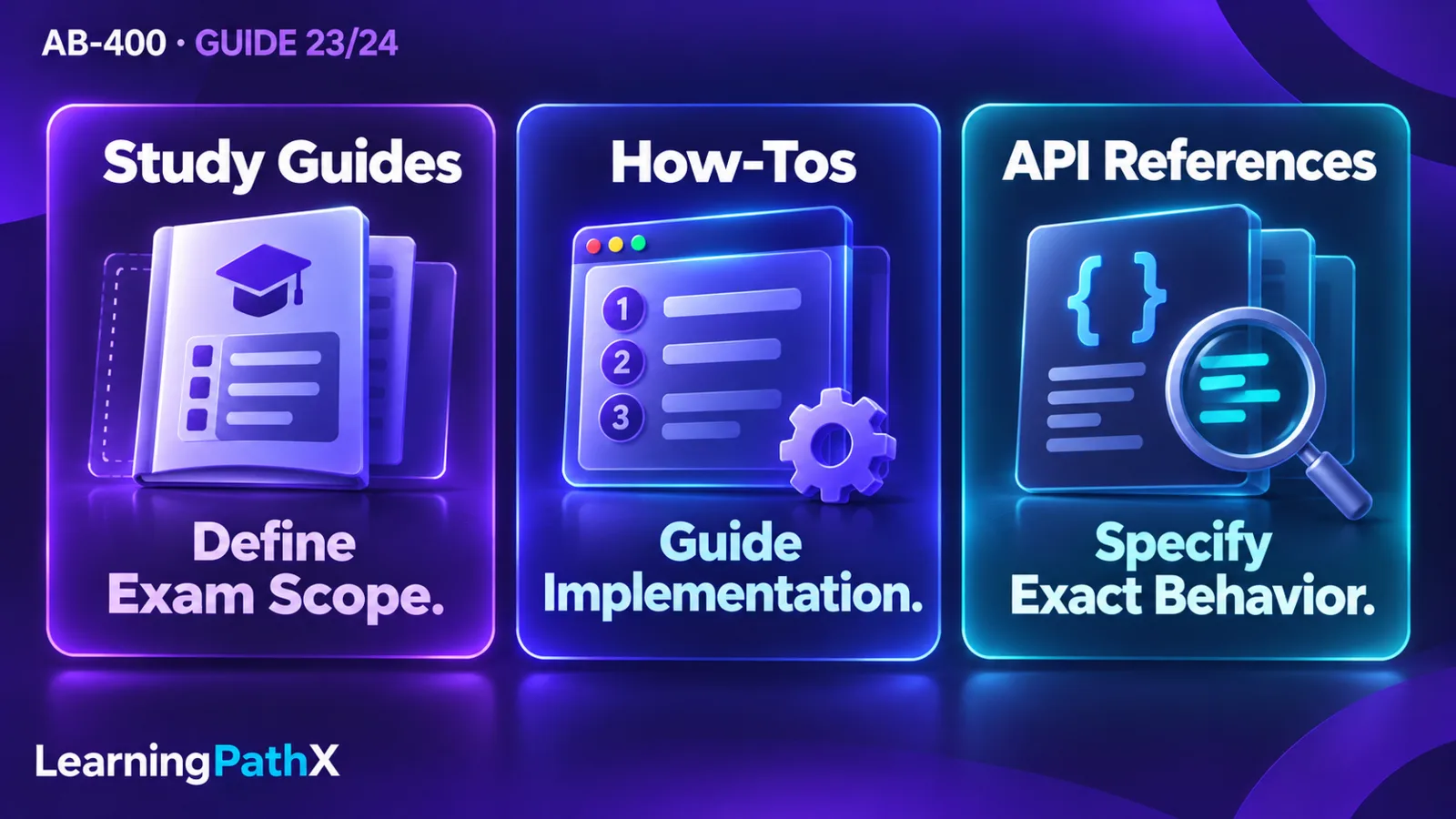
AB-400: Navigating Official Developer Documentation
Use the AB-400 study guide to decide what to learn, the exam and certification pages to establish credential context, and the relevant product documentation to decide how a solution works.
24 · Study & Preparation · Guide
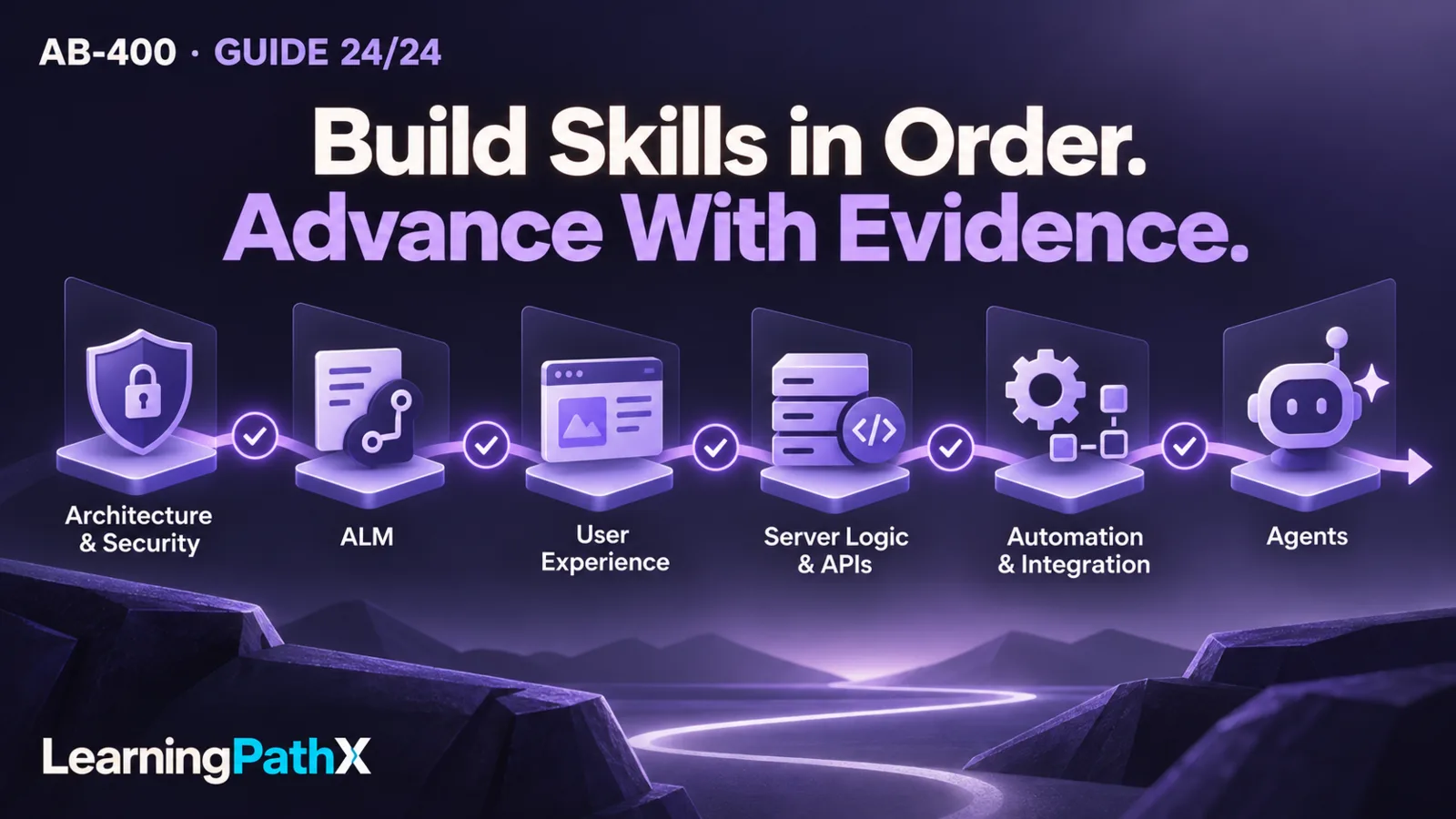
AB-400: A Skills Roadmap for Power Platform Developers
Build a skills roadmap for Power Platform developers in this order: architecture and security, application lifecycle management (ALM), user experience, server logic and API reliability, automation and integration, then agents and governed…