
VMware · VMware Certified Advanced Professional - VKS
3V0-24.25 Free Learning Path
Start with 10 free learning topics for Advanced VMware Cloud Foundation 9.0 vSphere Kubernetes Service.
10 free/ 33 total
53 free/ 171 total
PUBLIC BETA OFFER
Save 50% off on an Eligible Learning PlanValid for 1-month plan, 3-month plan, 12-month plan · Code LPXBETA50 · Ends Nov 4, 2026
VMware · VMware Certified Advanced Professional - VKS
Start with 10 free learning topics for Advanced VMware Cloud Foundation 9.0 vSphere Kubernetes Service.
Included free
Study resources
Guides and study preparation resources for this certification.
Preparation for VMware Certified Advanced Professional vSphere Kubernetes Service (3V0-24.25) should build demonstrable technical skills across VMware Cloud Foundation (VCF) 9.0 and VMware vSphere Kubernetes Service (VKS).
VMware vSphere Kubernetes Service (VKS) lifecycle operations depend on compatible versions, complete package content, registry reachability, authentication, and trusted certificate chains.
Networking and storage failures in VMware vSphere Kubernetes Service (VKS) often surface as Kubernetes symptoms even when their cause is an infrastructure dependency.
Day-2 operations begin after a VMware vSphere Kubernetes Service (VKS) cluster becomes ready. The objective is to maintain service health, capacity, security, and recoverability while detecting degradation before it becomes an outage.
Data protection for VMware vSphere Kubernetes Service (VKS) must cover more than virtual machines or persistent volumes.
VMware vSphere Kubernetes Service (VKS) lifecycle management coordinates Kubernetes versions, cluster nodes, platform services, and dependent packages.
Explore video explanations for this subject.
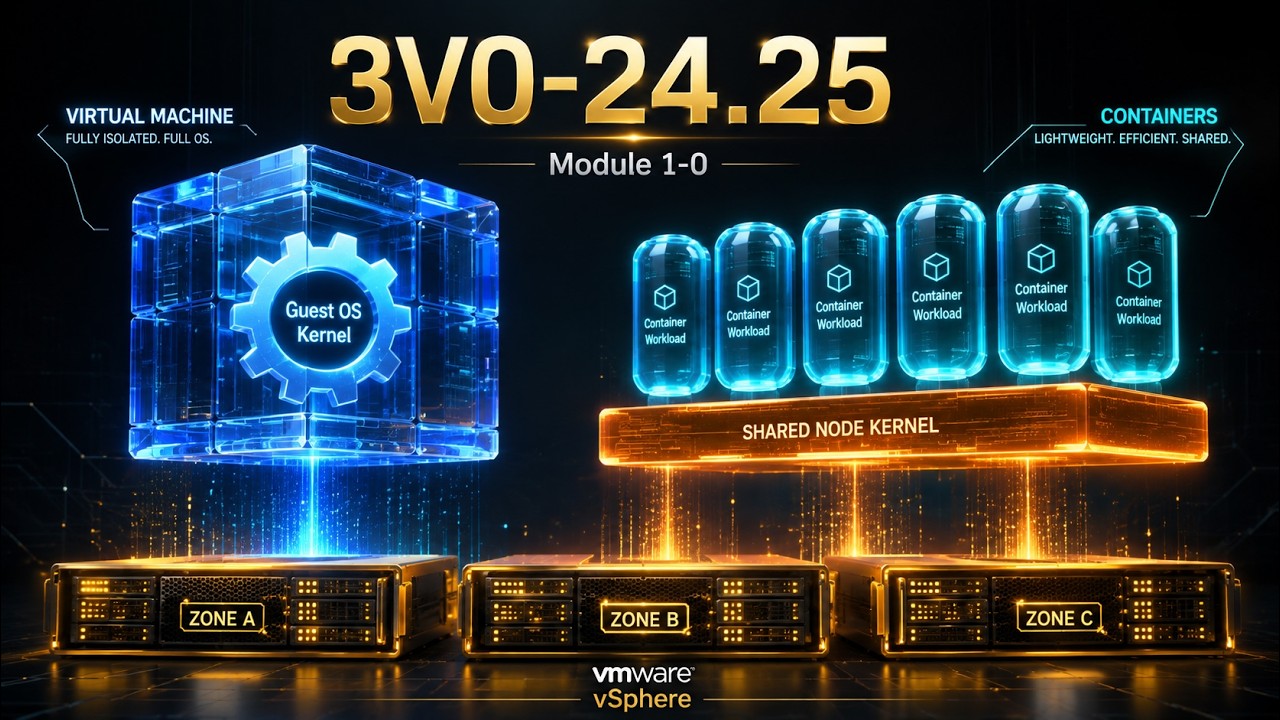 7:07
7:07In this first module of the VCF 9.0 Architect Certification series, we build the architectural foundation needed to make correct workload decisions under exam conditions. Many candidates understand individual technologies but struggle when the exam presents real-world design scenarios. The challenge is not remembering definitions — it is understanding where each workload model fits and why. In this video, we break down: The fundamental boundary between virtual machines and containers Why Supervi
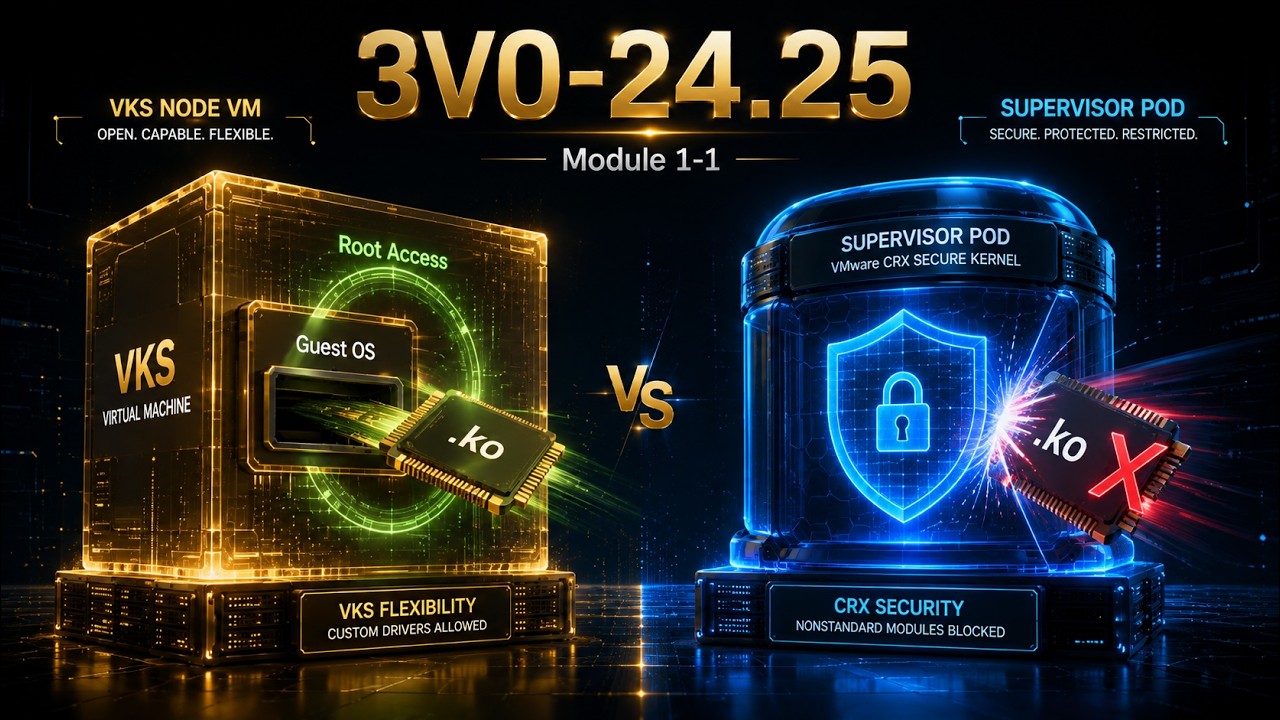 6:03
6:03In this video, we analyze a common VMware VCF 9.0 Architect certification scenario: choosing the correct compute model when an application requires a custom Linux kernel module or proprietary .ko driver. We’ll break down the difference between Supervisor Pods and VKS Node VMs, and why kernel capability becomes the deciding factor in architecture decisions. You’ll learn how to evaluate: Custom kernel module requirements Guest OS boundaries Workload isolation models Runtime ownership differences C
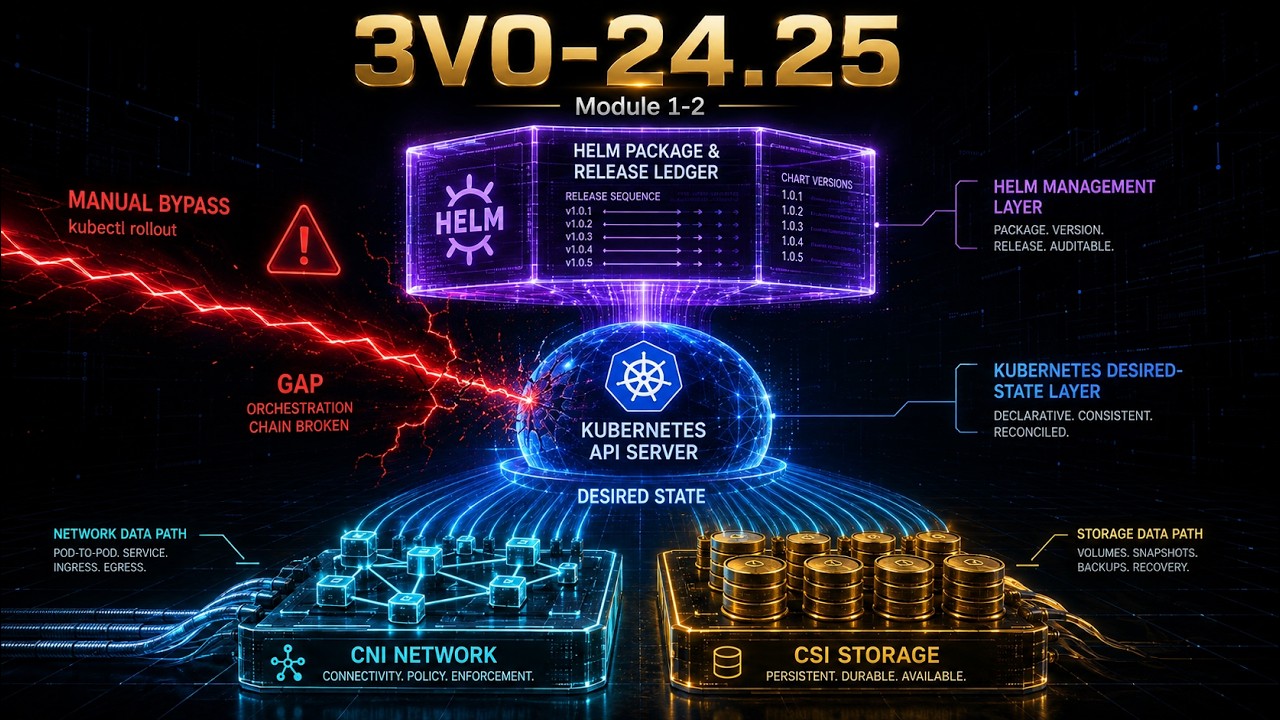 9:23
9:23In this video, we analyze a VMware VCF 9.0 Architect 3V0-24.25 certification scenario involving Helm deployments, Kubernetes desired state, and multi-layer application failures. We’ll explore why a failed Helm release does not always mean Helm is the problem, and why experienced architects must understand the separation between package management, Kubernetes controllers, networking, storage, and infrastructure dependencies. You’ll learn how to evaluate: Helm release history and revision tracking
 7:45
7:45In this video, we analyze a VMware VCF 9.0 Architect certification scenario focused on Supervisor reference architecture decisions. We’ll break down how architects choose between NSX VPC-based designs and VDS-backed Supervisor networking by evaluating business requirements, operational ownership, and infrastructure constraints. You’ll learn how to assess: Network fabric selection Tenant isolation requirements IP address planning and CIDR conflicts Load balancer capacity considerations Multi-zone
 8:47
8:47In this video, we analyze a VMware VCF 9.0 Architect certification scenario focused on choosing the correct network model for vSphere Namespaces. We’ll break down the differences between VDS-backed networks, NSX Segments, and NSX VPC designs, and explain why the correct architecture depends on requirements rather than feature availability. You’ll learn how to evaluate: Namespace network attachment models Tenant isolation requirements Address ownership and capacity planning Routing responsibiliti
 8:24
8:24In this video, we analyze a VMware VCF 9.0 Architect 3V0-24.25 certification scenario focused on vSphere Namespace ingress and egress architecture. We’ll break down how external traffic reaches Kubernetes workloads and how internal workloads communicate with external services through controlled outbound paths. You’ll learn how to analyze: DNS resolution and load balancer VIP mapping Avi Load Balancer traffic flow Kubernetes Services and EndpointSlices Namespace egress SNAT behavior Network polic
PUBLIC BETA OFFER
Valid for 1-month plan, 3-month plan, 12-month plan · Code LPXBETA50 · Ends Nov 4, 2026