
Microsoft Certified: Machine Learning Operations (MLOps) Engineer Associate
AI-300 Articles & Study Guides
Explore focused explanations and study guides for Operationalizing Machine Learning and Generative AI Solutions.
29 articles published

Start here
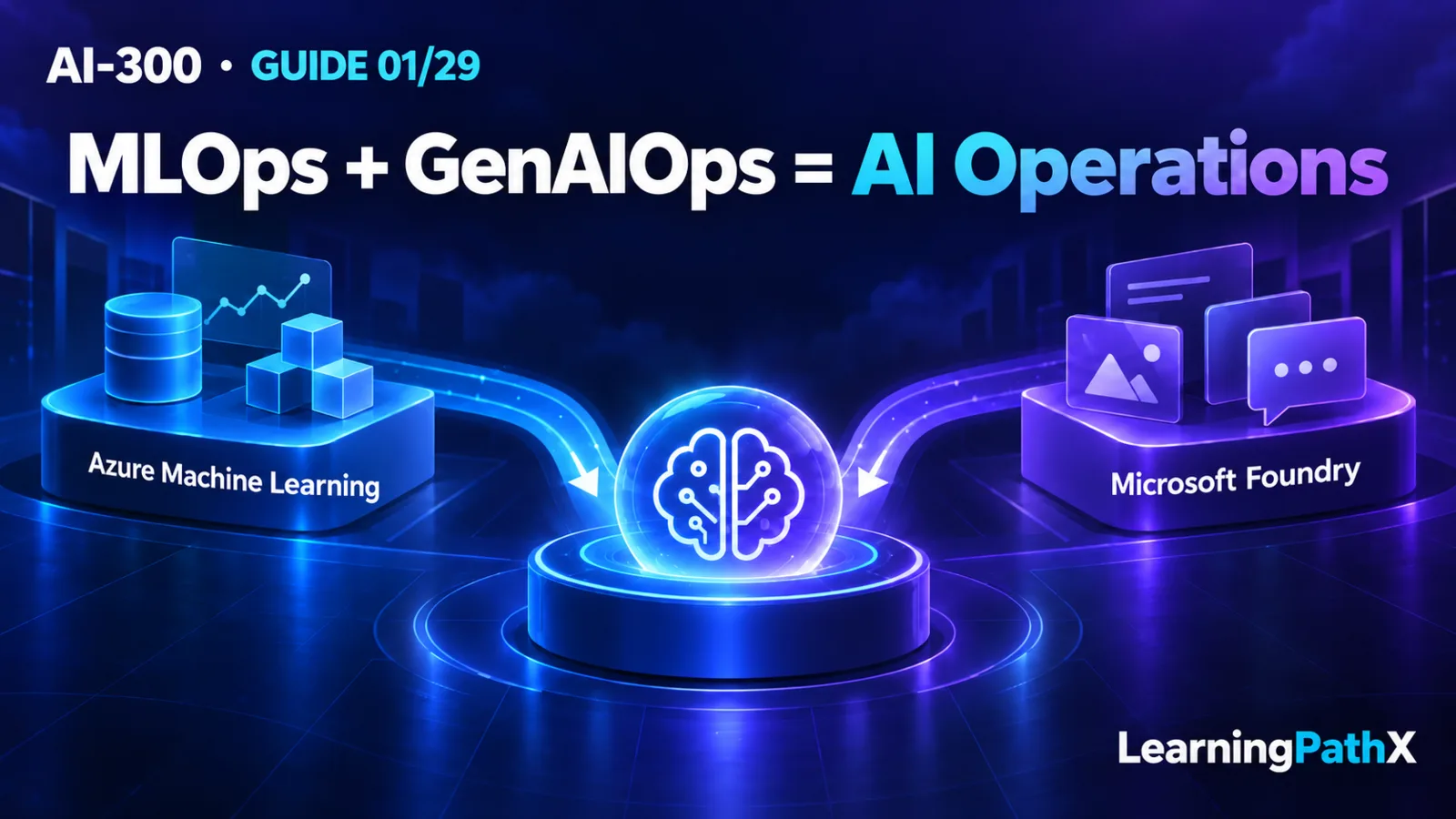
01 · Study & Preparation · Guide
AI-300: Certification Scope and the AI Operations Role
Introduction
Explore AI-300 articles
Showing 13–24 of 29 articles
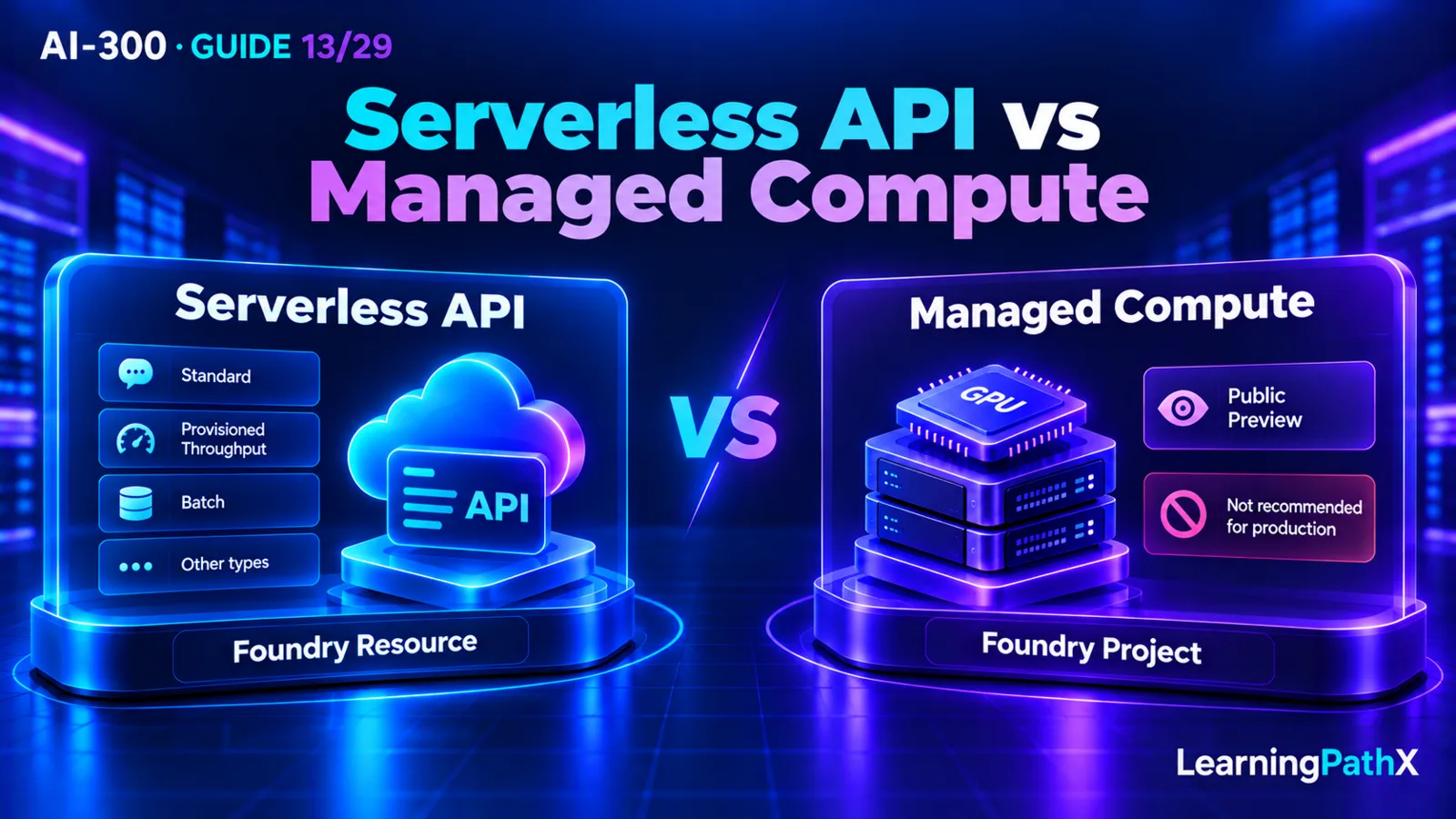
13 · Study & Preparation · Guide
AI-300: Choosing Foundry Model Deployment Options
When choosing Foundry model deployment options, start with a model that meets the application's quality and capability requirements, then reject deployment paths that violate production constraints.
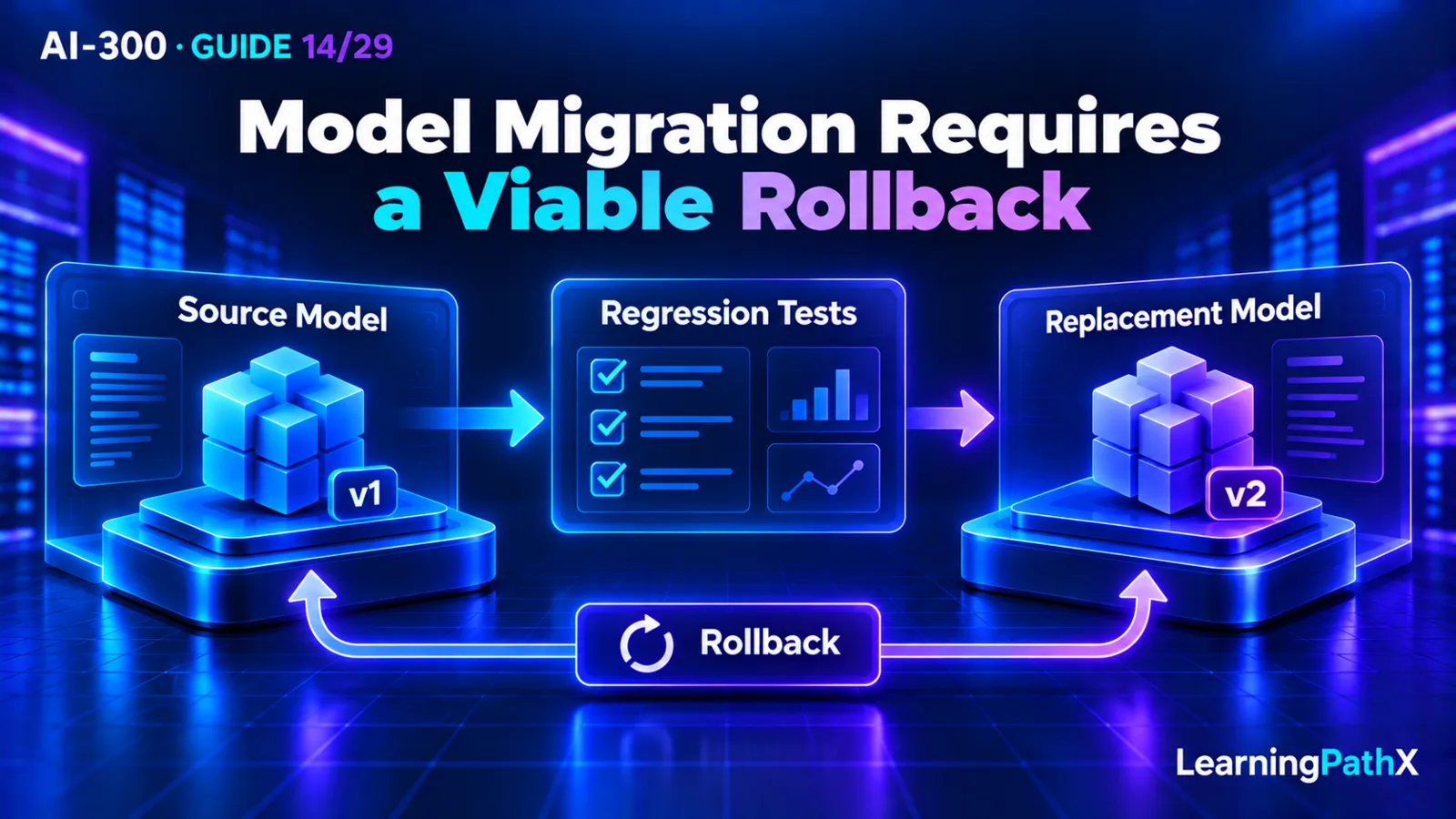
14 · Study & Preparation · Guide
AI-300: Migrating Production Base Models Safely
Change a production base model through a controlled sequence: discover the need and deadline, assess an available replacement, adapt the application, validate against fixed evidence, roll out in stages and retire the source deliberately.
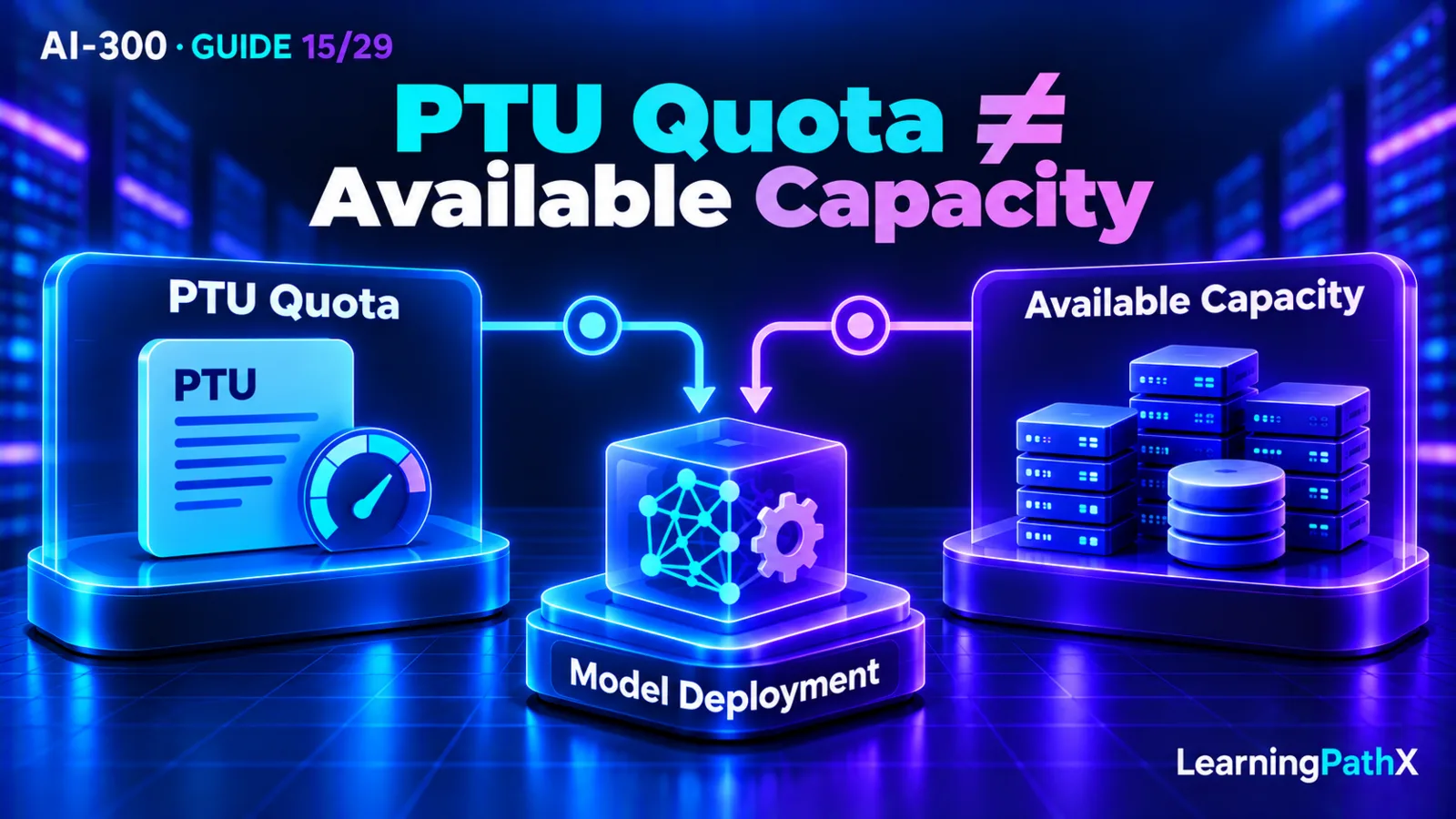
15 · Study & Preparation · Guide
AI-300: Sizing Provisioned Throughput and Checking Capacity
Choose provisioned throughput in Microsoft Foundry when measured, reasonably predictable demand and response-time requirements justify dedicated model-processing capacity.
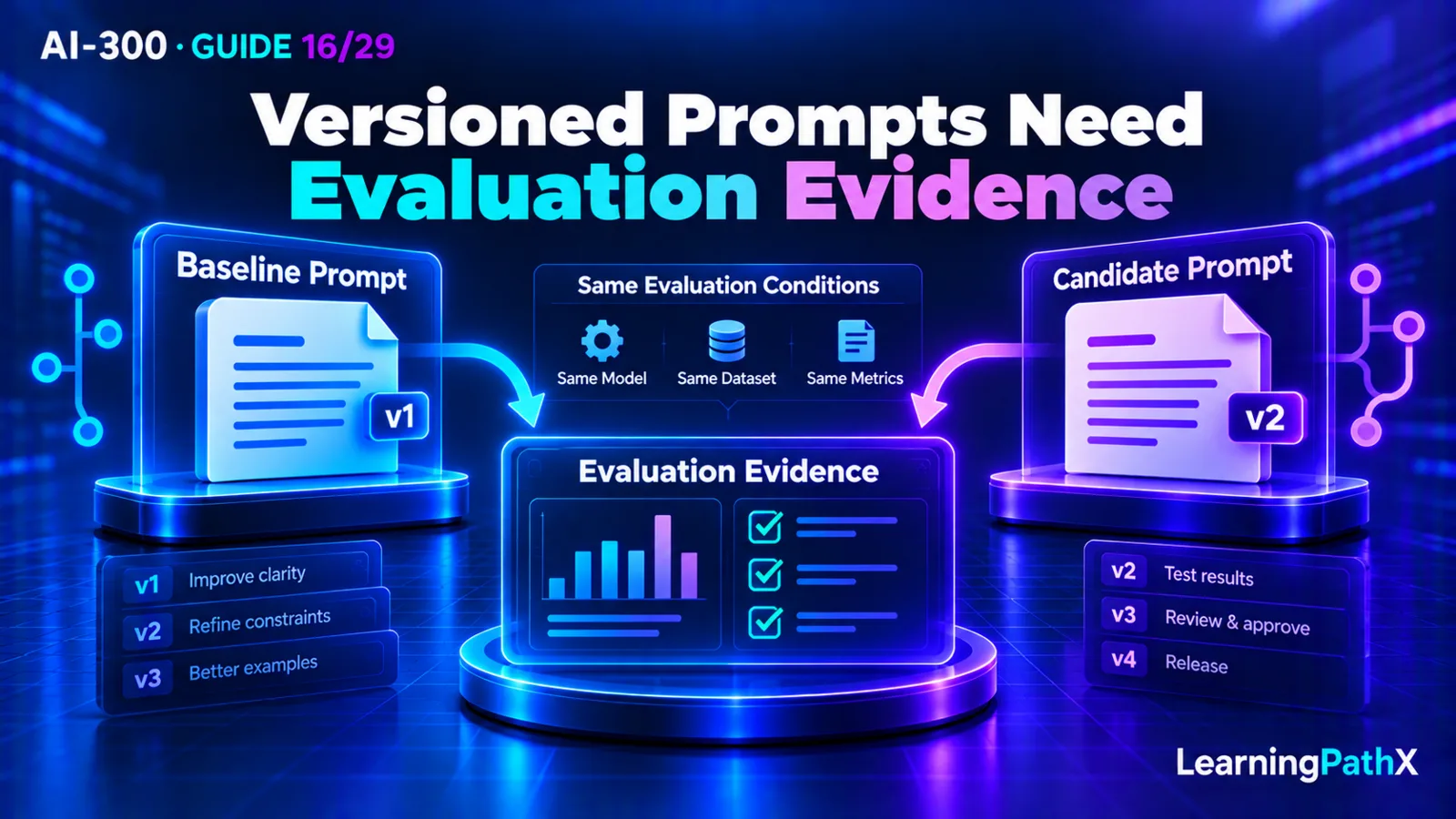
16 · Study & Preparation · Guide
AI-300: Versioning Prompts and Comparing Variants with Git
Versioning prompts and comparing variants with Git works best when the team versions a complete application change: prompt text, its configuration, the evaluation inputs, and the evidence used to approve it.
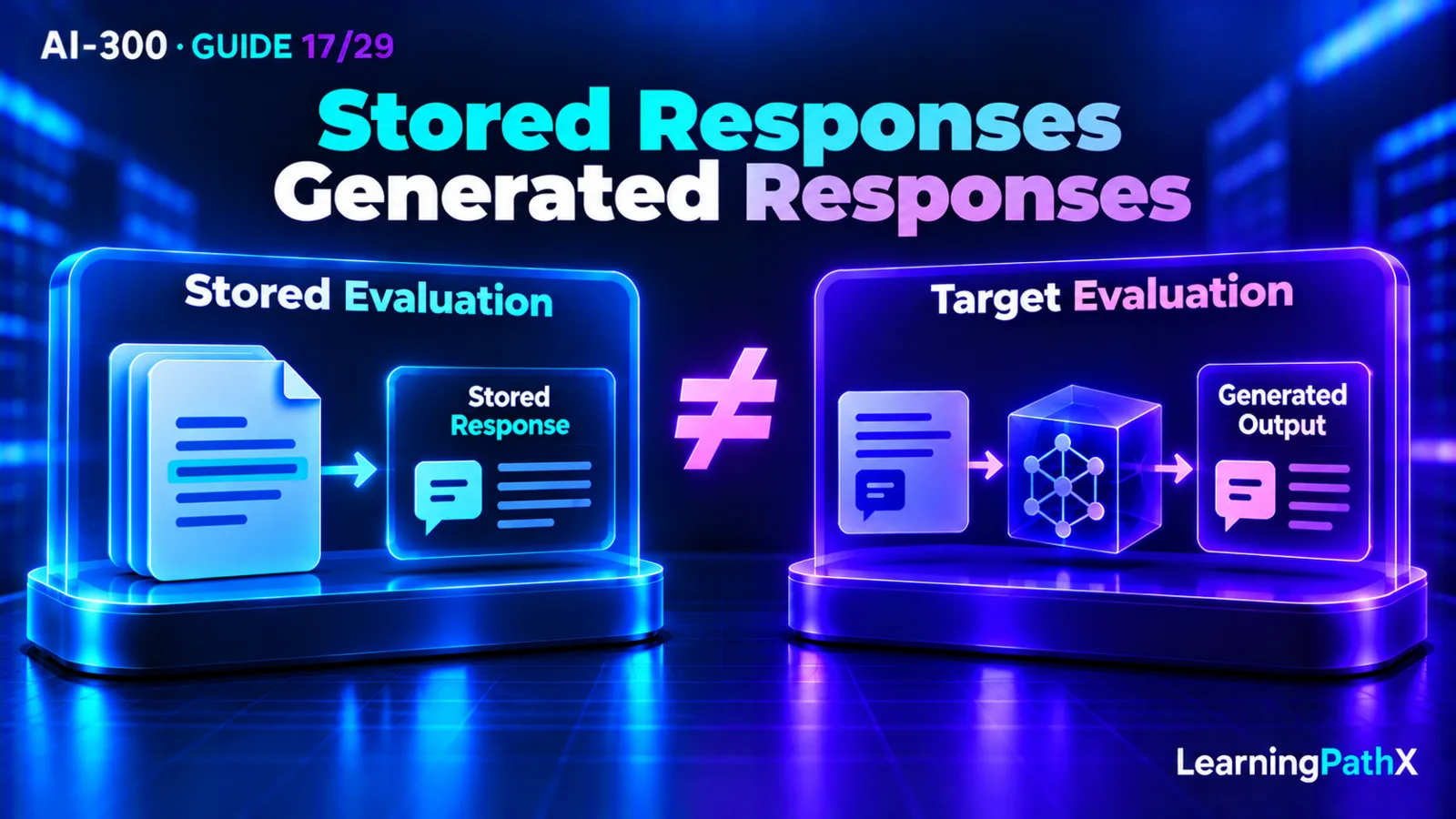
17 · Study & Preparation · Guide
AI-300: Preparing Evaluation Datasets and Field Mappings
Prepare evaluation records by first deciding whether Microsoft Foundry will score stored responses or invoke a model or agent target to generate new responses.
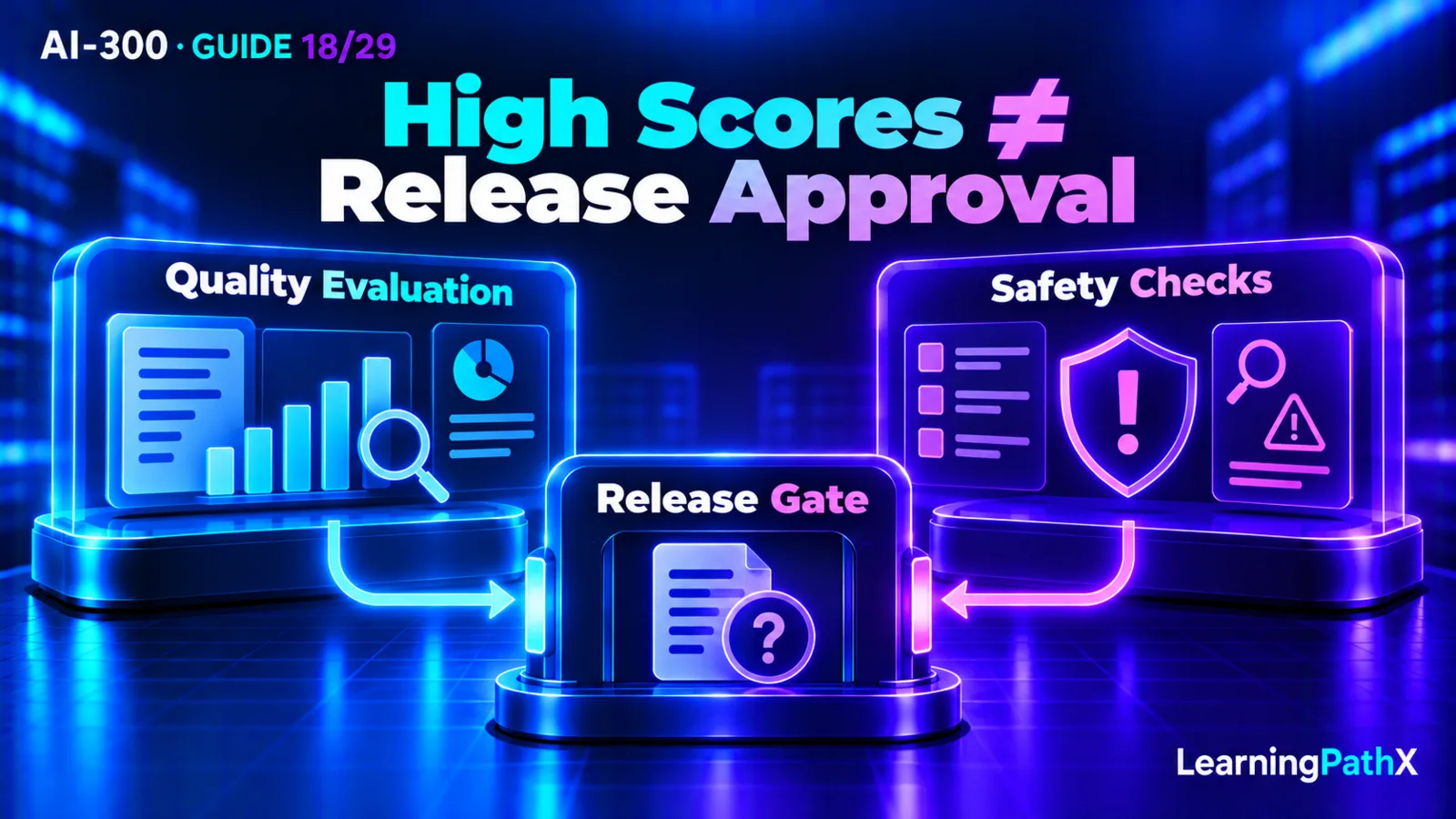
18 · Study & Preparation · Guide
AI-300: Choosing Quality, Safety, and Custom Evaluation Gates
Choose quality, safety, and custom evaluation gates by naming the failures a release must detect.
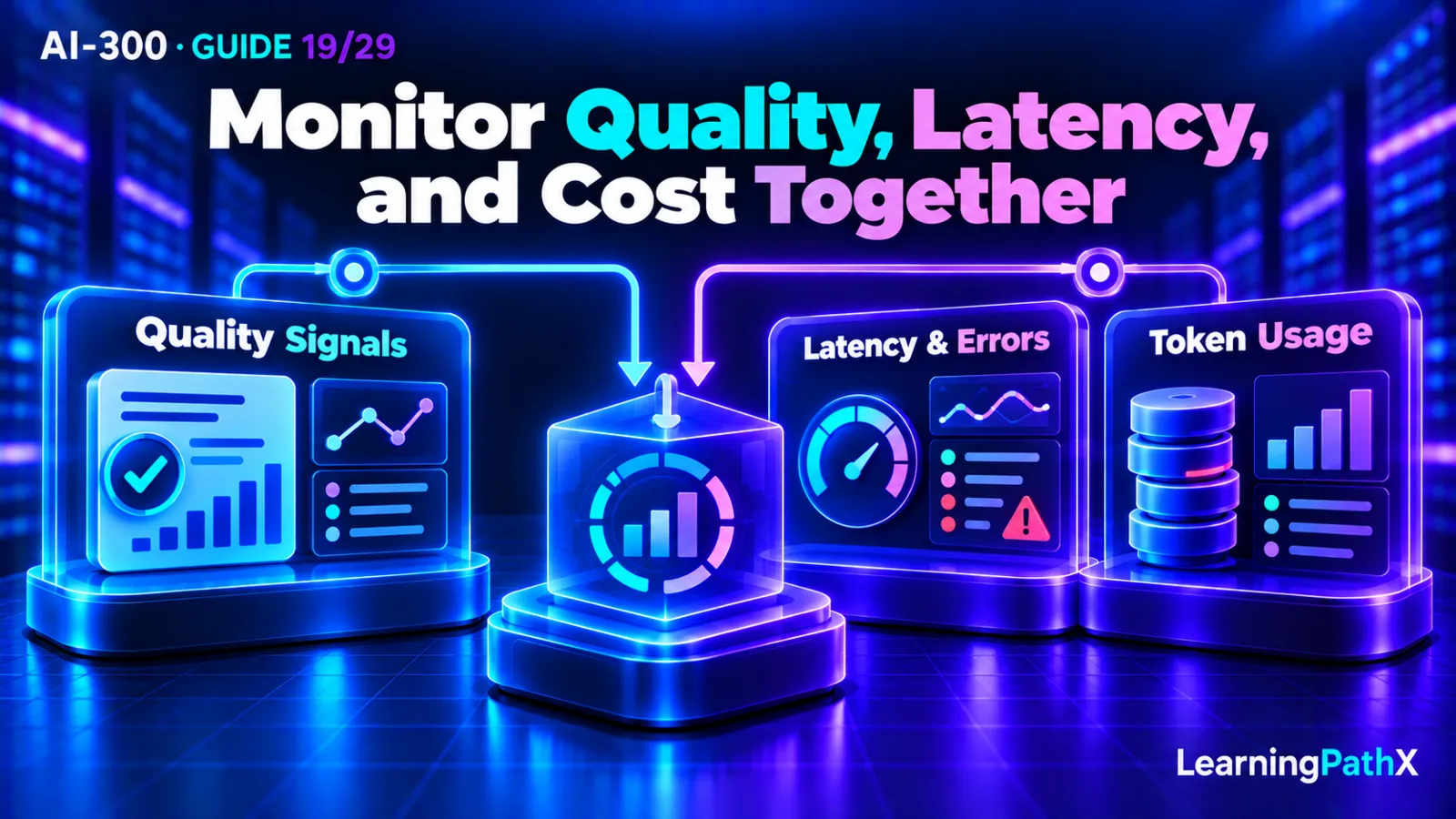
19 · Study & Preparation · Guide
AI-300: Monitoring Generative AI Quality, Latency, and Cost Drivers
Organize production monitoring around three connected views: sampled quality and safety evidence, operational performance, and cost drivers.
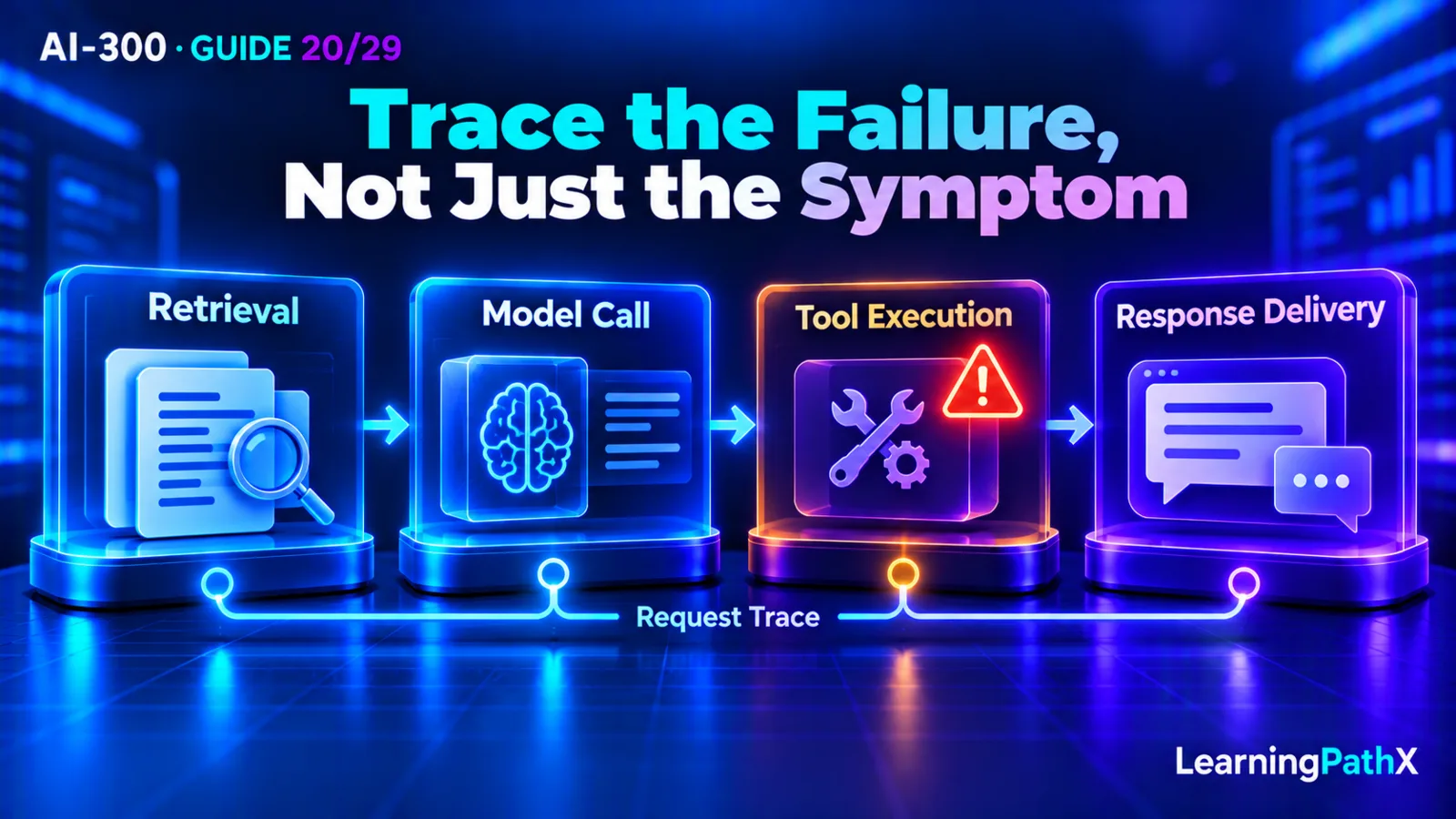
20 · Study & Preparation · Guide
AI-300: Tracing Slow or Incorrect Generative AI Responses
Locate the failing stage by starting with the actual request and its permitted trace, confirming which application version and operations it represents, and following the recorded execution through retrieval, model calls, tools, and…
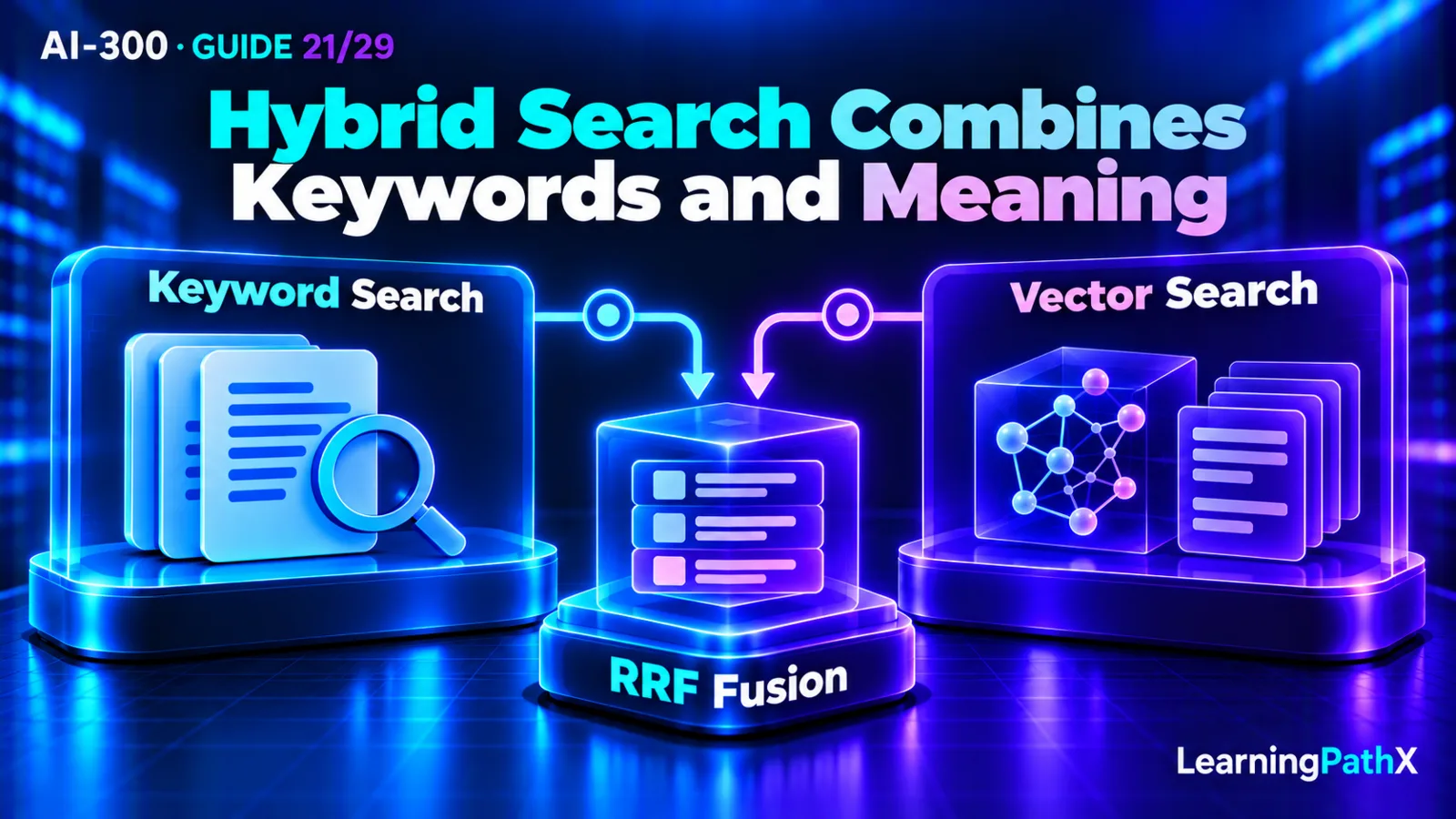
21 · Study & Preparation · Guide
AI-300: Designing Vector, Keyword, and Hybrid RAG Retrieval
Use keyword retrieval when the query's terms carry essential evidence, vector retrieval when meaning is expressed differently from the stored wording, and hybrid retrieval when both signals matter.
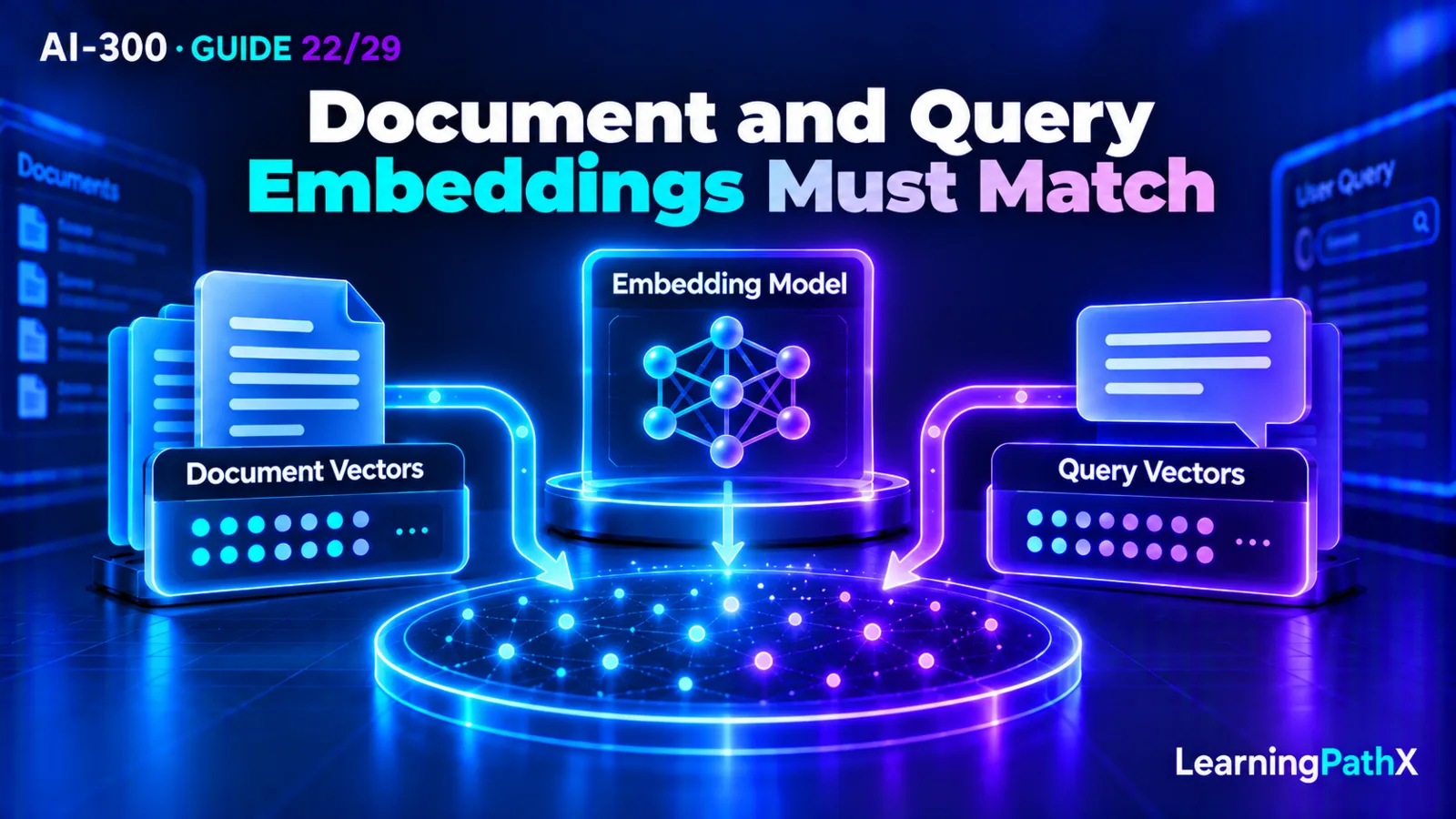
22 · Study & Preparation · Guide
AI-300: Selecting and Adapting Embedding Models
Change an embedding model when a controlled comparison shows that its representation of your queries and content is a material cause of retrieval failures.
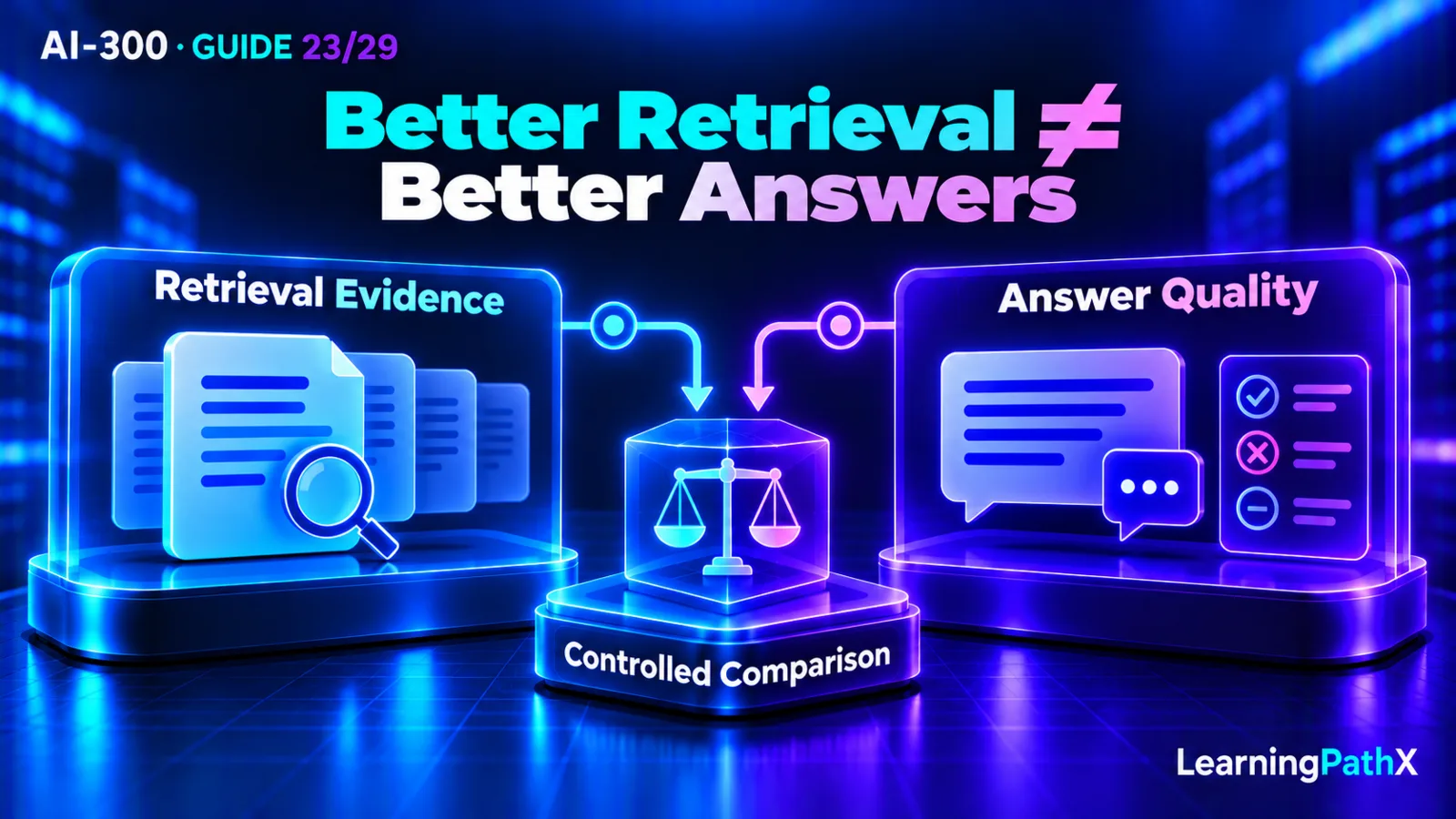
23 · Study & Preparation · Guide
AI-300: Lab: Comparing RAG Retrieval Configurations
Test a retrieval change by running baseline and candidate against the same frozen questions and source snapshot, then measuring retrieved evidence and generated answers separately.
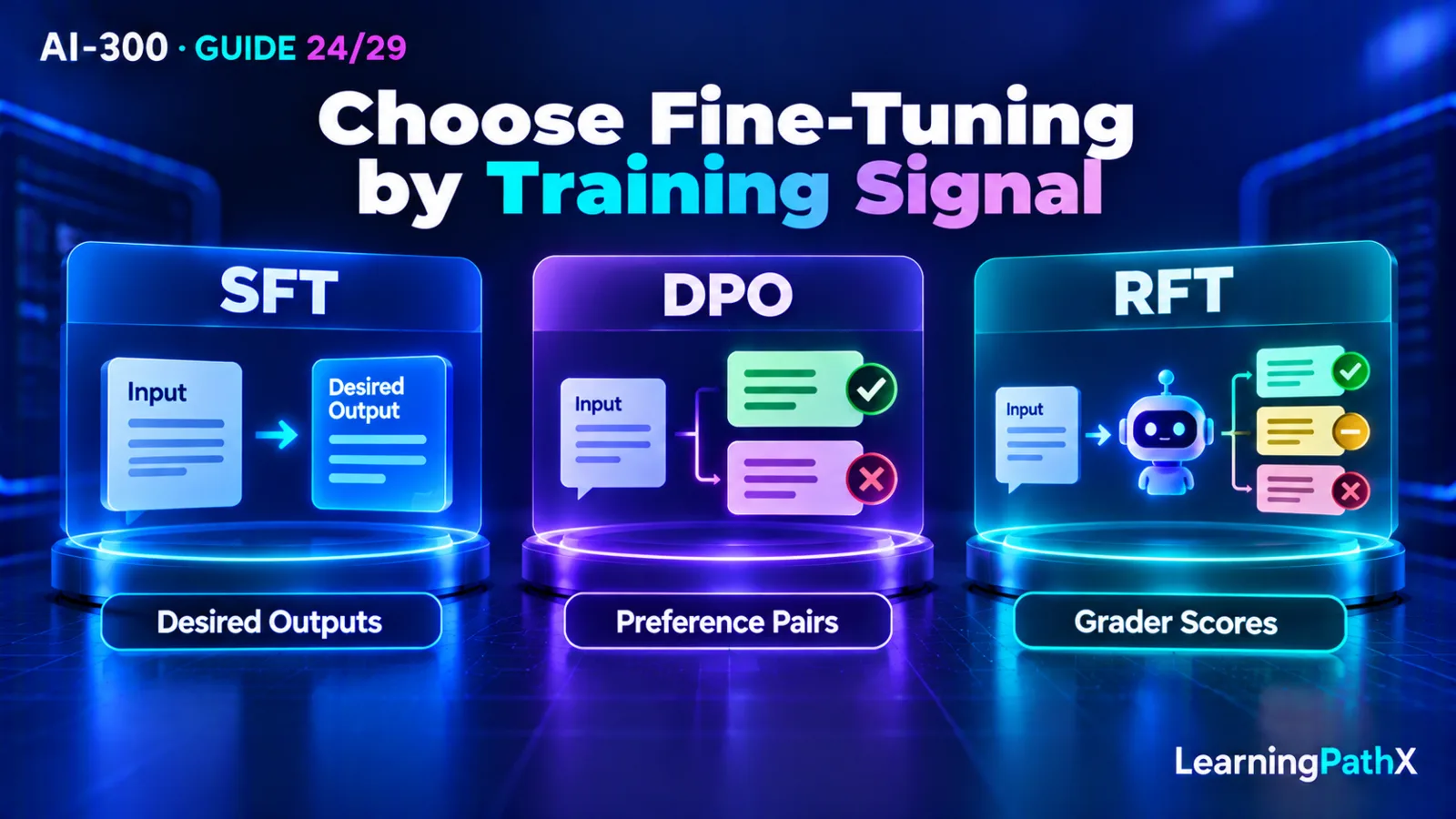
24 · Study & Preparation · Guide
AI-300: Choosing Supervised, Preference, and Reinforcement Fine-Tuning
Choose supervised fine-tuning (SFT) when you can demonstrate desired responses, direct preference optimization (DPO) when you can compare preferred and rejected responses to the same input, and reinforcement fine-tuning (RFT) when you can…