
Study & Preparation
Claude Agent Development Explained for CCDV-F Certification
About this video
Getting a Claude agent to run is only the beginning. Who authorizes its tools, controls its state, and decides when it must stop? In this video, we break down Claude agent development for CCDV-F certification preparation and real-world application design. We’ll examine how SDKs, custom tool-use loops, and frameworks fit into an agent architecture—and which responsibilities remain with your application. The focus is not simply choosing a runtime. It is understanding how to build an agent whose actions, limits, and recovery paths you can review. Topics covered include: Separating agent objectives, control loops, tools, state, and evaluation Comparing the Claude Agent SDK, custom loops, frameworks, and managed execution Validating and authorizing tool_use requests before execution Keeping session identity, workflow state, active context, and durable memory distinct Enforcing execution budgets and explicit stopping conditions Designing checkpoints, duplicate-action protection, and recovery A key reasoning question throughout this lesson is where responsibility belongs. A model can request a tool call, but that request is not authorization. A runtime can maintain a session, but your application still needs to define what becomes durable state. A final response can sound successful without proving that the execution met its objective. For your CCDV-F preparation, practice tracing the complete loop: who selects the next action, which policy permits it, where progress is recorded, and what evidence confirms completion. Build beyond the working prototype. Learn to evaluate the tool calls, policy decisions, costs, and failure paths that determine whether an agent can be operated reliably. #Claude #CCDVF #ClaudeAgentSDK
Keep watching
 6:31
6:31Study & Preparation
Claude Certified Developer Foundations CCDV-F Certification Overview
 7:40
7:40Study & Preparation
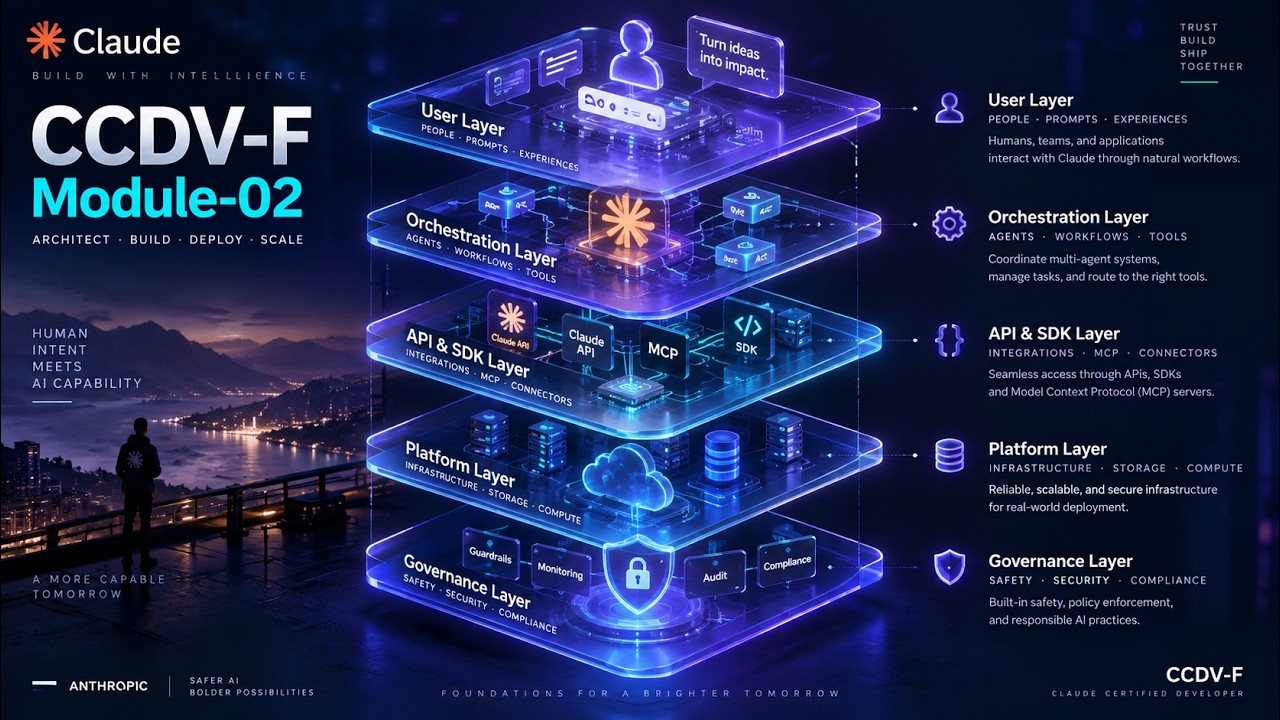
Claude Application Systems Life Cycle Explained | CCDV-F Certification
 7:39
7:39Study & Preparation
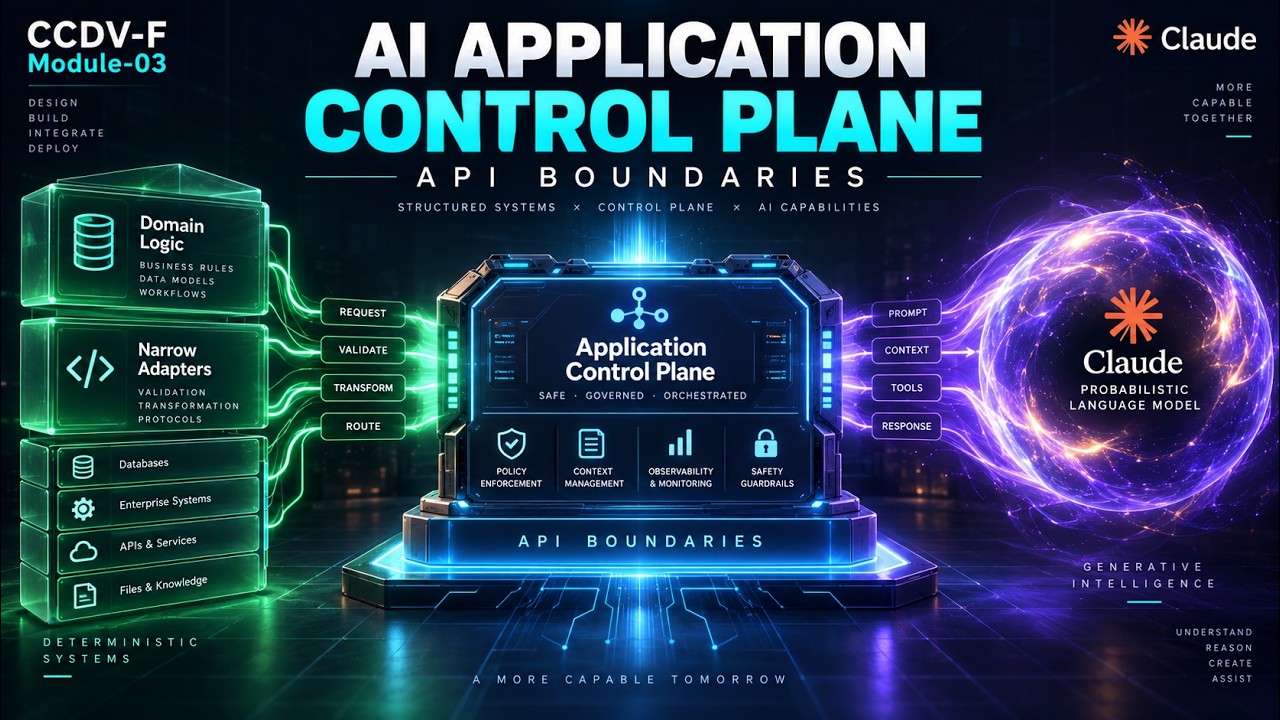
Claude Application Architecture Explained | CCDV-F AI Boundaries
 7:19
7:19Study & Preparation
Claude Messages API Foundations Explained for CCDV-F Exam Preparation
 9:11
9:11Study & Preparation
Claude API Streaming Explained for CCDV-F Certification
 9:47
9:47Study & Preparation