
Study & Preparation
Claude Application Architecture Explained | CCDV-F AI Boundaries
About this video
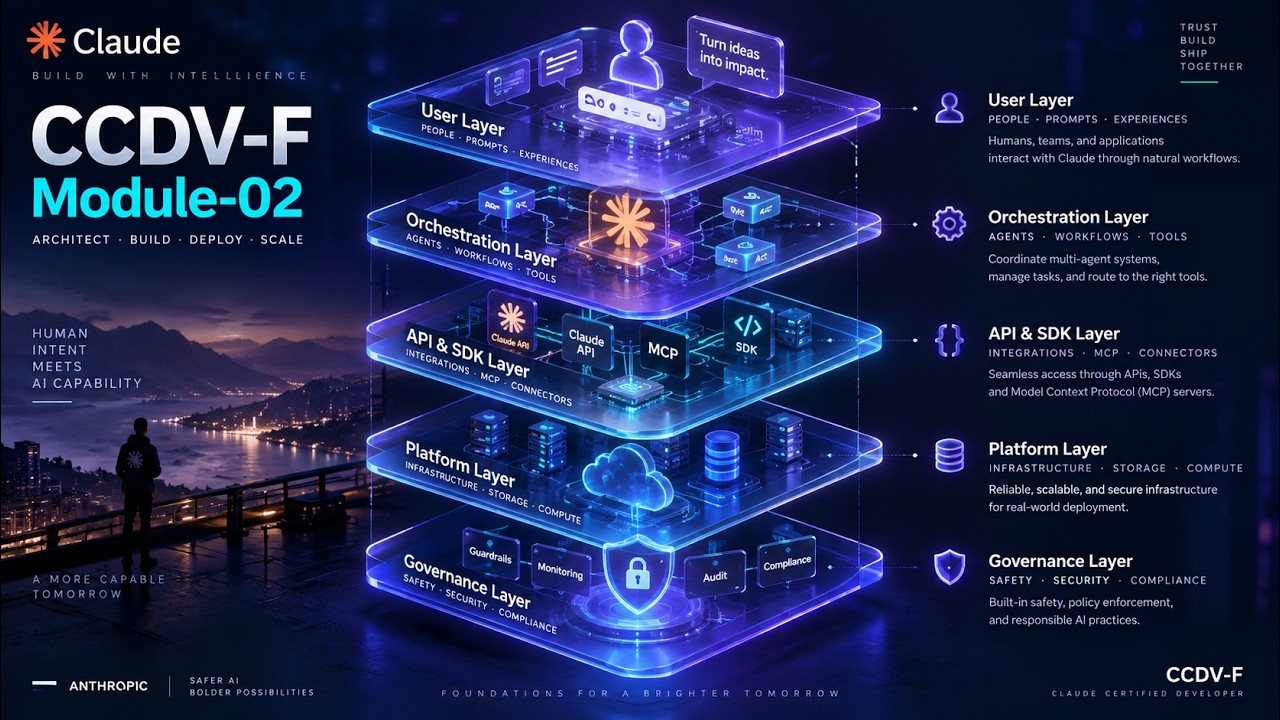
A production AI application is not built by giving a model more responsibility. It is built by creating clear boundaries between what the model can do and what the application must control. In this video, we explore Claude application architecture patterns from the perspective of the CCDV-F certification and real-world AI engineering practices. We’ll examine the five critical system surfaces: Application control plane Claude API integration Claude SDK usage Claude Code workflows Plugin boundaries You’ll learn why applications should own business rules, authorization, session state, schema validation, and external side effects instead of relying on model behavior or SDK abstractions. We’ll also cover practical architecture techniques including integration adapters, input and output contracts, session hygiene, configuration isolation, and deterministic controls around AI-generated responses. The key lesson is simple: reliable AI systems require explicit boundaries. Models provide intelligence, but applications provide control, safety, and accountability. This topic is part of the Claude Certified Developer – Foundations (CCDV-F) knowledge area and is essential for developers building secure Claude-powered applications. #CCDVF #Claude #AIArchitecture
Keep watching
 6:31
6:31Study & Preparation
Claude Certified Developer Foundations CCDV-F Certification Overview
 7:40
7:40Study & Preparation
Claude Application Systems Life Cycle Explained | CCDV-F Certification
 7:19
7:19Study & Preparation
Claude Messages API Foundations Explained for CCDV-F Exam Preparation
 9:11
9:11Study & Preparation
Claude API Streaming Explained for CCDV-F Certification
 9:47
9:47Study & Preparation
Claude API Workload Modes Explained for CCDV-F Certification
 8:50
8:50Study & Preparation