Who it is for
Designed for AI and machine learning engineers, senior software engineers, and technical leads who build practical applications and agents with Claude.
PUBLIC BETA OFFER
Save 50% off on an Eligible Learning PlanValid for 1-month plan, 3-month plan, 12-month plan · Code LPXBETA50 · Ends Nov 4, 2026
CCDV-F validates foundational skill in building, integrating, and shipping production-grade applications, agents, and workflows with Claude and the Claude API.
Your exam at a glance
Designed for AI and machine learning engineers, senior software engineers, and technical leads who build practical applications and agents with Claude.
Assesses Claude application integration, agents, tools and MCP, model selection, prompt and context engineering, evaluation, security, and Claude Code.
Passing demonstrates foundational, production-focused judgment for designing, implementing, testing, optimizing, and securing Claude-powered solutions.
Your learning path to exam readiness
Five clear stepsBuild the Claude API, prompt, context, tool-use, and agent foundations assessed by CCDV-F.
BeginOrganize all eight CCDV-F domains by official weight, available time, and hands-on practice needs.
PlanMeasure your command of Claude integration, agents, tools, context engineering, and security.
PracticeReview weak CCDV-F objectives and connect each missed answer to a practical Claude implementation choice.
ReviewCheck domain coverage, implementation confidence, and test timing before scheduling CCDV-F.
AssessWhat to focus on
Keep learning
Claude Certified Developer – Foundations validates a developer's foundational ability to design, integrate, operate, evaluate, optimize, and secure production-oriented applications, agents, and workflows built with Claude.
An engineering team should translate a Claude application idea into a maintainable system through four connected artifacts: a measurable outcome, a testable requirement baseline, an explicit responsibility map, and a staged life cycle…
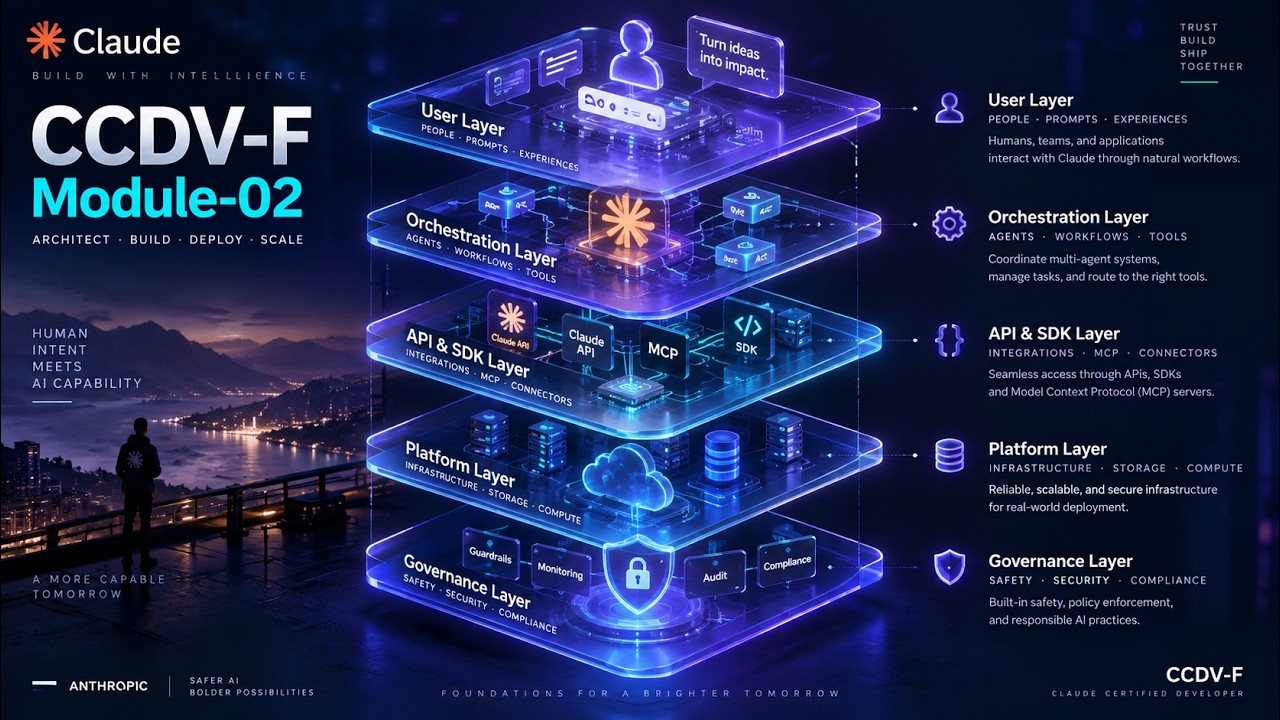
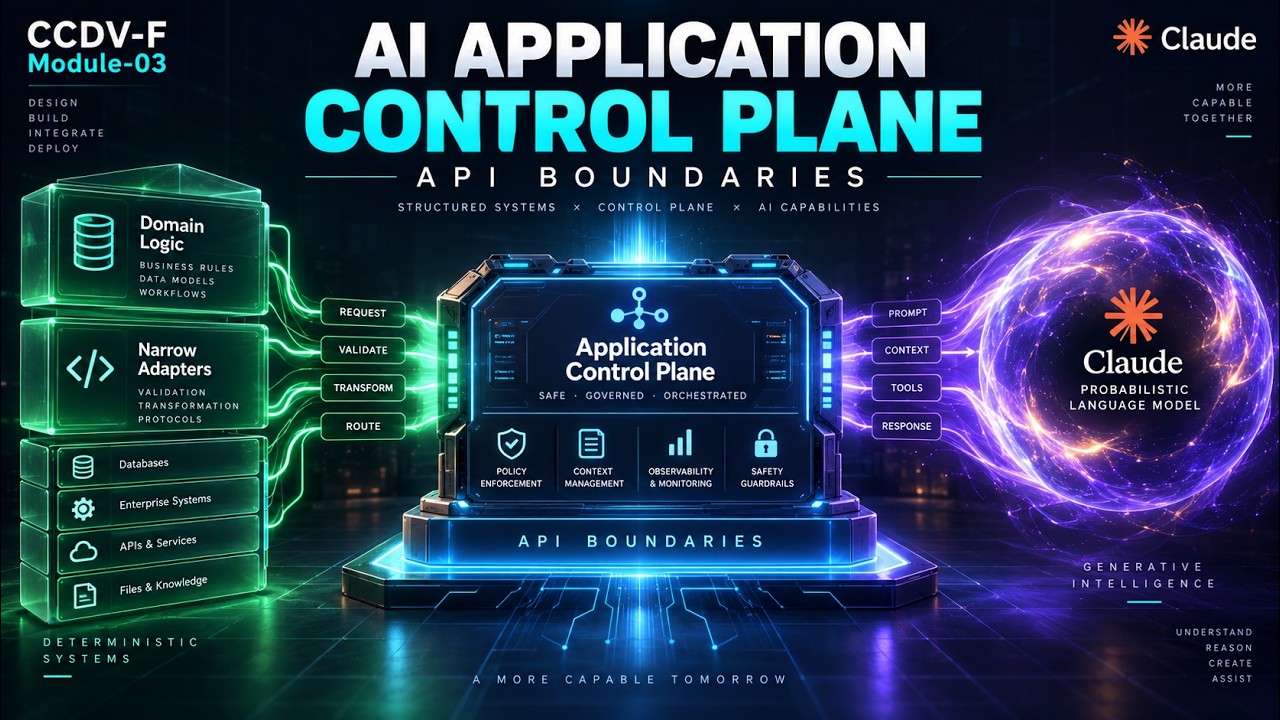
A sound Claude application architecture gives each layer one explicit responsibility. The application owns business rules, trusted and untrusted input separation, conversation state, schemas, validation, authorization, and side effects.
Build your understanding with focused video lessons.