
Study & Preparation
Claude Application Systems Life Cycle Explained | CCDV-F Certification
About this video
Building a Claude application is easy to demonstrate. Building one that is reliable, secure, and maintainable in production requires a completely different engineering mindset. In this video, we explore the Claude Application Systems Life Cycle and how CCDV-F approaches production AI development through structured engineering practices. We’ll break down the four foundational artifacts behind a mature AI system: Outcome statements Requirements baselines Responsibility maps Evidence-based life cycle stages You’ll learn how production Claude applications move from initial discovery through design, implementation, verification, controlled release, operation, and retirement. We’ll also examine critical engineering principles such as separating model behavior from deterministic controls, managing trust boundaries, versioning prompts and schemas, and avoiding common mistakes that make AI systems difficult to maintain. The goal is not just to build an AI prototype that works once. The goal is to engineer Claude-powered systems that can operate safely and predictably in real environments. This topic is part of the Claude Certified Developer – Foundations (CCDV-F) knowledge area and is especially relevant for developers preparing for the exam or designing enterprise AI applications. #CCDVF #Claude #AnthropicCertification
Keep watching
 6:31
6:31Study & Preparation
Claude Certified Developer Foundations CCDV-F Certification Overview
 7:39
7:39Study & Preparation
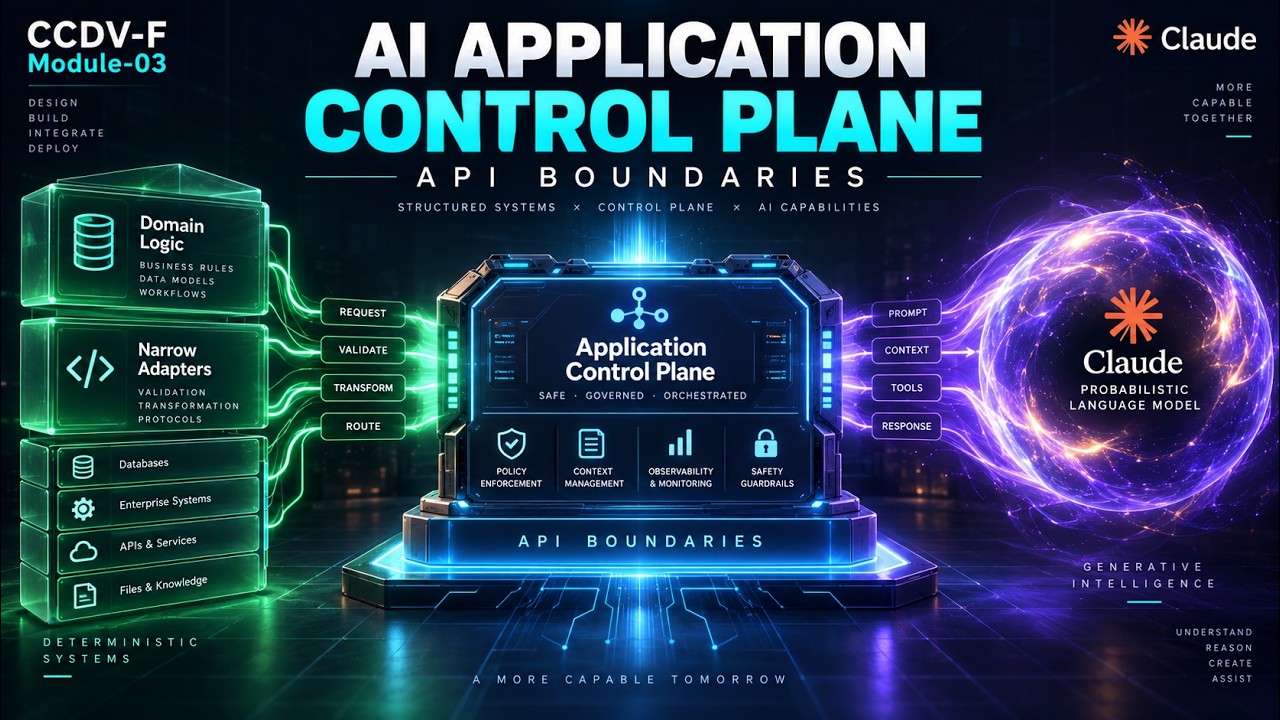
Claude Application Architecture Explained | CCDV-F AI Boundaries
 7:19
7:19Study & Preparation
Claude Messages API Foundations Explained for CCDV-F Exam Preparation
 9:11
9:11Study & Preparation
Claude API Streaming Explained for CCDV-F Certification
 9:47
9:47Study & Preparation
Claude API Workload Modes Explained for CCDV-F Certification
 8:50
8:50Study & Preparation