
Anthropic · Claude Certified Architect
CCAR-F Free Learning Path
Start with 10 free learning topics for Claude Certified Architect - Foundations (CCAR-F).
10 free/ 30 total
354 free/ 1081 total
PUBLIC BETA OFFER
Save 50% off on an Eligible Learning PlanValid for 1-month plan, 3-month plan, 12-month plan · Code LPXBETA50 · Ends Nov 4, 2026
Anthropic · Claude Certified Architect
Start with 10 free learning topics for Claude Certified Architect - Foundations (CCAR-F).
Included free
Study resources
Guides and study preparation resources for this certification.
The public scope of Claude Certified Architect - Foundations (CCAR-F) is best understood as an architecture map, not as a collection of isolated product features.
The right Claude architecture is usually the least autonomous one that can complete the job safely. Start with a single model call when one bounded response is enough.
An agentic design becomes operable only when its runtime is bounded. In the Claude Agent SDK, an agent loop evaluates the current state, requests tools when needed, incorporates their results, and eventually returns a final result.
Delegate to a subagent when a focused, independently bounded piece of work would otherwise overload the primary agent's context or mix responsibilities that need different tools and permissions.
Claude tool interfaces should be treated as production API contracts, not as a thin list of functions.
Model Context Protocol (MCP) is useful when an AI application needs a consistent way to discover and use external context or capabilities. It is not a permission system and it does not make an external system trustworthy by itself.
Explore video explanations for this subject.
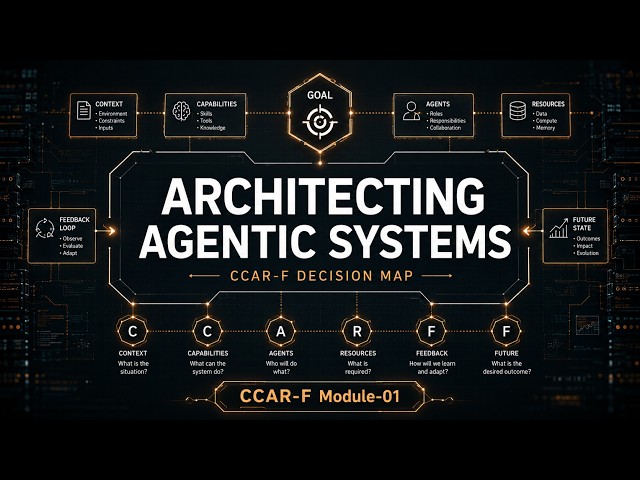 8:05
8:05Enterprise AI systems are not built by writing better prompts alone. In this video, we break down the CCAR-F Architect Decision Map and explore how architects approach Claude-powered solutions from a system design perspective. You’ll learn how to move from a business outcome to a production-ready architecture by examining five critical areas: Agentic architecture and orchestration Tool design and MCP integration Claude Code workflows Prompt contracts and structured outputs Context management and
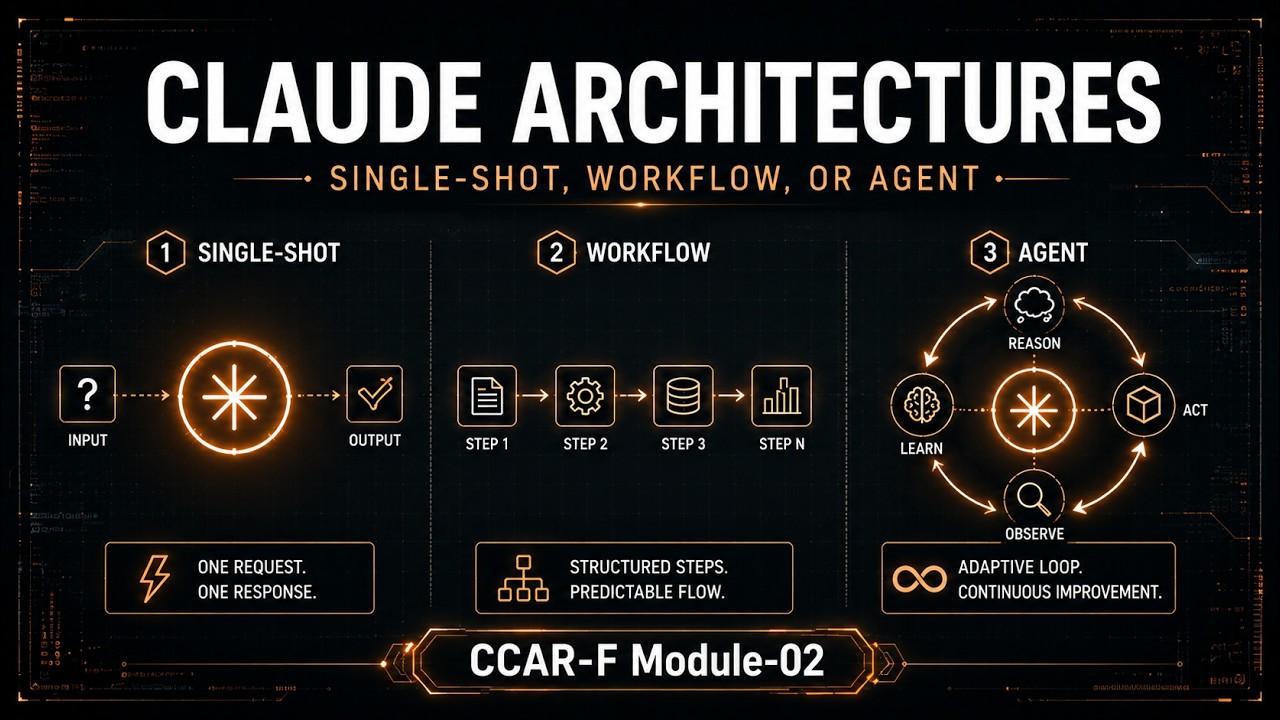 9:46
9:46Building an AI agent is not always the right architecture decision. In this video, we break down one of the most important CCAR-F architecture concepts: choosing between single-shot interactions, deterministic workflows, and agentic Claude systems. You’ll learn how architects evaluate: - When a simple model interaction is enough - When application-controlled workflows provide better reliability - When autonomous agent loops are actually justified - How cost, security, and operational risk influe
 6:55
6:55AI agents are powerful, but uncontrolled autonomy creates operational risk. In this video, we explore how architects design bounded Claude Agent SDK runtimes that are secure, predictable, and production-ready. We’ll break down the key runtime concepts behind reliable agent systems: - Agent execution loops and host-controlled boundaries - Session continuation, resumption, and forking - Permission models and approval workflows - Turn limits and budget controls - Context compaction strategies - Tra
 9:16
9:16Multi-agent systems are powerful, but adding more agents does not automatically create better AI solutions. In this video, we explore how architects design reliable Claude subagent architectures using clear delegation boundaries, context isolation, permissions, and failure containment. You’ll learn how enterprise AI teams approach: - When subagents are actually necessary - Coordinator-worker architecture patterns - Handoff contracts and context isolation - Least-privilege tool access - Parallel
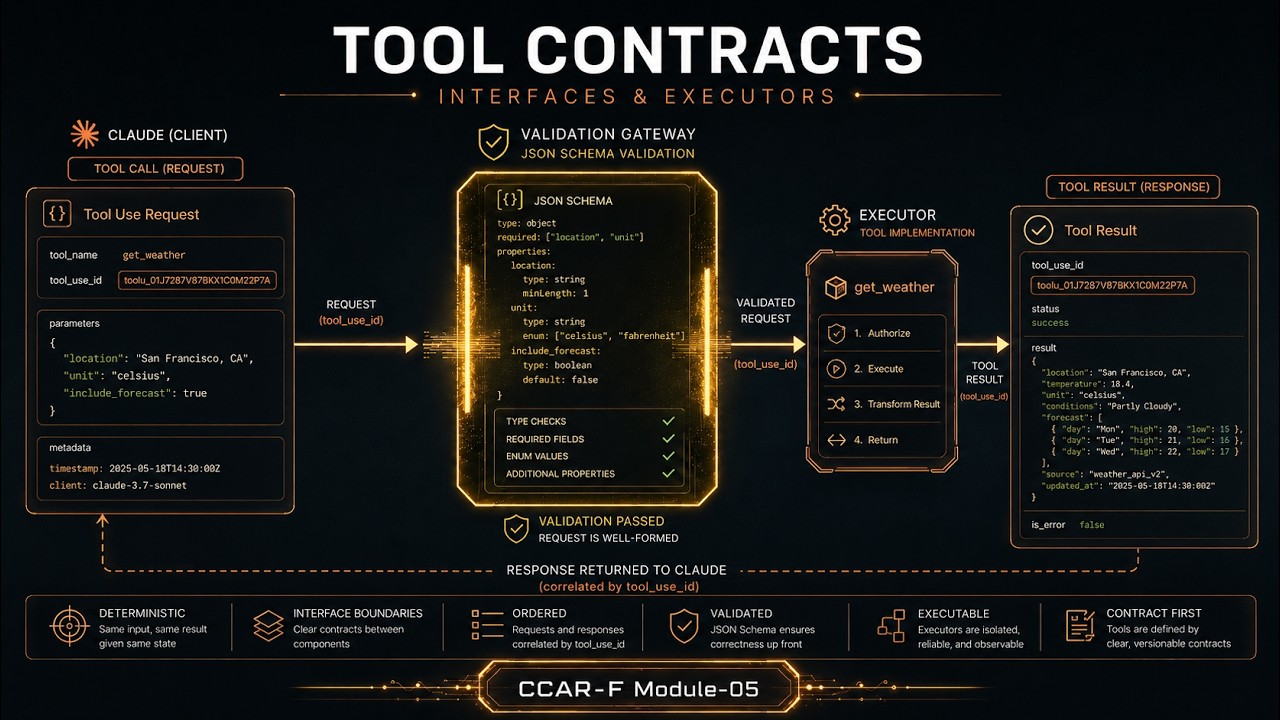 7:46
7:46AI agents become production systems only when their tool interfaces are designed with the same discipline as enterprise APIs. In this video, we explore how architects design secure and reliable Claude tool integrations using explicit execution contracts, validation boundaries, and controlled side effects. You’ll learn how to design: - Narrow, outcome-focused tool interfaces - JSON Schema input constraints - Tool execution and result correlation - Safe error handling patterns - Retry and idempote
 8:26
8:26MCP is becoming a key pattern for connecting AI systems with enterprise data and capabilities — but protocol connectivity alone does not create security. In this video, we break down the architecture principles behind Model Context Protocol (MCP) and how architects design safe Claude integrations. You’ll learn: - The roles of MCP Host, Client, and Server - How MCP connection lifecycle and capability negotiation work - The difference between Tools, Resources, and Prompts - Where authorization and
PUBLIC BETA OFFER
Valid for 1-month plan, 3-month plan, 12-month plan · Code LPXBETA50 · Ends Nov 4, 2026