
Study & Preparation
COF-C03 Snowflake Data Types: Structured, Semi-Structured, and Unstructured
About this video
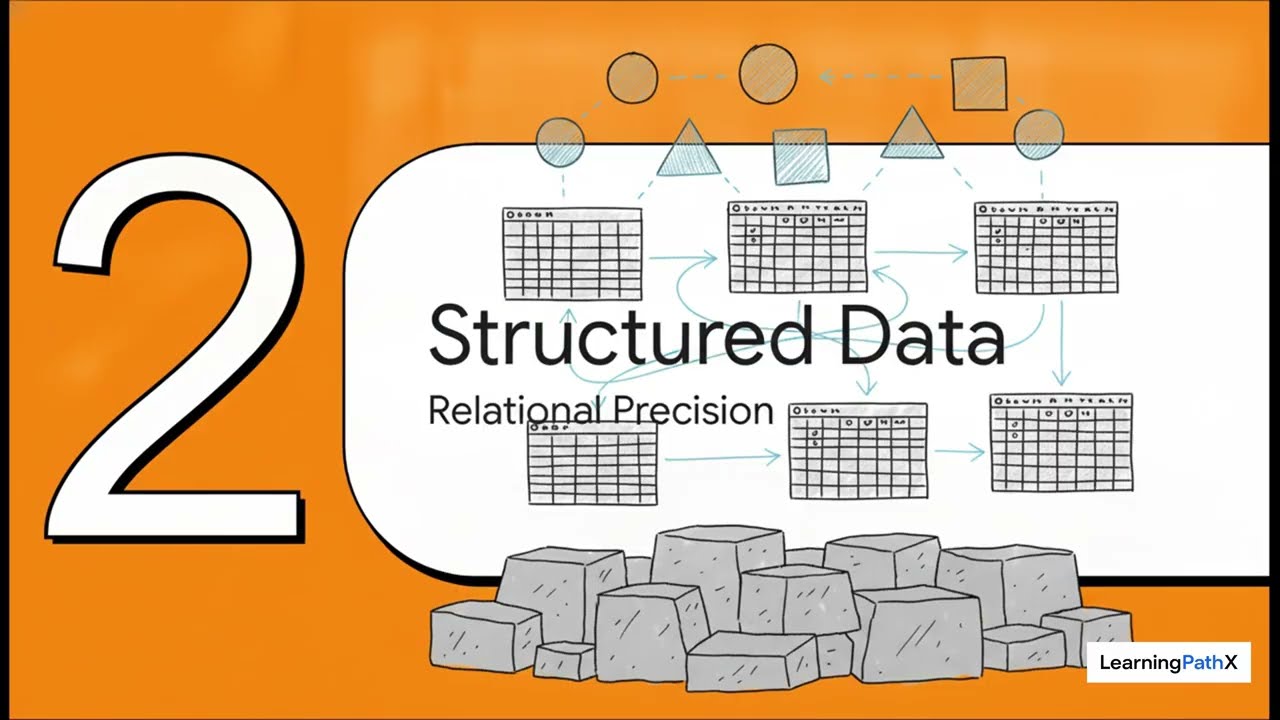
Snowflake can work with structured, semi-structured, and unstructured data, but choosing the right representation is an architectural decision—not just a file-format decision. In this video, we break down the different Snowflake data models and how to choose between relational columns, VARIANT-based structures, and staged unstructured files for the SnowPro Core COF-C03 exam. We’ll cover: Structured relational data Semi-structured data VARIANT, OBJECT, and ARRAY JSON and nested structures Path notation LATERAL FLATTEN VARIANT vs. relational columns Typed columns and partition pruning Raw payload preservation Unstructured files Internal and external stages Directory tables Scoped URLs Data governance considerations Common COF-C03 modeling mistakes One of the most important exam skills is understanding that not every irregular input should remain permanently in VARIANT, and not every source needs to be forced immediately into a rigid relational model. Stable fields that drive filters, joins, policies, and aggregations may benefit from typed relational columns. Evolving source structures may be better preserved in VARIANT, particularly in raw landing layers. For unstructured content such as documents, images, and audio, Snowflake uses staged files and metadata-driven access rather than treating the content as ordinary relational rows. For COF-C03, focus on the trade-offs. Understand what each representation provides, how nested data is queried, when FLATTEN changes row cardinality, and why workload requirements should determine which data remains raw and which data becomes typed. #Snowflake #COFC03 #SnowProCore
Keep watching
 8:48
8:48Study & Preparation
SnowPro Core COF-C03 Exam Guide: What You Need to Know
 8:09
8:09Study & Preparation
COF-C03 Snowflake Architecture: How Storage, Compute, and Cloud Services Work Together
 7:38
7:38Study & Preparation
COF-C03 Snowflake Micro-Partitions, Pruning, and Data Organization Explained
 8:02
8:02Study & Preparation
COF-C03 Snowflake Access Control: Roles, Privileges, and Least Privilege
 7:38
7:38Study & Preparation
COF-C03 Snowflake Virtual Warehouses: Sizing, Scaling, and Cost Control
 9:11
9:11Study & Preparation