
Study & Preparation
3V0-24.25 VKS Day-Two Operations: Velero, Upgrades and Troubleshooting
About this video
Deployment is only the beginning. In this overview of Module 6, we build a practical Day-Two operations and troubleshooting framework for the VMware 3V0-24.25 VKS exam. The official blueprint covers Velero backup and restore, VM class failures, registry and trusted CA errors, failed cluster upgrades, monitoring, and scaling across Objectives 4.13 and 5.2 through 5.5. The exam content is based on VMware Cloud Foundation 9.0. We will examine five operational areas: Velero backup and restore with external object storage VM class availability and namespace configuration Private registry certificate trust Stalled VKS rolling updates Performance monitoring and autoscaling First, we separate Kubernetes resource backup from persistent-volume protection. Velero stores Kubernetes resources through an external BackupStorageLocation, while persistent data follows the configured CSI snapshot, snapshot data movement, or File System Backup workflow. We will examine how to validate storage connectivity, inspect backup details and logs, identify failed volume operations, and confirm that a restore meets the application’s recovery objectives. Next, we trace infrastructure and security errors to their correct owners. A requested VM class must be available in the target vSphere Namespace before VKS can use it to provision cluster nodes. An x509 unknown-authority error represents a certificate-trust failure, so registry credentials should not be the first troubleshooting target. We will then examine why rolling updates stall. A replacement node may fail to provision because of network, IP, storage, or infrastructure constraints. An old node may remain in a draining state because of a restrictive PodDisruptionBudget, an unavailable workload replica, or an unresolved volume attachment. The correct response is to inspect Cluster, Machine, Node, PodDisruptionBudget, and VolumeAttachment evidence—not manually delete the node VM. Finally, we connect monitoring with the correct scaling control. Horizontal Pod Autoscaling changes workload replica counts, while node autoscaling addresses Pods that cannot be scheduled with the existing worker capacity. Namespace quotas, requests, limits, and autoscaler behavior must be analyzed as separate controls rather than treated as one generic capacity problem. The strongest 3V0-24.25 troubleshooting habit is simple: classify the failure before applying a fix. By the end of this module overview, you will have a clearer diagnostic map for backup failures, entitlement errors, certificate problems, stalled upgrades, and VKS performance bottlenecks. In Module 6-1, we will deploy Velero, configure external object storage, run a namespace backup, and validate a complete restore workflow. #3V02425 #VKS #VMwareCertification
Keep watching
 7:07
7:07Study & Preparation
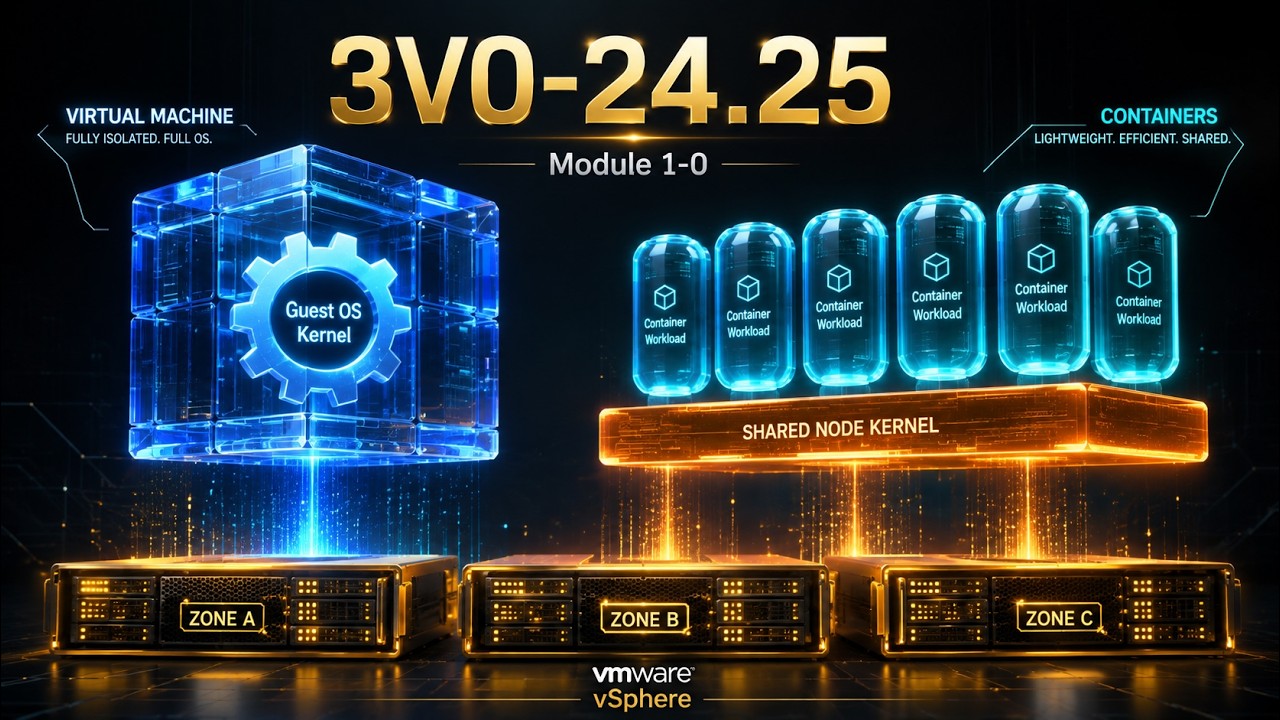
VMware VCF 9.0 Architect 3V0-24.25 Certification: VM vs Container Workload Design Explained
 6:03
6:03Study & Preparation
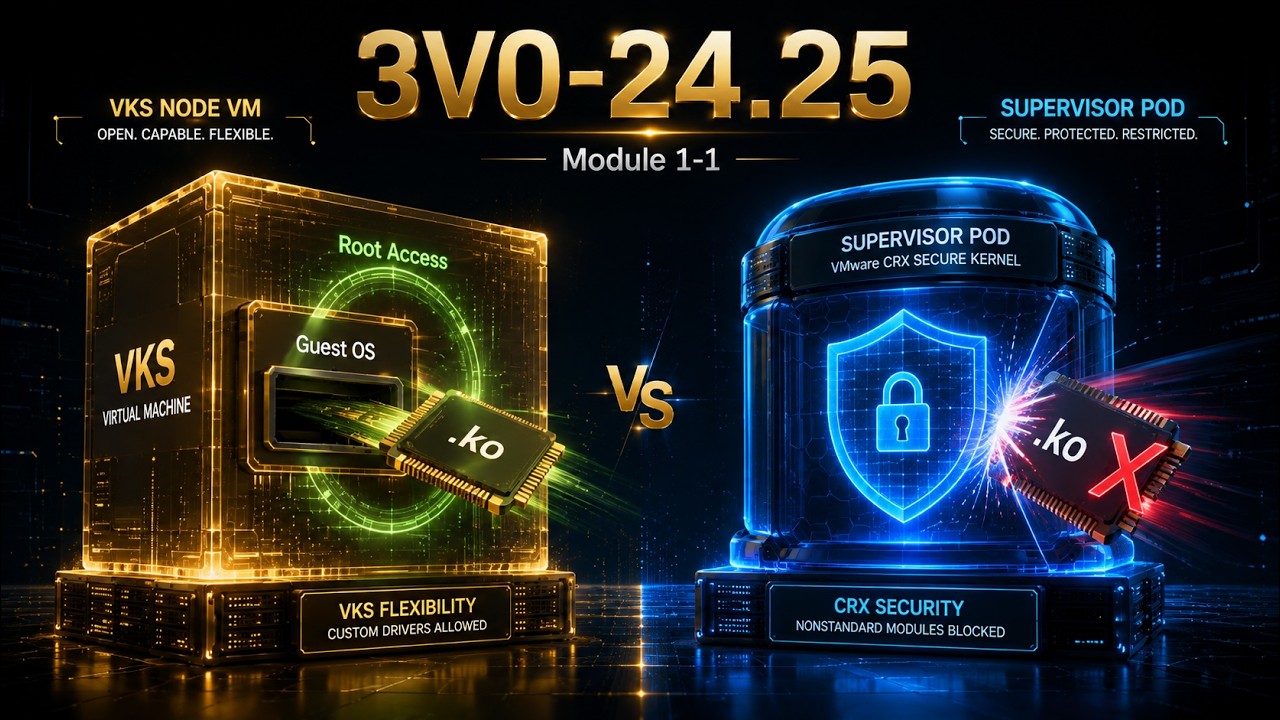
VCF 9.0 Architect 3V0-24.25 Exam: Supervisor Pods vs VKS Node VM Explained
 9:23
9:23Study & Preparation
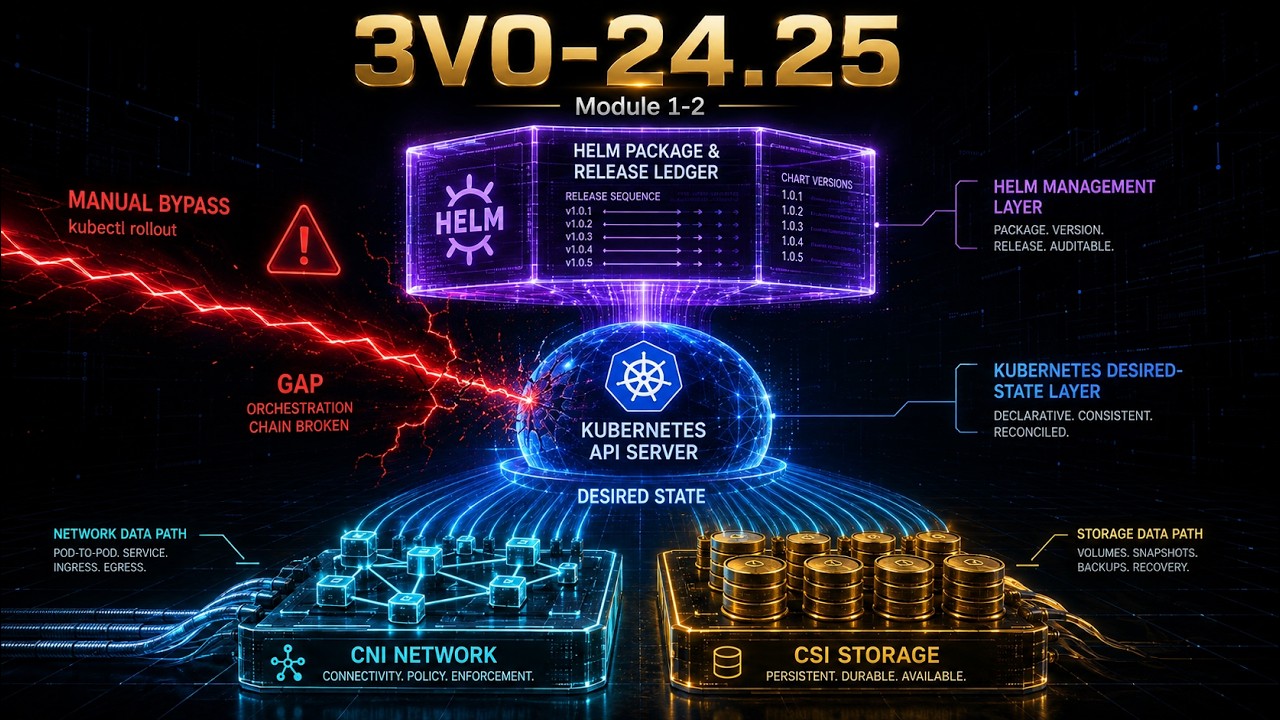
VCF 9.0 Architect 3V0-24.25 Exam: Helm and Kubernetes Troubleshooting Explained
 7:45
7:45Study & Preparation
VCF 9.0 Architect 3V0-24.25 Exam: NSX VPC vs VDS Supervisor Architecture Explained
 8:47
8:47Study & Preparation
VCF 9.0 Architect 3V0-24.25 Exam: Namespace Network Options Explained
 8:24
8:24Study & Preparation