
Study & Preparation
3V0-24.25: Why Your Kubernetes Autoscaler Is Not Scaling
About this video
In this video, we continue our 3V0-24.25 certification preparation series and explore how autoscaling works across Kubernetes workloads and VKS infrastructure in VMware Cloud Foundation 9.0. Autoscaling is often misunderstood because multiple controllers operate at different layers. Increasing Pod replicas does not create new worker nodes, and infrastructure scaling cannot replace a broken application metrics pipeline. In this module, we analyze: The difference between HPA, VPA, and Cluster Autoscaler How application scaling differs from infrastructure scaling The role of metrics-server and workload resource requests How Cluster Autoscaler provisions additional VKS worker nodes Why Namespace ResourceQuotas and VM Class entitlements limit scaling How to troubleshoot autoscaling failures using Kubernetes events How to verify successful node and workload convergence For the 3V0-24.25 exam, the key skill is understanding scaling boundaries: HPA scales Pods. VPA adjusts workload resource requirements. Cluster Autoscaler scales infrastructure nodes. The architect approach is to trace the complete dependency chain: Metrics → Scheduling → Capacity → Node Provisioning → Workload Placement By mastering this model, you can avoid common exam traps involving incorrect scaling actions, quota limitations, and infrastructure capacity assumptions. This completes the core VKS lifecycle and scaling pathway. Next, we will move into advanced diagnostics and recovery scenarios, including failed cluster states, bootstrap issues, and lifecycle troubleshooting. #3V0-2425 #VCF9 #VMwareCertification
Keep watching
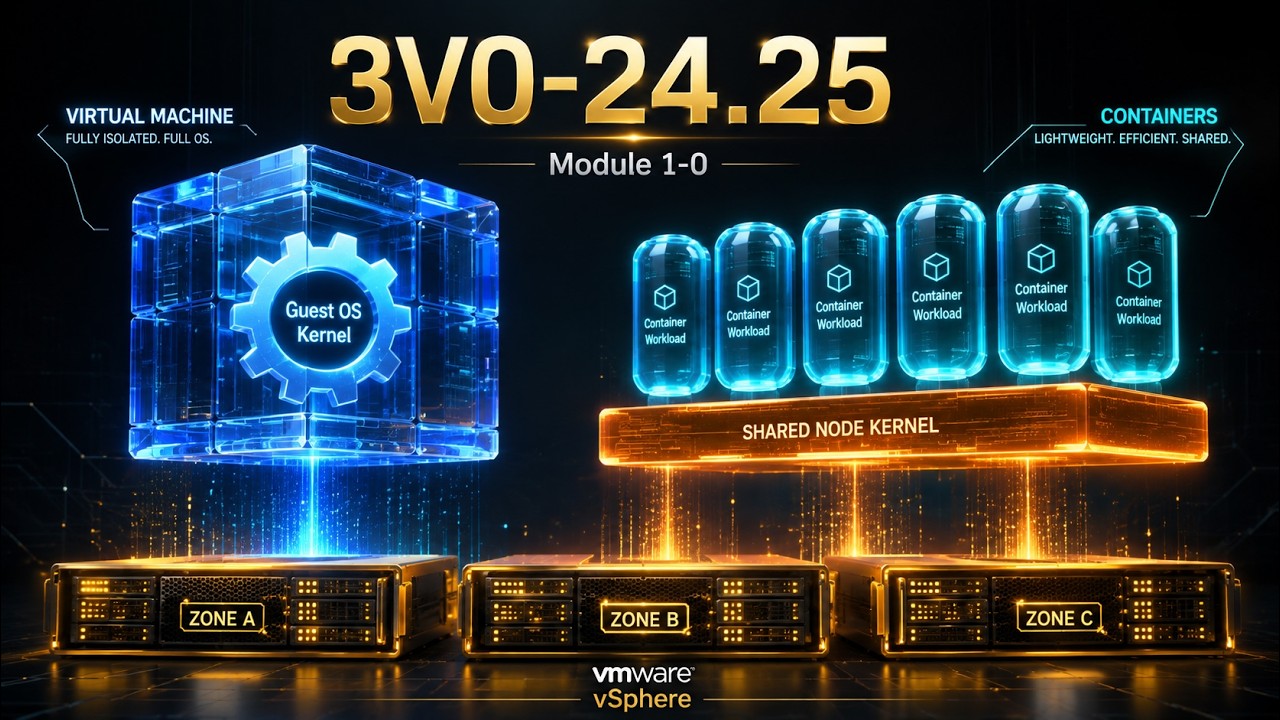 7:07
7:07Study & Preparation
VMware VCF 9.0 Architect 3V0-24.25 Certification: VM vs Container Workload Design Explained
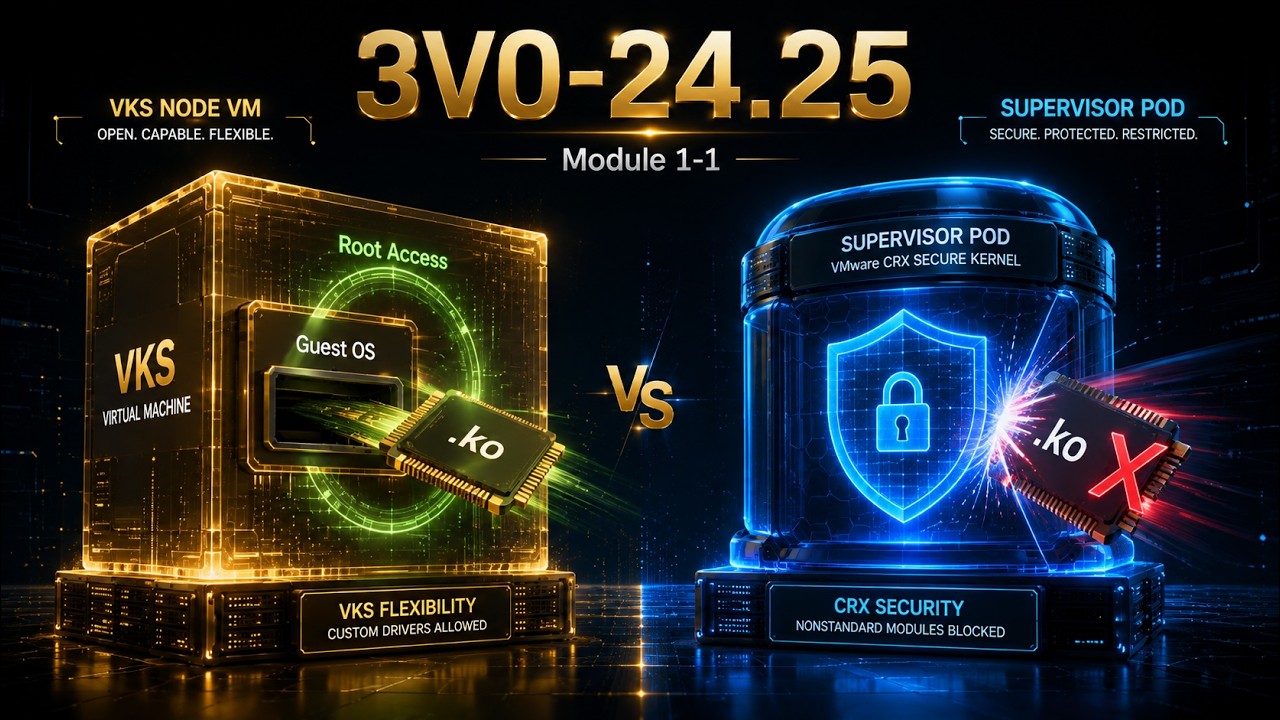 6:03
6:03Study & Preparation
VCF 9.0 Architect 3V0-24.25 Exam: Supervisor Pods vs VKS Node VM Explained
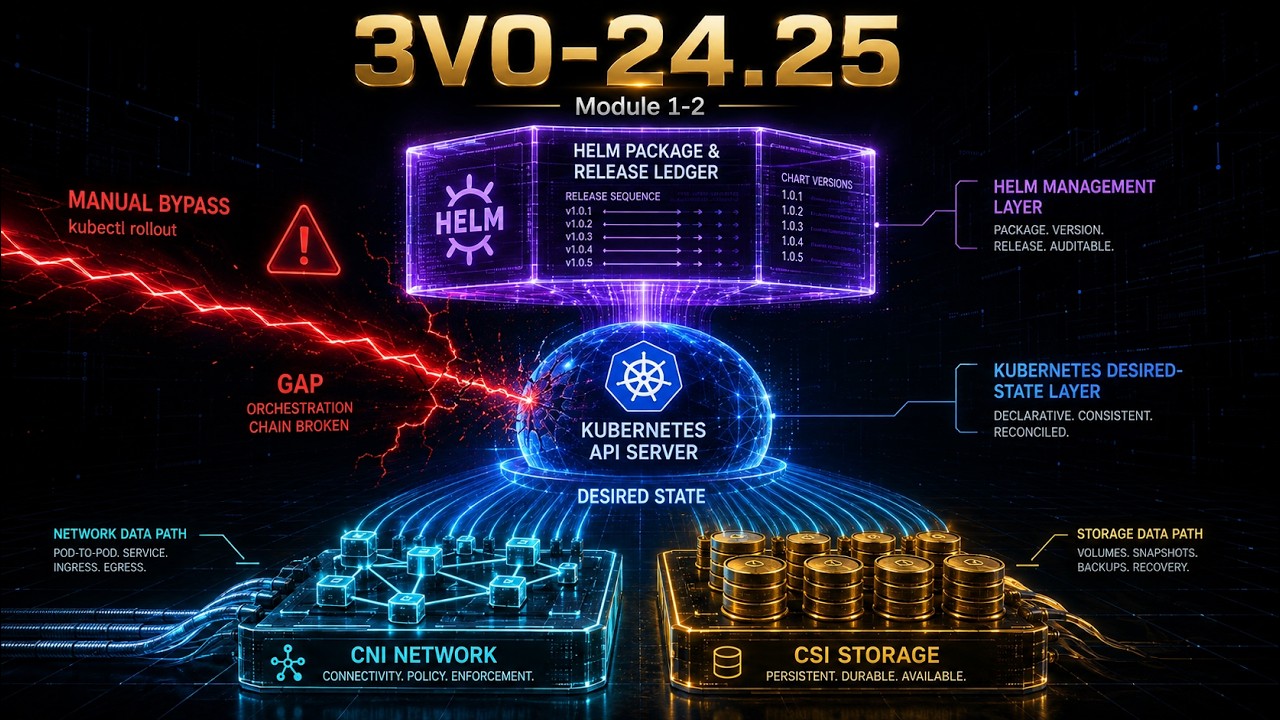 9:23
9:23Study & Preparation
VCF 9.0 Architect 3V0-24.25 Exam: Helm and Kubernetes Troubleshooting Explained
 7:45
7:45Study & Preparation
VCF 9.0 Architect 3V0-24.25 Exam: NSX VPC vs VDS Supervisor Architecture Explained
 8:47
8:47Study & Preparation
VCF 9.0 Architect 3V0-24.25 Exam: Namespace Network Options Explained
 8:24
8:24Study & Preparation