
Study & Preparation
3V0-24.25 Istio Canary Routing with VirtualService and DestinationRule
About this video
A 90/10 canary rollout can look correct in YAML and still produce unexpected traffic or HTTP 503 errors. In this video, we break down Objective 3.6 of the VMware 3V0-24.25 VKS exam and examine how Istio separates traffic-routing decisions from destination policies. Broadcom’s current exam guide places service-mesh implementation under Objective 3.6 and states that the exam content is based on VMware Cloud Foundation 9.0. We will walk through the relationship between VirtualServices, DestinationRules, Kubernetes Services, workload labels, and named subsets. A VirtualService determines where matched traffic should be sent. A DestinationRule defines the subsets and traffic policies that apply after the destination has been selected. If the VirtualService references a subset that is missing or does not match any workload labels, the configuration may exist in Kubernetes while traffic still fails in the data plane. The canary example routes requests between payments-v1 and payments-v2 using relative 90/10 weights. We will also discuss why traffic should be measured across a meaningful request sample rather than expecting an exact one-in-ten sequence. You will learn how to: Define version-based subsets correctly Configure weighted traffic shifting Apply DestinationRules and VirtualServices in a safe order Diagnose subset and label mismatches Configure connection-pool and outlier-detection policies Verify which proxy received the routing configuration Distinguish endpoint isolation from Kubernetes Pod recovery We will also examine what happens when a canary endpoint begins returning 5xx responses. Istio outlier detection can temporarily eject an unhealthy endpoint from the proxy’s load-balancing pool, while settings such as consecutive5xxErrors, interval, and baseEjectionTime control the detection and ejection behavior. This module follows the Istio API traffic-management model used with a Sidecar data plane. In Ambient mode, Layer 7 routing requires a waypoint proxy, and current Istio guidance recommends using HTTPRoute rather than relying on Alpha-level VirtualService support with waypoints. The 3V0-24.25 exam is not simply testing whether you recognize two Istio manifests. It is testing whether you understand which resource chooses the route, which resource defines the destination, where the policy is enforced, and how to isolate the real cause of a failed canary rollout. By the end of this video, you will have a practical troubleshooting framework for Istio traffic shifting, canary releases, subset configuration, circuit breaking, and endpoint failure isolation. This completes Module 5. In Module 6, we move into Day-Two Operations, Velero backup and restore, and advanced VKS troubleshooting. #3V02425 #VKS #VMwareCertification
Keep watching
 7:07
7:07Study & Preparation
VMware VCF 9.0 Architect 3V0-24.25 Certification: VM vs Container Workload Design Explained
 6:03
6:03Study & Preparation
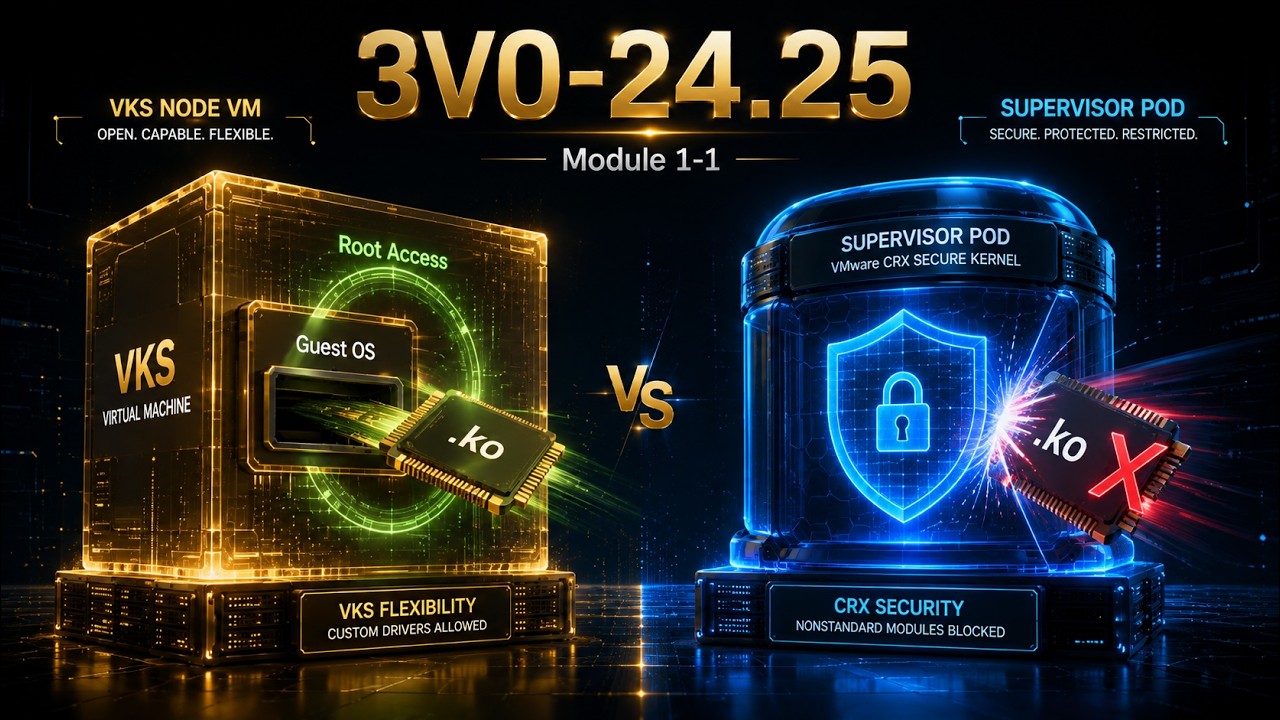
VCF 9.0 Architect 3V0-24.25 Exam: Supervisor Pods vs VKS Node VM Explained
 9:23
9:23Study & Preparation
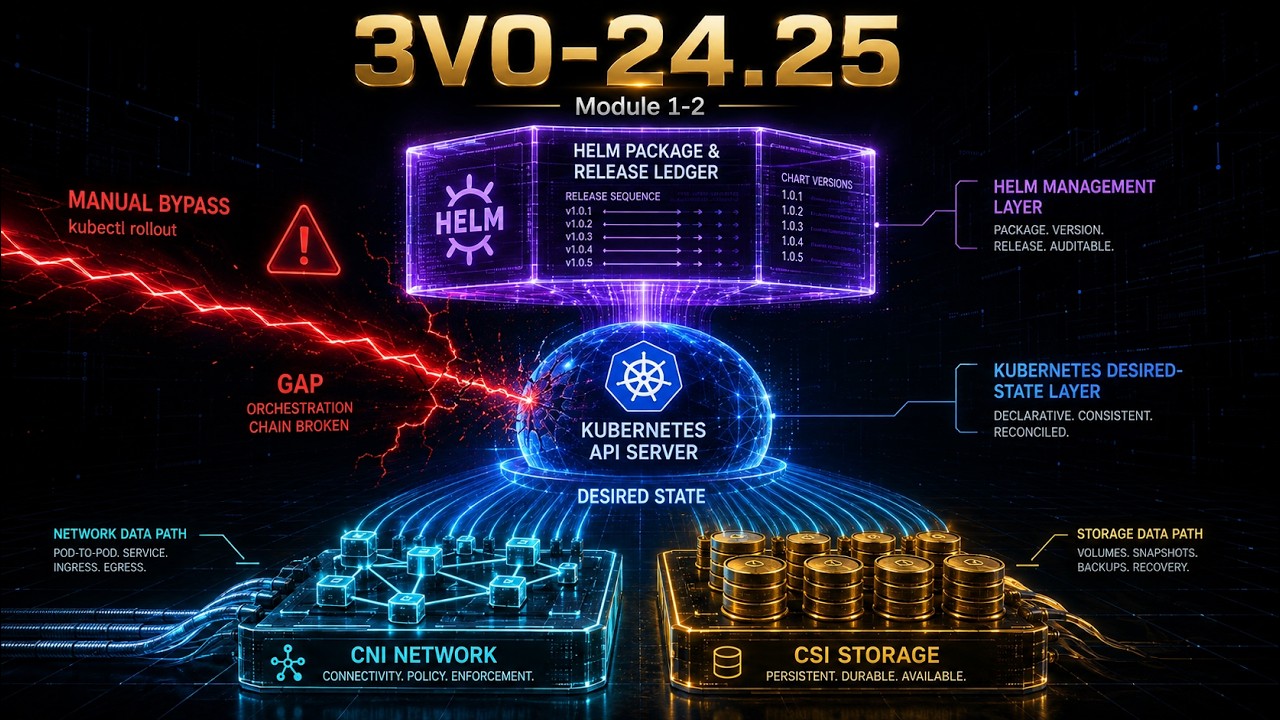
VCF 9.0 Architect 3V0-24.25 Exam: Helm and Kubernetes Troubleshooting Explained
 7:45
7:45Study & Preparation
VCF 9.0 Architect 3V0-24.25 Exam: NSX VPC vs VDS Supervisor Architecture Explained
 8:47
8:47Study & Preparation
VCF 9.0 Architect 3V0-24.25 Exam: Namespace Network Options Explained
 8:24
8:24Study & Preparation