
Study & Preparation
3V0-24.25 VKS ImagePullBackOff: Harbor, x509 and Pull Secrets
About this video
ImagePullBackOff is a retry state, not a complete diagnosis. In this video, we break down Objective 5.3 of the VMware 3V0-24.25 VKS exam and examine how to troubleshoot container deployment, private registry, and trusted CA failures. Broadcom’s official exam guide places these scenarios directly under Objective 5.3. We begin by reading the evidence in the correct order. First, we determine whether the Pod was successfully scheduled. Then we inspect the container waiting reason and chronological Pod events to identify the actual image-pull failure. Kubernetes recommends using the Pod event stream when a workload reaches ImagePullBackOff, because the summarized status alone does not reveal whether the problem is trust, authentication, image naming, or connectivity. We will distinguish between: x509: certificate signed by unknown authority Missing or incorrectly named image pull Secrets Registry authorization failures Incorrect image paths or tags DNS, network, and registry availability problems A central exam mistake is changing registry credentials when the event clearly reports an x509 trust failure. For VKS workload clusters, Broadcom documents that an untrusted private-registry certificate must be addressed through the cluster’s supported additionalTrustedCAs configuration. Updating that trust configuration may also trigger a rolling redeployment of cluster nodes, so this must be treated as a controller-managed lifecycle change rather than an ad hoc node modification. We will also examine the authentication side of the image-pull process. Kubernetes registry Secrets must exist in the same namespace as the consuming Pod. They can be referenced directly from the Pod specification or attached through a ServiceAccount. New Pods created with that ServiceAccount inherit its imagePullSecrets configuration. The troubleshooting workflow covers: Identifying the exact failing container Reading Pod waiting reasons and events Separating certificate trust from registry authorization Configuring VKS trusted CA certificates Creating a kubernetes.io/dockerconfigjson Secret Verifying namespace placement Attaching the Secret to a dedicated ServiceAccount Confirming the effective Pod configuration Validating image pull, container startup, and readiness The 3V0-24.25 exam is not simply testing whether you know how to create a registry Secret. It is testing whether you can identify which security boundary failed and apply the correction at the proper layer. By the end of this module, you will have a practical failure map for ErrImagePull, ImagePullBackOff, x509 errors, private Harbor authentication, and namespace-scoped image pull Secrets. Next, we will move into VKS performance optimization and examine HPA metrics, workload requests, namespace quotas, and node-level scaling constraints. #3V02425 #VKS #VMwareCertification
Keep watching
 7:07
7:07Study & Preparation
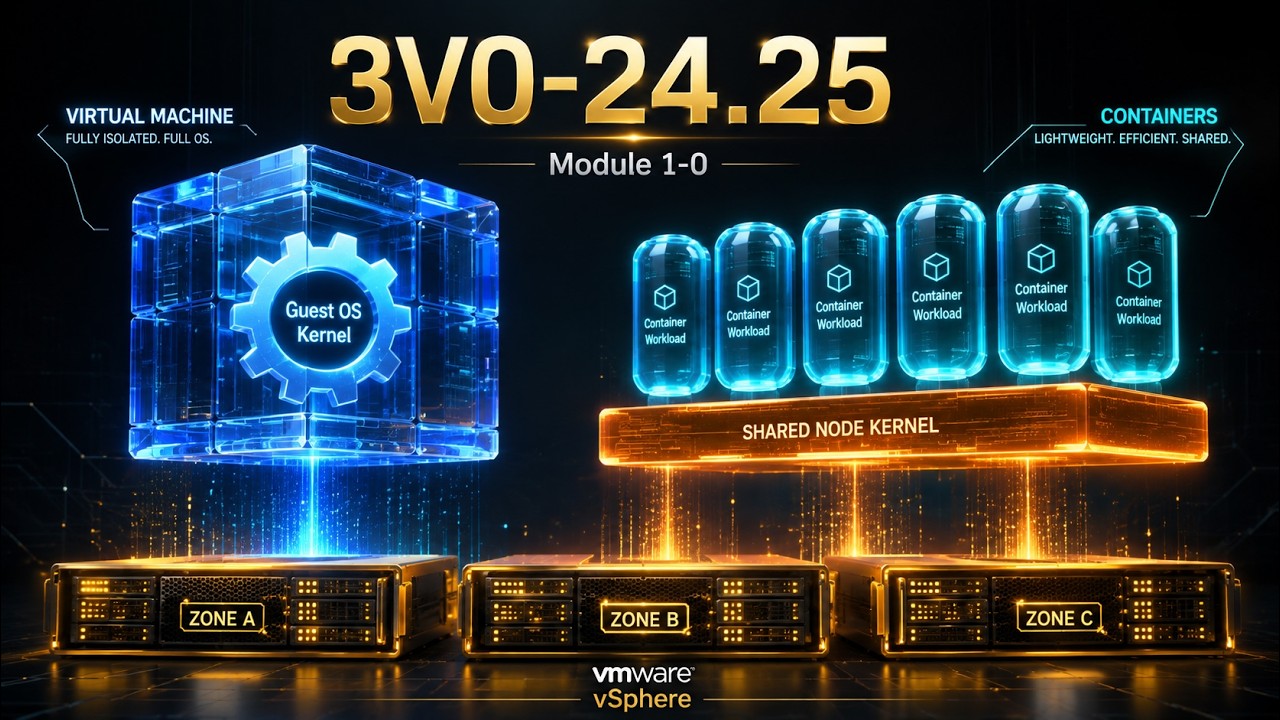
VMware VCF 9.0 Architect 3V0-24.25 Certification: VM vs Container Workload Design Explained
 6:03
6:03Study & Preparation
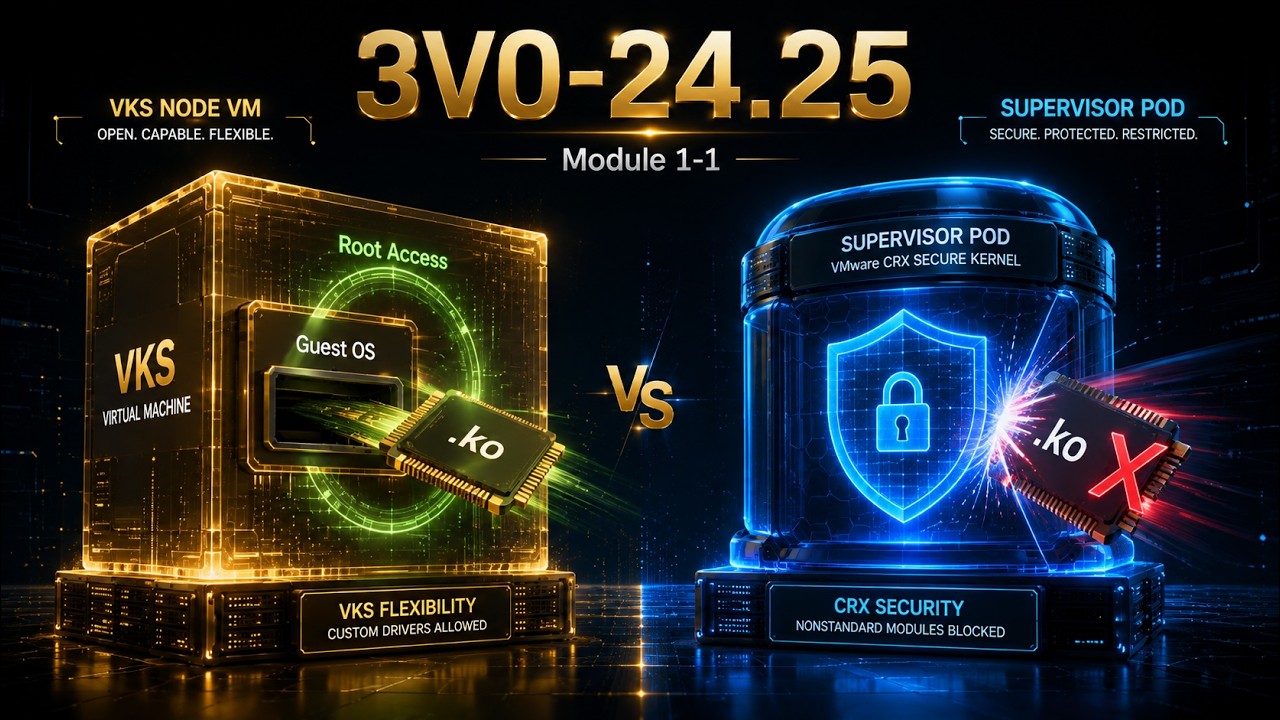
VCF 9.0 Architect 3V0-24.25 Exam: Supervisor Pods vs VKS Node VM Explained
 9:23
9:23Study & Preparation
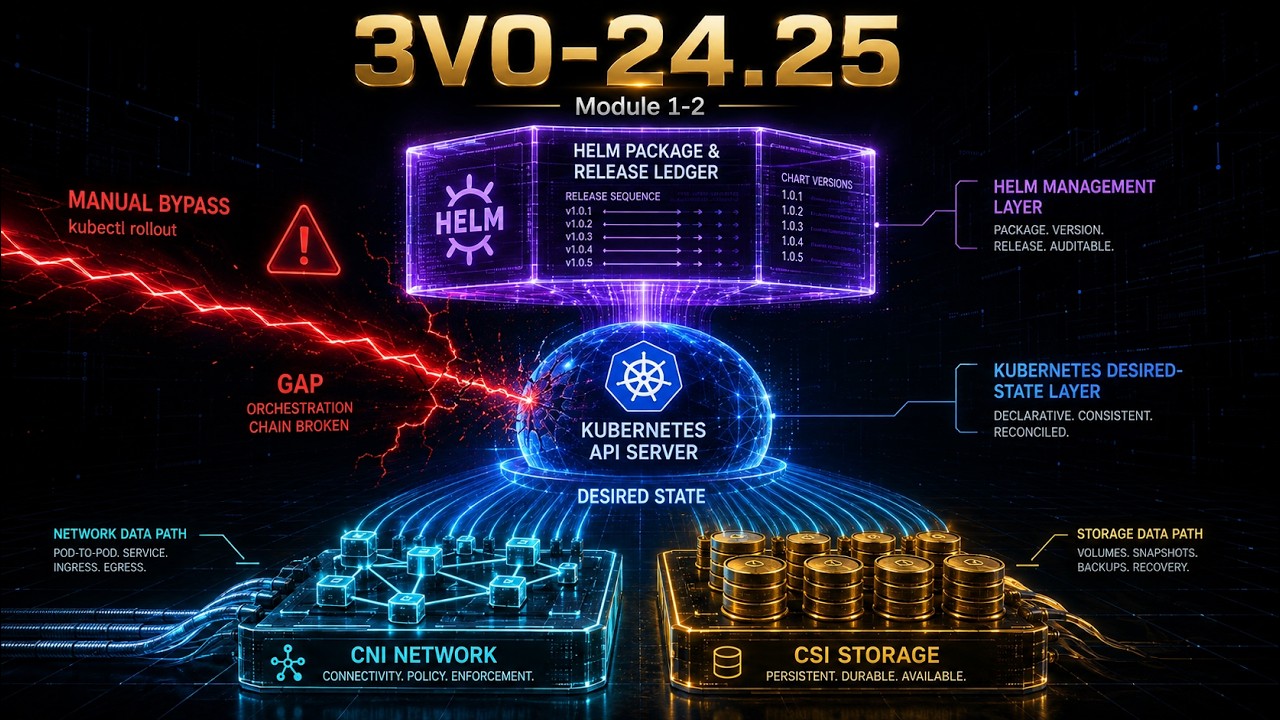
VCF 9.0 Architect 3V0-24.25 Exam: Helm and Kubernetes Troubleshooting Explained
 7:45
7:45Study & Preparation
VCF 9.0 Architect 3V0-24.25 Exam: NSX VPC vs VDS Supervisor Architecture Explained
 8:47
8:47Study & Preparation
VCF 9.0 Architect 3V0-24.25 Exam: Namespace Network Options Explained
 8:24
8:24Study & Preparation