
Study & Preparation
3V0-24.25 VKS Velero Backup and Restore with S3 and CSI Snapshots
About this video
A Velero backup reporting Completed does not automatically prove that your application data is recoverable. In this video, we break down Objective 4.13 of the VMware 3V0-24.25 VKS exam and examine the complete backup-and-restore path for Kubernetes workloads using Velero and external object storage. The official exam blueprint specifically includes backup and restore strategies using Velero under Objective 4.13. We begin with the BackupStorageLocation, or BSL. You will learn how Velero connects to an S3-compatible object-storage platform, how its credential Secret is referenced, and how to troubleshoot an unavailable location or AccessDenied response. We will inspect the bucket, endpoint, region, TLS configuration, credential reference, and Velero controller logs before attempting another backup. A BSL is ready for backup operations when it reports an Available phase. Next, we separate Kubernetes resource protection from persistent-volume protection. Velero collects Kubernetes API objects and uploads the backup archive to object storage. Persistent application data can then be protected using native CSI snapshots, CSI snapshot data movement, or File System Backup, depending on the storage architecture and recovery requirements. We will examine: BackupStorageLocation configuration S3-compatible credentials and bucket policies Kubernetes resource backup vSphere CSI snapshot selection Native snapshots versus snapshot data movement VolumeSnapshot and DataUpload verification Namespace restore and application-level validation A critical exam distinction is that native CSI snapshots and object-storage data movement are not the same process. With native CSI protection, the snapshot remains in the storage platform and the CSI driver provisions the restored volume from that snapshot. When snapshot data movement is enabled, Velero copies the snapshot data into the configured backup repository and retrieves it through a data-download workflow during recovery. We will then run a controlled restore rehearsal using namespace mapping. Instead of treating a Bound PVC as final proof, we will inspect the restore status and logs, confirm volume recovery, verify Pod readiness, and test the application’s actual database contents. Velero supports namespace remapping and restores persistent volumes differently depending on whether they were protected through CSI snapshots, File System Backup, or another snapshot workflow. The 3V0-24.25 exam is not simply testing whether you recognize the velero backup create command. It is testing whether you understand the difference between object-storage access, Kubernetes resource backup, volume-data protection, and recovery validation. By the end of this module, you will have a practical framework for diagnosing BSL failures, validating CSI-backed data protection, and proving that a VKS workload can be recovered within its defined RPO and RTO. Next, we will move into Supervisor and namespace troubleshooting, including resource quotas, VM class availability, and VirtualMachineClassNotFound failures. #3V02425 #VKS #VMwareCertification
Keep watching
 7:07
7:07Study & Preparation
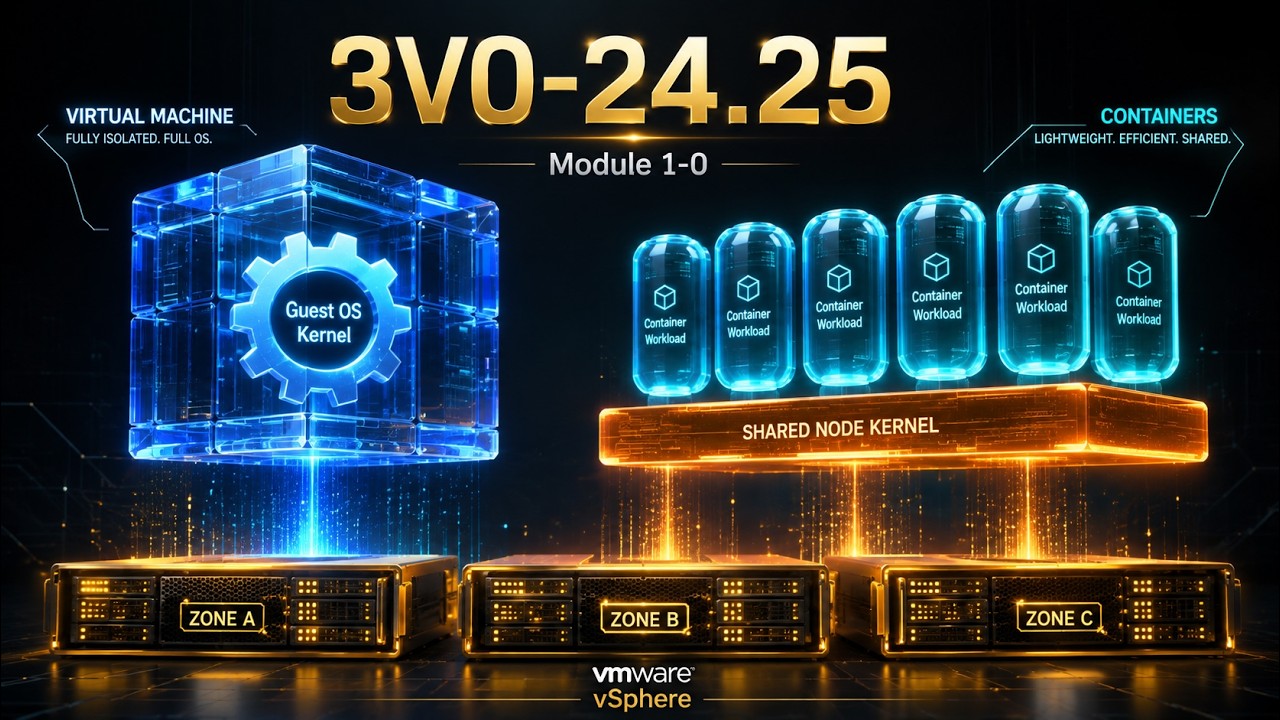
VMware VCF 9.0 Architect 3V0-24.25 Certification: VM vs Container Workload Design Explained
 6:03
6:03Study & Preparation
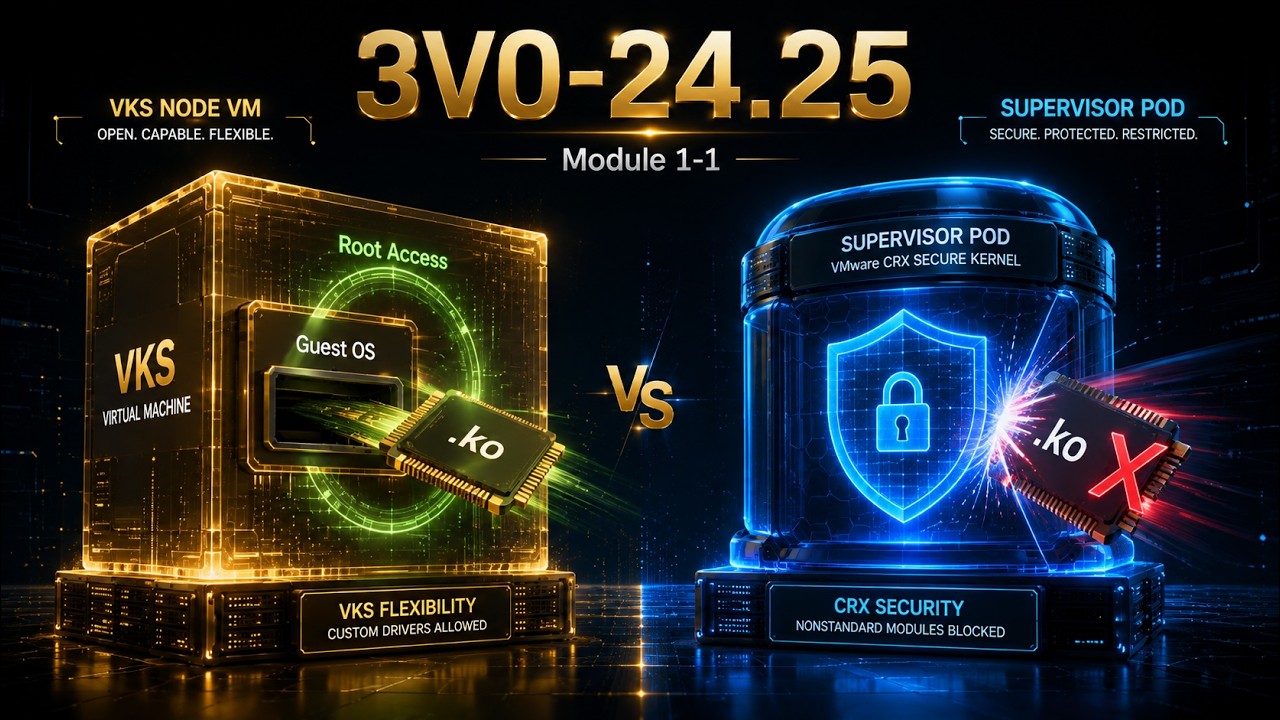
VCF 9.0 Architect 3V0-24.25 Exam: Supervisor Pods vs VKS Node VM Explained
 9:23
9:23Study & Preparation
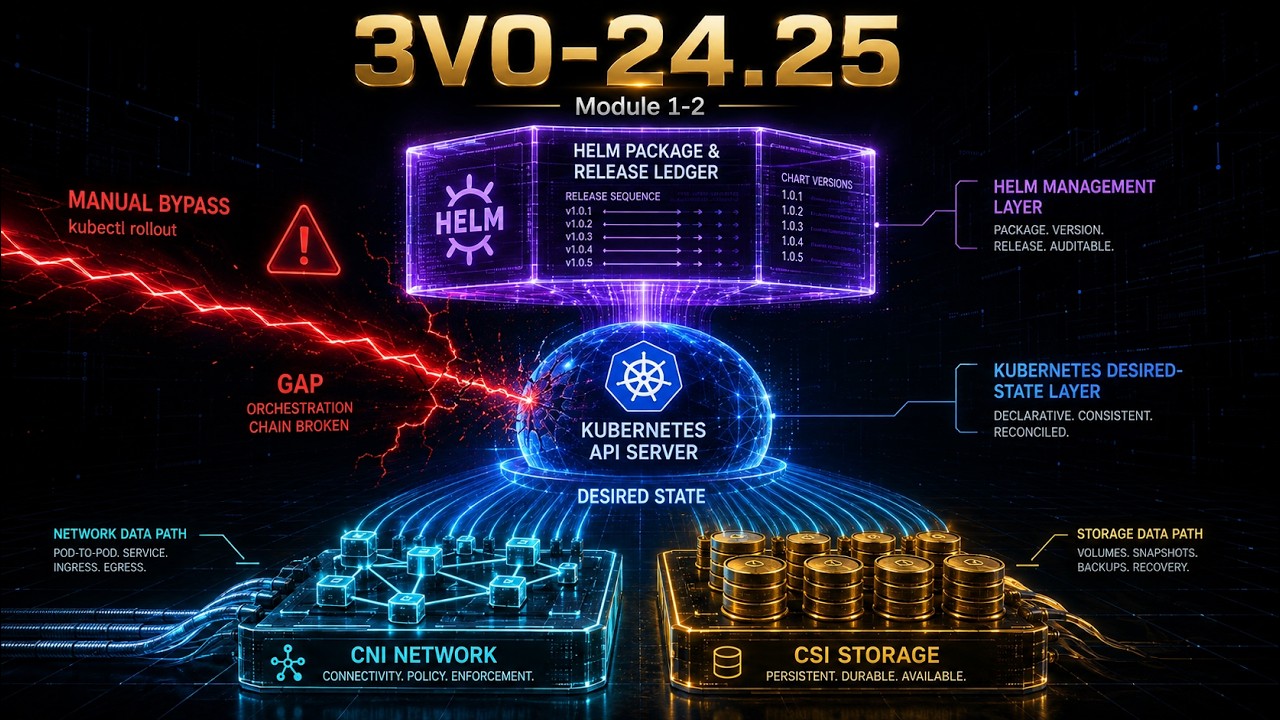
VCF 9.0 Architect 3V0-24.25 Exam: Helm and Kubernetes Troubleshooting Explained
 7:45
7:45Study & Preparation
VCF 9.0 Architect 3V0-24.25 Exam: NSX VPC vs VDS Supervisor Architecture Explained
 8:47
8:47Study & Preparation
VCF 9.0 Architect 3V0-24.25 Exam: Namespace Network Options Explained
 8:24
8:24Study & Preparation